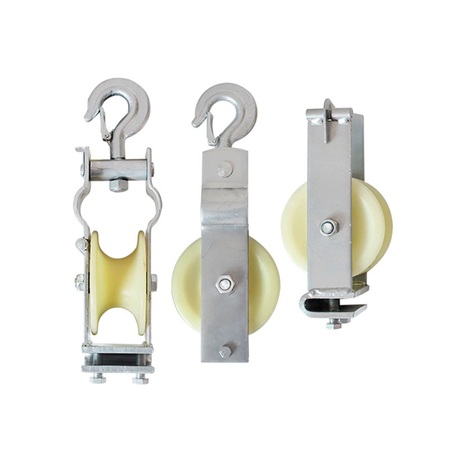
Recovery operations and heavy lifting leave zero margin for error. When you are deep in the mud or hoisting heavy machinery, a hardware failure is not just an inconvenience—it is catastrophic. Miscalculating forces or choosing the wrong rigging hardware can snap cables, burn out expensive winch motors, and endanger lives. Unfortunately, many buyers treat this equipment as a commodity, confusing standard pulleys with a proper Snatch Block or selecting units based on price rather than technical specifications like Working Load Limit (WLL) and sheave geometry.
The goal of this guide is to move beyond basic definitions and provide an engineering-focused selection framework. We will strip away the marketing jargon to focus on the physics that dictate safety and efficiency. From understanding critical sizing ratios (D/d) to navigating material trade-offs between bushings and bearings, this article covers the compliance standards—specifically ASME B30.26—necessary for a safe, high-ROI purchase.
Key Takeaways
Calculate Resultant Force, Not Just Load: The force exerted on a snatch block anchor varies by angle; a 180-degree turn doubles the load on the block itself.
The D/d Ratio Rule: To prevent rope fatigue, the sheave diameter should generally be at least 10x the wire rope diameter.
Bushings vs. Bearings: Choose bronze bushings for heavy, slow, static loads; choose sealed bearings for high-speed or frequent rotation to reduce friction.
Safety Factors Matter: Look for a minimum 4:1 design factor (MBS to WLL) to comply with industrial safety standards.
Understanding the Mechanics: ROI and Equipment Protection
Most buyers view a snatch block merely as a tool to increase pulling power. While this is true in specific rigging configurations, experienced operators view high-quality blocks as an insurance policy for their primary equipment. The winch motor is often the most expensive component in a recovery setup. By utilizing a block to create a mechanical advantage, you effectively halve the amp draw required for the same load. This reduction in electrical stress significantly lowers heat buildup, which is the primary cause of winch motor failure. The Total Cost of Ownership (TCO) of a quality block is minimal compared to the cost of replacing a burnt-out winch or a snapped synthetic line.
The "Double Power" Physics
It is vital to understand when mechanical advantage actually occurs. A standard 2:1 line pull involves running the line from the winch, through the block on the load, and back to a fixed anchor point near the winch. This setup distributes the weight across two lines, effectively doubling the winch's capacity.
However, a critical distinction must be made regarding redirecting forces. If you use a Snatch Block anchored to a tree simply to change the direction of the pull (deflection), you do not gain mechanical advantage. You are merely redirecting the line. Mechanical advantage only exists when the block travels with the load or when the line returns to the anchor point of the winch. Misunderstanding this principle leads to dangerous situations where operators believe they have more power than they actually do.
Friction Reduction
Beyond mechanical advantage, the quality of the sheave plays a massive role in system efficiency. Cheap, poorly machined sheaves introduce parasitic friction. This friction acts as a hidden load, forcing the winch to work harder than necessary to overcome the resistance of the block itself. High-quality sheaves with precision bearings or bushings ensure that the force is directed into moving the load, not generating heat within the block.
Critical Selection Criteria #1: WLL and Anchor Load Calculations
Selecting the correct hardware begins with understanding the numbers stamped on the side plate. Two distinct ratings usually appear: Working Load Limit (WLL) and Minimum Breaking Strength (MBS).
WLL vs. MBS
The Working Load Limit is the maximum load the block is designed to handle during routine operation. This is the number you must use for planning. The Minimum Breaking Strength is the theoretical point at which the device will fail catastrophically. Industrial standards typically require a design factor—often 4:1. This means a block with a WLL of 10,000 lbs should theoretically hold 40,000 lbs before breaking. However, you should never encroach on the MBS. Always size your purchase based on the weakest link in your rigging chain, which is frequently the winch line or the shackle connecting the block to the anchor.
The "Resultant Force" Trap
One of the most dangerous misconceptions in rigging is that a 10,000 lb pull exerts 10,000 lbs of force on the block. This is rarely the case. The force exerted on the block's anchor point is determined by the "Angle of Deflection"—the angle between the line entering the block and the line exiting it.
As the angle between the lines decreases (the lines get closer to parallel), the stress on the block increases. Refer to the table below to understand how angle affects load:
| Angle of Deflection | Multiplier Factor | Resultant Load on Block (10,000 lb Pull) |
| 0° (Straight Line) | 0x | 0 lbs |
| 45° | 0.76x | 7,600 lbs |
| 90° (Right Angle) | 1.41x | 14,100 lbs |
| 120° | 1.73x | 17,300 lbs |
| 180° (Parallel Lines) | 2.00x | 20,000 lbs |
At a 180-degree turn (where the line goes out and comes straight back), the block anchor must withstand double the force of the pull. This is why a block rated exactly for your winch's capacity is often insufficient.
Safety Margin Recommendation
To ensure safety across all rigging scenarios, including high-angle redirects and sudden shock loading, we recommend purchasing a Snatch Block rated for at least double your winch's pulling capacity. If you operate a 10,000 lb winch, your snatch block should have a WLL of at least 20,000 lbs. This buffer accounts for the angle multiplier effect and inevitable wear and tear.
Critical Selection Criteria #2: Rope Compatibility and D/d Ratios
The interaction between the rope and the sheave groove is where longevity is determined. A mismatch here destroys ropes faster than any other factor.
Sheave Groove Anatomy
The groove of the sheave must support the rope correctly. If the groove is too narrow, the rope will be pinched. Under load, this pinching crushes the core of the rope, leading to internal structural failure that is difficult to detect visually. Conversely, if the groove is too wide, the rope flattens out under tension. A flattened rope loses its structural integrity and strength. Ideally, the rope should sit in the groove with support covering roughly 135 to 150 degrees of its circumference.
Wire vs. Synthetic Rope
Material compatibility is equally critical. Wire rope is abrasive and requires a hardened steel sheave. If you use wire rope on a soft aluminum sheave, the wire will act like a saw, cutting into the metal. Synthetic rope, on the other hand, requires a perfectly smooth surface. Even minor burrs or rough spots left by previous wire rope usage can slice through synthetic fibers instantly. If you switch from wire to synthetic, you must replace your snatch block or sheave to ensure a smooth, burr-free contact surface.
The D/d Ratio
The D/d ratio is the ratio of the Sheave Diameter (D) to the Rope Diameter (d). Bending a rope tightly creates internal friction and fatigue. Engineering standards generally recommend a 10:1 ratio for general lifting. For example, a 1-inch diameter rope should theoretically run over a 10-inch diameter sheave to maximize rope life.
In off-road recovery, carrying a 10-inch block is often impractical due to space constraints. Compact recovery gear often compromises this ratio down to 7:1 or 8:1. While acceptable for occasional use, users must accept the trade-off: tighter bends mean a shorter lifespan for your winch line.
Material Composition and Bearing Types
The environment in which you operate dictates the materials you should choose. Industrial logging differs vastly from marine salvage or recreational 4x4 recovery.
Housing Materials
Carbon Steel: Extremely durable and heavy. Carbon steel is the standard for static industrial rigging. It is susceptible to rust, so it requires powder coating or galvanization.
Alloy Steel: Offers a higher strength-to-weight ratio than carbon steel. It allows for a lighter block without sacrificing WLL, making it a good middle ground.
Aluminum: The material of choice for mobile recovery. It is lightweight and naturally resistant to corrosion. However, high-quality aluminum blocks are significantly more expensive than their steel counterparts.
Internal Mechanics: Bushings vs. Bearings
The internal rotation mechanism defines how the block handles load and speed.
Bronze Bushings: These are simple sleeves of bronze that the axle rotates within. They are incredibly robust and handle extreme static loads well. If they fail, they tend to do so gradually rather than catastrophically. They are ideal for slow, heavy pulls like vehicle recovery or logging.
Sealed Roller Bearings: These offer much lower friction and higher efficiency. They are essential for cranes or applications where the line moves at high speeds. However, they are more sensitive to dirt intrusion and shock loading.
Maintenance Features
Look for practical maintenance features. Grease Fittings (Zerks) are essential for flushing out contaminants, especially if the block is submerged in water or mud. Additionally, a Side-Opening Design is mandatory for efficiency. It allows you to rig the block onto the line at any point without threading the entire length of the cable through the system—a crucial feature when wearing thick rigging gloves.
Connection Types: Hooks vs. Shackles vs. Tailboards
How the block connects to the anchor point changes its utility and safety profile.
Shackle/Eye Mounts
Shackle mounts provide the most secure connection. They create a closed loop that is virtually impossible to detach accidentally, even if the line goes slack. While they are slightly slower to rig than hooks, the safety trade-off is well worth it for heavy-duty recovery. They are the preferred choice for complex rigging scenarios.
Swivel Hooks with Latches
Hooks offer speed. They can be attached to a strap or point in seconds. The swivel feature allows the block to align automatically with the load, preventing twist in the line. However, the safety latch is a weak point; it can break or malfunction. Hooks are generally less secure for overhead lifting compared to screw-pin shackles.
Tailboard Blocks
Tailboard blocks are specialized units designed for fixed mounting. You will typically find these bolted to the decks of ships, flatbed trailers, or factory walls. They serve as permanent redirect points and are not intended for mobile recovery operations.
Inspection Protocols and Safety Standards
Compliance is not optional in rigging. The ASME B30.26 standard serves as the baseline for rigging hardware. When inspecting a block, look for clear manufacturer markings, including the brand name, WLL, and compatible rope size. If a block lacks these markings, do not use it for critical loads.
Pre-Use Inspection Checklist
Before every pull, perform a rapid inspection:
Wobble Test: Grasp the sheave and try to wiggle it side-to-side. Excessive play indicates bearing or bushing wear.
Groove Inspection: Check for "corrugation"—a ripple pattern worn into the groove by wire rope. This acts like a file and will destroy new ropes.
Deformation: Inspect the side plates. If they are spreading apart, or if the hook throat has opened up, the block has been overloaded and must be retired immediately.
The "Dead Zone"
Safety extends beyond the hardware to the operator. Always calculate the "bight"—the inside angle formed by the rope passing through the block. If the block or strap fails, it will fly outward in the direction of the bight's bisection. Never stand within this "snap-back zone."
Conclusion
Choosing the right hardware is a balance between raw capacity, rope fitment, and environmental suitability. A mismatch in any of these areas creates a weak link that compromises the entire operation. The right Snatch Block does more than just redirect a line; it protects your winch, preserves your rope, and ensures the safety of your crew.
For general vehicle recovery and heavy-duty use, we recommend prioritizing a Shackle-mount, side-opening block equipped with a bronze bushing. Ensure the Working Load Limit exceeds your winch’s capacity by at least 2x to account for the physics of resultant forces. Before your next project, take the time to inspect your current rigging gear for wear and upgrade any non-compliant blocks to meet modern safety standards.
FAQ
Q: What is the difference between a snatch block and a standard pulley?
A: The primary difference lies in the side plates. A snatch block features a "side-opening" or swing-away cheek plate. This allows you to insert the wire rope or synthetic line at any point along its length without having to thread the end of the cable through the pulley. Standard pulleys typically have fixed side plates, requiring you to feed the rope through from the end, which is impractical for long winch lines.
Q: Does a snatch block always double pulling power?
A: No. A snatch block only doubles pulling power (mechanical advantage) when it is attached to the load and travels with it, or when the line returns to the winch's anchor point. If the block is attached to a stationary object (like a tree) simply to change the direction of the pull, it provides zero mechanical advantage. In that scenario, it is only a redirect.
Q: Can I use a steel snatch block with synthetic rope?
A: You can, but only if the sheave is in perfect condition. Synthetic rope requires a smooth surface to prevent abrasion. If the steel block was previously used with wire rope, the sheave likely has burrs or a rough texture that will cut synthetic fibers. Ideally, use a dedicated block for synthetic rope with an aluminum or specialized coated sheave to ensure longevity.
Q: How do I size a snatch block for my winch?
A: The Working Load Limit (WLL) of the block should generally be at least two times the pulling capacity of your winch. For a 10,000 lb winch, choose a block rated for 20,000 lbs. This safety margin accounts for the "angle multiplier effect," where a 180-degree turn in the line can exert double the force on the block's anchor point.


