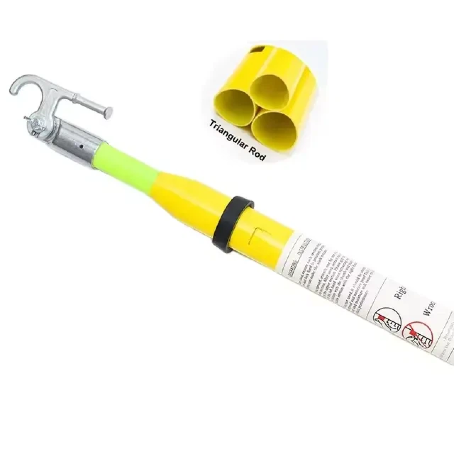
When it comes to high-voltage electrical work, the right tools can make all the difference. In particular, hot sticks are essential for ensuring safety while working with live electrical systems. However, two main types of hot sticks—telescopic hot sticks and shotgun hot sticks—are often used for different tasks, and choosing the right one can be a challenge.
As an operator, you may be facing this dilemma: both types are useful, yet they serve slightly different purposes, and deciding between them depends on factors like reach, control, task type, and even environmental conditions. Choosing the appropriate tool for specific tasks—whether it's disconnecting switches, grounding, or fuse handling—can increase both safety and efficiency.
In this article, we will break down the key differences between telescopic hot sticks and shotgun hot sticks, compare their functionalities in various scenarios, and guide you through the process of selecting the best tool based on your operational needs.
Quick definitions without jargon
Before diving into the specifics of telescopic hot sticks and shotgun hot sticks, let’s establish a simple understanding of what these tools are and how they differ in function.
Telescopic: variable reach + compact transport
Telescopic hot sticks are designed with extendable sections, allowing the operator to adjust the length of the tool according to the task at hand. The length can range from a few meters to over 12 meters, offering significant flexibility for various high-voltage work applications.
The telescopic mechanism involves sections that can be locked in place as the operator extends the tool. This feature is especially beneficial for tasks that require varying reach, such as switching, maintenance in overhead lines, and working in substations. When not in use, these tools can be collapsed into a compact form, making them easier to store and transport.
This adjustable length and compact storage make telescopic hot sticks the ideal choice for jobs where flexibility in reach is essential.
Shotgun: controlled gripping + quick engagement at the tip
Shotgun hot sticks, on the other hand, are typically fixed-length tools with a universal head fitting at the tip. The key advantage of shotgun hot sticks is their ability to securely grip and engage hardware quickly. These tools are widely used in situations where operators need to engage hardware such as fuse pullers, load break switches, or other similar devices, especially in confined spaces.
Shotgun hot sticks offer excellent control at the tip, making them ideal for tasks that involve quick attachment and manipulation of smaller components, such as fuse replacements or switch operations in tight spaces.
The rapid engagement and precise control offered by shotgun hot sticks make them the preferred choice in certain high-voltage applications, particularly when quick and efficient operation is crucial.
Use-case mapping: what task are you doing?
One of the first steps in selecting the right tool is understanding the task you need to perform. The type of hot stick you choose will largely depend on the kind of work you do and the environment you are working in. Let’s look at some common tasks and determine which tool is most suitable.
Disconnect switching and cutout operations
Disconnecting switches and handling cutouts require a tool with variable reach and secure control. Telescopic hot sticks are often preferred for these operations because they allow the operator to maintain a safe distance from energized equipment while adjusting the length to suit the task.
In situations where you need to operate switches in overhead lines or substations, telescopic sticks offer the flexibility to extend and retract, which enhances safety and efficiency. Telescopic designs also allow you to adapt quickly to the specific reach required for each task, reducing the time spent setting up and increasing overall workflow speed.
Handling small hardware in tight reach windows
For tasks involving small hardware or confined spaces, shotgun hot sticks are typically the better choice. Their design allows for precise control at the tip, making them ideal for engaging smaller components such as fuse pullers, switchgear, or voltage testers.
Shotgun hot sticks are also easier to maneuver in tight spaces, where a telescopic stick might not be able to operate effectively. The ability to quickly engage and manipulate hardware is critical in such environments, making shotgun sticks the preferred option for these applications.
Control vs reach: what feels “stable” at full extension
When choosing between telescopic and shotgun hot sticks, one of the most critical factors to consider is the balance between reach and control. The stability of the tool at full extension is a key consideration in ensuring safe and efficient operation.
No-twist/triangular profiles and why they reduce orientation drift
A significant design feature that helps maintain stability in telescopic hot sticks is the triangular or no-twist profile. This profile reduces the likelihood of rotation or orientation drift during extension, ensuring that the tool remains steady and controlled while in use.
For tasks requiring full extension, the no-twist design ensures that the hot stick remains aligned, providing operators with greater control and confidence while manipulating switches or disconnects at a distance.
Weight, rigidity, and operator fatigue tradeoffs
In terms of weight, telescopic hot sticks are generally heavier than shotgun models because they are designed with multiple sections and locking mechanisms. This added weight can lead to operator fatigue, especially when the tool is extended for prolonged periods.
However, telescopic hot sticks are engineered to balance rigidity with lightweight construction, allowing for optimal stability without sacrificing control. Operators should always consider the trade-off between the tool’s weight and the duration of use, particularly in scenarios where repeated adjustments are required.
Attachment speed and workflow efficiency
When working with live-line equipment, speed is often of the essence. The ability to quickly attach and detach various tools can significantly impact the efficiency of the operation.
Universal heads and quick-release changes
Both telescopic and shotgun hot sticks are typically equipped with universal heads that allow operators to change attachments quickly. However, the speed of this process can vary depending on the tool type.
Shotgun hot sticks often excel in scenarios where fast attachment and detachment are required, particularly when the operator needs to move between tasks rapidly. For example, switching between fuse pullers, voltage detectors, and grounding tools is streamlined with shotgun hot sticks.
While telescopic hot sticks also offer quick attachment changes, their primary advantage lies in their ability to adjust length, which allows for more flexibility in reaching different components without needing to move the entire tool.
Standardizing attachments across crews
When working with a large crew, consistency is key. Telescopic hot sticks offer a significant advantage in environments where multiple teams use the same equipment. By standardizing attachments, such as C-hooks, fuse pullers, and ground rods, teams can work more efficiently and reduce downtime during setup.
Having a universal attachment system ensures that tools are interchangeable across different crew members, reducing procurement costs and simplifying training processes.
Transport and storage realities
Another important consideration when choosing between telescopic and shotgun hot sticks is how easy they are to transport and store. Larger tools with more sections tend to be more difficult to manage and transport.
Truck space, tool tubes, and protecting the finish from UV/abrasion
Telescopic hot sticks, while highly versatile, can be cumbersome to store if not properly organized. These tools require adequate storage space in vehicles to prevent damage to the finish and to ensure the sections remain secure.
Shotgun hot sticks, being more compact, are generally easier to store in smaller spaces and are less likely to suffer from finish damage due to their fixed length. They also require less space in tool tubes or storage compartments.
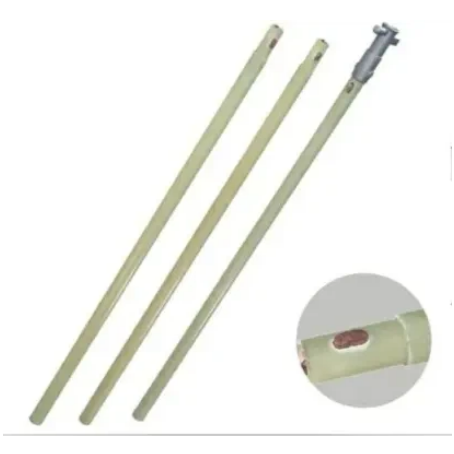
In situations where space is limited or storage conditions are not ideal, sectional rods (which can be disassembled for transport) may offer an additional solution, allowing for modular length adjustment while remaining easy to store and transport.
When sectional rods beat telescopic
For operations that require a custom reach and modular flexibility—such as air freight or confined access jobs—sectional rods may be the better choice. These rods consist of individual sections that can be added or removed as needed, offering a high degree of flexibility and reducing transportation and storage challenges.
While sectional rods do not offer the same ease of extension as telescopic models, they are a good option for specific situations where adaptability and compact storage are critical.
Table — Telescopic vs Shotgun vs Sectional
Dimension | Telescopic hot stick | Shotgun hot stick | Sectional operating rod |
Reach flexibility | Excellent (adjustable) | Moderate (model-dependent) | Excellent (add/remove sections) |
Tip control for small parts | Good | Excellent | Good |
Speed for repeated operations | High | High (fast engagement) | Medium |
Transport convenience | High (collapses) | High | Medium (multiple sections) |
Best-fit scenarios | Switching, general overhead work | Gripping/engaging hardware in tight spots | Custom heights, modular logistics |
This comparison grid will help you make an informed decision based on your specific needs, ensuring that you select the hot stick that best fits your operational environment.
Conclusion
When selecting between telescopic hot sticks and shotgun hot sticks, the key is understanding the task at hand. Telescopic hot sticks excel in applications requiring flexible reach and variable extension, while shotgun hot sticks offer precision and speed in tight spaces. Each type of hot stick is suited to specific use cases and environments, and the decision should be based on factors like reach, control, attachment speed, and storage convenience.
ZHEJIANG JITAI ELETCIRC POWER EQUIPMENT CO.,LTD provides a wide range of hot sticks, including both telescopic and shotgun models, designed to meet various operational needs. For more information or to find the perfect tool for your specific application, browse our Telescopic Disconnect Tools category and contact us for expert advice on choosing the right tool.
FAQ
1. What is the difference between telescopic and shotgun hot sticks?
Telescopic hot sticks provide adjustable reach and are ideal for tasks requiring flexible length, while shotgun hot sticks are designed for quick engagement and fine control, making them suitable for tasks in tight spaces.
2. Which hot stick is better for high-voltage switching?
Telescopic hot sticks are typically better for high-voltage switching because they provide greater reach and flexibility, allowing for safe operation at a distance.
3. Can shotgun hot sticks be used for general overhead work?
While shotgun hot sticks excel in tasks requiring precision and quick attachment, they are not ideal for general overhead work where longer reach and flexibility are required. Telescopic hot sticks are a better fit for these tasks.
4. Are sectional rods a good option for all situations?
Sectional rods are great for jobs requiring custom lengths or when compact storage is necessary, but they do not offer the same ease of extension as telescopic models. They are best suited for specialized applications where reach must be adjusted frequently.


