Introduction
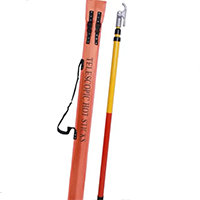
Working on live high-voltage lines is one of the most dangerous jobs in the utility industry. Every piece of equipment stands between a technician and a lethal electrical arc. Among these tools, the Insulated link stick is a primary line of defense. It provides the necessary separation and insulation to handle energized conductors safely. However, a High voltage link stick is only effective if its dielectric integrity remains intact. Environmental factors, mechanical stress, and improper storage can compromise a Fiberglass link stick, turning a safety tool into a conductor.
This expert guide focuses exclusively on the mandatory inspection and testing protocols for a link stick before it ever touches a live line. We will break down the visual cues of failure, the mechanical checks for structural stability, and the high-moisture-proof evaluations required for field safety. By following these steps, you ensure that your Portable link stick performs as intended, protecting lives and maintaining grid reliability.
Visual Inspection: Identifying Surface Defects on the Link Stick
Before any electrical test, a thorough visual "hand-over-hand" inspection is the first step. You are looking for any compromise in the epoxy resin coating or the underlying Fiberglass structure. Even a microscopic crack can house moisture or carbon tracks, which allow electricity to bypass the insulation.
Detecting Cracks and Scratches
Run your eyes and fingers along the entire length of the Insulated link stick. We look for deep scratches or "nicks" that penetrate the protective gloss coat. If the epoxy resin surface is dull or feels "fuzzy," the glass fibers may be exposed. This condition, known as "fiber blooming," is a major red flag. Exposed fibers wick in moisture, significantly reducing the high moisture-proof capabilities of the tool.
Checking for Contaminants
Grease, oil, and carbon dust are conductive. They create a path for "creepage" across the surface of the link stick. We check the ferrules and the attachment points for any buildup of soot or metallic particles. If you find dirt, clean it immediately with approved non-conductive wipes. However, if the contamination has burned into the surface (forming a carbon track), the High voltage link stick must be removed from service immediately. It cannot be "cleaned" away once the path is etched into the resin.
Mechanical Integrity and Hardware Evaluation
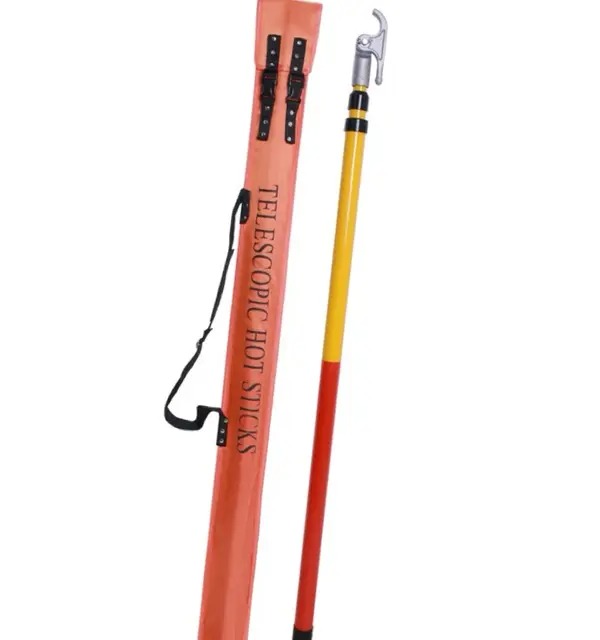
A link stick is a mechanical tool as much as an electrical one. It must support the weight of conductors or the force of a tension puller. Mechanical failure during live-line work can lead to "dropped" lines, causing catastrophic phase-to-ground faults.
Testing the Ferrules and End Fittings
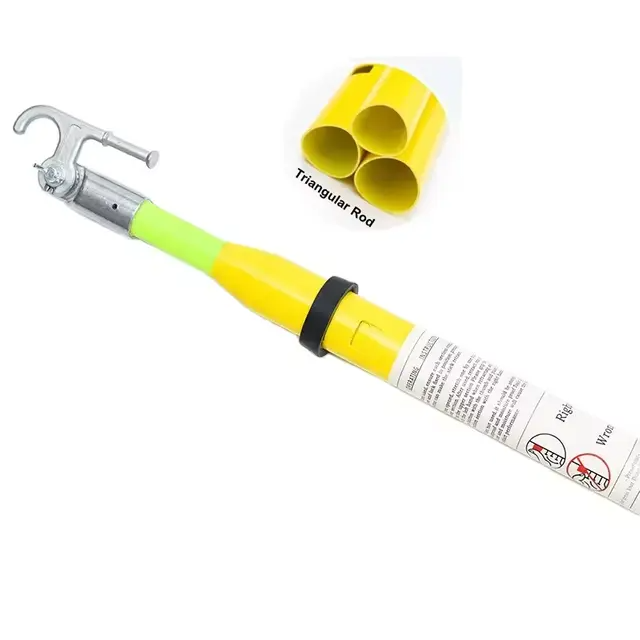
The metal caps at the ends of a Fiberglass link stick are called ferrules. They are usually bonded with high-strength adhesives. We must ensure these are tight. If you can twist the ferrule or see a gap between the metal and the epoxy resin rod, the tool is unsafe. Any movement suggests the internal bond has failed. This could lead to the rod pulling out of the fitting under load.
Checking for Internal Delamination
Tap the rod gently with a non-metallic object and listen to the sound. A healthy Insulated link stick produces a solid "snap" or clear ring. A dull "thud" might indicate internal delamination, where the layers of Fiberglass have separated inside the rod. This hidden defect weakens the structural capacity of the Portable link stick, making it prone to snapping under tension.
| Checkpoint | Status: Pass | Status: Fail |
| Surface Finish | Glossy, smooth, uniform color | Dull, "fuzzy," or cracked |
| Ferrules | Fixed, no visible gap | Loose, rotating, or corroded |
| Rod Sound | High-pitched, solid ring | Dull, hollow thud |
| Hardware | Clean, smooth operation | Rusted, bent, or stiff |
Dielectric Field Testing: The Daily "Go/No-Go" Check
Visual checks aren't enough for High voltage safety. Field workers must perform a dielectric test using a portable hot stick tester. This device simulates high-voltage stress to see if the link stick leaks current.
How to Use a Portable Tester
Place the link stick in the tester and slide it along the length of the rod. The tester applies a localized voltage and measures the leakage current. If the tool is truly Insulated and dry, the meter stays in the green zone. If it hits the red zone, it means the epoxy resin is no longer providing a sufficient barrier. This often happens if the tool has lost its high moisture-proof seal.
Environmental Considerations
Humidity plays a massive role in field testing. If you are working in foggy or rainy conditions, even a good Fiberglass link stick might show some surface leakage. We must distinguish between surface moisture and internal saturation. If a quick wipe with a silicone-treated cloth doesn't bring the test results back into the green, the link stick is compromised and must be sent back to the lab for a full wet/dry laboratory test.
Advanced Moisture and Contamination Analysis
The ability of a link stick to remain high moisture-proof is its most critical feature. Moisture is the enemy of high-voltage insulation. If water gets inside the hollow or foam-filled core of a Portable link stick, it creates an internal conductive path that is invisible to the naked eye.
Understanding High Moisture-Proof Design
High-quality tools use a "closed-cell" foam or a solid epoxy resin core to prevent water ingress. During our inspection, we check the end seals. If the seal is broken, air (and humidity) can move in and out of the rod as temperatures change. This "breathing" effect eventually leads to internal condensation.
The Bead Test for Surface Hydrophobicity
A simple way to check the high moisture-proof status of the outer coating is the water bead test. Spray a fine mist of distilled water on the Insulated link stick. On a good surface, the water should form distinct, tight beads and roll off. If the water "sheets" or flattens out, the surface is contaminated or the epoxy resin is degraded. This means the stick will become conductive much faster in damp weather.
Cleaning and Refinishing Protocols
If a link stick fails a visual or dielectric test due to surface issues, it might be salvageable through proper maintenance. However, there is a strict line between a dirty tool and a broken one.
Proper Cleaning Agents
Never use shop rags or gasoline to clean a Fiberglass link stick. These can leave conductive residues or dissolve the epoxy resin finish. We only use specialized hot stick cleaners or mild soap and water followed by a thorough rinse. After cleaning, apply a thin layer of silicone. This restores the high moisture-proof properties by helping water bead up and roll off.
When to Refinish
If the gloss is gone but the Fiberglass isn't damaged, the link stick can be refinished. This involves light sanding and applying a new coat of high-dielectric epoxy resin. However, this is not a field task. It must be done in a controlled environment to ensure no dust or moisture is trapped under the new coat. A poorly refinished Insulated link stick is more dangerous than an old one because it looks safe but may contain hidden traps for electricity.
Storage and Transport: Preventing Pre-Work Damage
Many link sticks fail inspection not because of work wear, but because of how they were stored in the truck. A Portable link stick is sensitive to UV light and mechanical abrasion during transport.
UV Degradation of Epoxy Resin
Long-term exposure to sunlight breaks down the chemical bonds in epoxy resin. This leads to the "fiber blooming" we discussed earlier. We always store our High voltage link stick in a protective UV-resistant bag when not in use. If it sits on a truck rack in the sun for months, its life expectancy drops by half.
Preventing Mechanical Abrasion
In a vibrating utility truck, a Fiberglass link stick rubbing against a metal bracket will quickly lose its protective coating. We use padded racks or individual PVC tubes to house each link stick. By preventing these small scratches during transport, we ensure the tool passes its visual inspection when it arrives at the job site.
Mandatory Laboratory Testing Cycles
While field inspections are daily, a link stick also requires periodic laboratory testing. National standards (like OSHA or ASTM) usually dictate these intervals, often every year or two.
What Happens in the Lab?
The lab performs a "Wet Dielectric Test." They spray the Insulated link stick with water for several minutes while applying its full rated voltage (e.g., 100kV per foot). This is the ultimate test of its high moisture-proof and High voltage integrity. They measure the "leakage current" in milliamperes. If the stick exceeds the allowed threshold, it is permanently retired.
Tracking the Test Date
Every link stick must have a legible test sticker. Before you start live-line work, check the date. If the lab test has expired, it doesn't matter how "clean" the stick looks; it is legally and practically unfit for service. We treat the test date as a hard deadline for safety.
Detailed Guide to Fiberglass and Resin Composition
To truly understand how to inspect a link stick, you need to know what it is made of. The synergy between the glass fibers and the resin is what creates the insulation.
The Role of Fiberglass
The Fiberglass provides the mechanical skeleton. It gives the Portable link stick its "stiffness" and tensile strength. If these fibers break (indicated by a "crunching" sound when the stick flexes), the tool can no longer support mechanical loads.
The Importance of Epoxy Resin
The epoxy resin acts as the glue and the electrical barrier. It fills the gaps between fibers so that electricity cannot find a path through. High-quality Insulated link sticks use vacuum-impregnated resin to ensure there are zero air bubbles (voids) inside. A void is a place where internal arcing can start, slowly hollowing out the stick from the inside.
Comparison of Material Properties
| Material | Primary Function | Failure Symptom |
| Fiberglass | Structural Strength | Splintering, snapping, "fuzziness" |
| Epoxy Resin | Dielectric Insulation | Tracking, dulling, moisture absorption |
| Closed-cell Foam | Internal Moisture Barrier | Internal condensation, heavy weight |
Conclusion
Inspecting and testing a link stick is not a formality; it is a life-saving ritual. A High voltage environment leaves no room for error. By performing a meticulous visual check for epoxy resin damage, verifying mechanical stability, and utilizing portable testers, we mitigate the risks of live-line work. Remember, a Fiberglass link stick is a precision instrument. Treat it with care, store it in UV-protected environments, and never ignore a failed bead test or a dull surface. When in doubt, take the tool out of service. No job is worth a life.
FAQ
1. Can I use a link stick if it has a small surface scratch?
It depends on the depth. If the scratch is only in the clear gloss, it may be cleaned and waxed. If the scratch reaches the Fiberglass fibers, the link stick must be removed from service and repaired by a professional.
2. How often should a Portable link stick be cleaned?
It should be wiped down before every use. A deep cleaning with soap and water should happen whenever visible dirt or grease accumulates. Always re-apply silicone after a deep clean to maintain high moisture-proof performance.
3. What is "tracking" on an Insulated link stick?
Tracking is a permanent carbon path burnt into the surface of the epoxy resin. It happens when electricity leaks across a dirty surface. If you see a black, lightning-bolt-shaped mark that won't wipe off, the stick is "tracked" and is now a conductor. It must be destroyed.
About Us: Our Factory and Professional Strength
We are a premier manufacturer dedicated to the production of high-performance electrical safety equipment. Our factory is equipped with the latest vacuum-pressure impregnation technology, ensuring every Fiberglass link stick we produce is free of internal voids and possesses superior dielectric strength. With decades of experience in the High voltage sector, we understand the rigorous demands of field work. Our strength lies in our strict quality control—every Insulated link stick leaves our facility only after passing exhaustive mechanical and electrical stress tests. We don't just sell tools; we provide the peace of mind that comes from knowing your equipment is engineered to the highest safety standards. Whether you need a standard Portable link stick or a high moisture-proof solution for extreme climates, we have the technical expertise and manufacturing power to deliver excellence.


