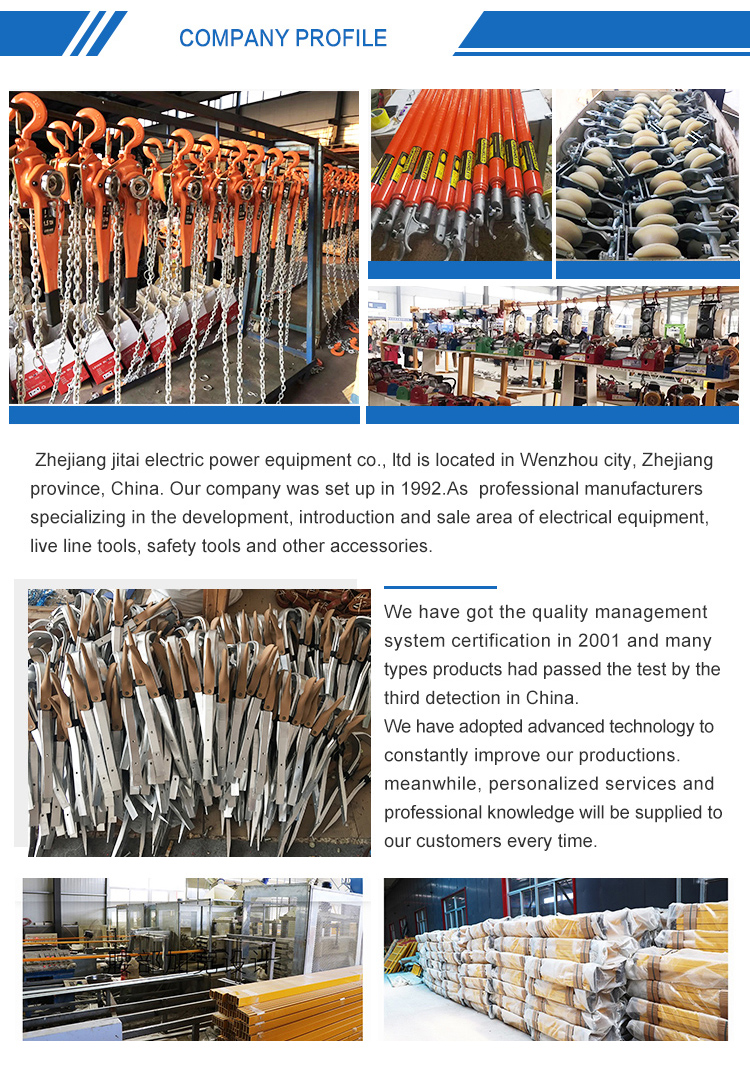
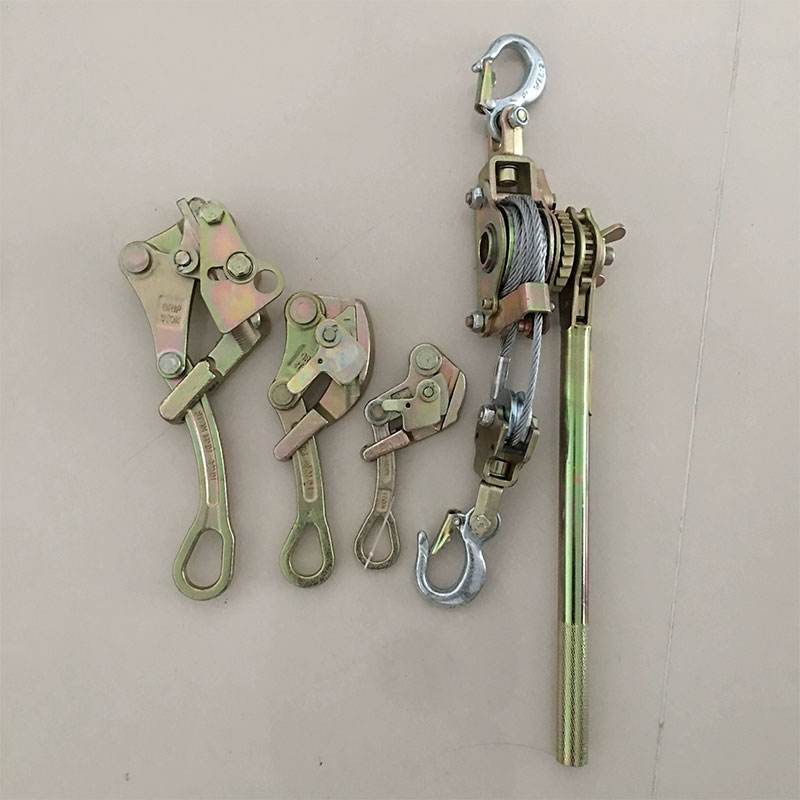
A tension puller, also known as a ratchet tensioner in Chinese and referred to as a Tension Puller in English, is an industrial tool used for tightening conductors in infrastructure projects such as power transmission, construction, highways, and bridges. It primarily consists of components including a wire clamp head, positioning hook, tensioning gear, and handle Structurally, it can be classified into three types: hand-operated (hand-driven) hoists, ratchet tensioners, and double-hook tensioners. Hand-operated hoists achieve cable tensioning or heavy load traction through manual operation, while ratchet tensioners are predominantly employed for stranding tensioning in power transmission line installations.
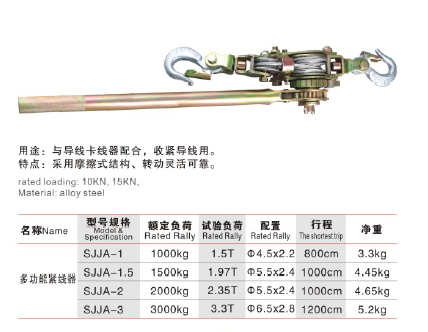
Product Specifications
Product no. | Specification | Steel wire rope length (MM) | Weight (KG) |
SJJA-1 | 1000KG*1M | 1210 | 3.2 |
SJJA-1.5 | 1500KG*1M | 1400 | 3.8 |
SJJA-3 | 3000KG*1M | 1900 | 4.2 |
Key Features & Highlights
Built for Controlled Power
Rated for 1.5 ton working capacity, balancing strength and safety
Progressive ratcheting mechanism prevents sudden load loss
Ideal for tensioning rather than aggressive pulling
Durable Steel Construction
High-strength steel frame resists bending under load
Hardened ratchet gear reduces wear in repetitive use
Corrosion-resistant surface treatment suitable for outdoor conditions
Ergonomic Manual Operation
Comfortable handle geometry reduces hand fatigue
Smooth ratchet engagement minimizes jerky motion
Compact size allows operation in confined spaces
Safety-Oriented Design
Mechanical lock prevents backsliding under tension
Predictable release action enhances operator confidence
Reduces dependency on unstable manual methods
Common Application Scenarios
Cargo securing on flatbeds and utility trailers
Wire, cable, and fencing tensioning
Equipment alignment and positioning
Light structural pulling and adjustment
Industrial maintenance and installation tasks
These scenarios share a common demand: precision over brute force. This ratchet delivers exactly that.
Performance & Reliability in Real Work Conditions
In real-world operations, tools are exposed to dust, moisture, uneven loads, and time pressure. This tension ratchet is engineered to perform consistently under non-ideal conditions.
The ratcheting system maintains stable engagement even when the operator pauses mid-cycle. This prevents load rollback, a critical safety concern in elevated or angled pulling tasks. The steel structure absorbs force without flexing, ensuring that applied effort translates directly into tension rather than wasted motion.
For teams working in shifts, this consistency reduces training time—operators quickly develop trust in how the tool behaves. Over months of use, reduced mechanical play means predictable performance, which directly lowers maintenance costs and replacement frequency.
Manufacturing Quality & Compliance Considerations
This product follows a manufacturing philosophy focused on repeatable precision rather than decorative features. Every structural component is selected to meet strength and durability requirements under rated loads.
Controlled material sourcing for steel components
Load-focused structural design rather than lightweight shortcuts
Compatibility with standard industrial safety practices
For B2B buyers, this means fewer surprises during audits, inspections, or long-term deployment.
Why Choose Us
B2B-Focused Manufacturing Experience
We understand that industrial buyers value consistency, documentation, and supply stability over novelty.
Stable Quality Across Batches
Products are manufactured under controlled processes to minimize variation.
OEM & Customization Support
We support branding, packaging, and specification adjustments for distributors and project-based buyers.
Long-Term Supply Reliability
Designed not just for one shipment, but for sustained procurement relationships.
Technical Communication Support
Clear specifications and responsive technical assistance help reduce pre-sale and post-sale friction.
Frequently Asked Questions
Q1: Is this ratchet suitable for lifting loads vertically?
This product is designed primarily for tensioning and controlled pulling. Vertical lifting should only be performed within safety guidelines and local regulations.
Q2: Can it be used outdoors long-term?
Yes. The steel construction and surface treatment support outdoor use, but regular inspection is recommended in harsh environments.
Q3: What industries typically use this product?
Logistics, construction, fencing, equipment installation, and industrial maintenance are common users.
Q4: Is OEM branding available?
Yes. Custom logos, packaging, and documentation can be supported for bulk and long-term orders.
Q5: How does it compare to automatic tensioning systems?
Manual ratchets offer better tactile control, lower maintenance, and higher reliability in environments without power access.