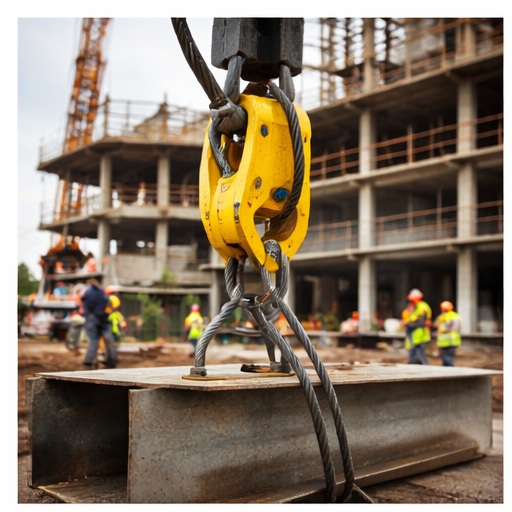
Heavy loads often seem impossible to move safely.
A snatch block can change that.Many people see a snatch block but do not understand its role.
This often leads to confusion during lifting or pulling work.In this article, you will learn what a snatch block is.
You will also understand how it works and when to use it.
What Is a Snatch Block?
A precise definition of a snatch block as a side-opening pulley used in lifting and pulling systems
A snatch block is a type of pulley designed for lifting and pulling systems where the line does not need to be fed from the end. It features a side-opening body that allows a rope or cable to be placed directly onto the sheave while the line remains in position. This design makes a snatch block suitable for temporary or changing setups where speed and flexibility matter. In practical use, the snatch block helps guide, redirect, or share load forces within a mechanical system. It is commonly used in combination with winches, hoists, or manual pulling tools to manage heavy loads more effectively.
Structural distinction between snatch blocks and closed or fixed pulleys
The main structural difference between a snatch block and a closed pulley lies in how the line is installed. Closed pulleys require the rope or cable to be threaded through the wheel before tension is applied. A snatch block opens from the side, allowing mid-line placement without disassembly. This distinction affects how each tool is used in the field. The table below highlights the structural differences that influence real-world operation.
Feature |
Snatch Block |
Closed or Fixed Pulley |
Side-opening body |
Yes |
No |
Mid-line installation |
Possible |
Not possible |
Setup flexibility |
High |
Limited |
Typical use |
Temporary or adjustable systems |
Fixed or permanent systems |
Why the side-opening design enables mid-line installation and operational flexibility
The side-opening design allows operators to install a snatch block anywhere along an existing rope or cable. This removes the need to disconnect hooks, eyes, or terminations at the line end. In field operations, this saves time and reduces handling risks. Mid-line installation also supports rapid adjustments when load direction or force requirements change. Because the snatch block can be added or removed without rebuilding the system, it adapts well to unpredictable working conditions. This flexibility is one reason the snatch block is favored in recovery, construction, and utility work.
How snatch blocks fit into the broader category of lifting and pulling tools
Snatch blocks belong to a wider group of lifting and pulling tools used to manage force, direction, and load control. Within this category, they function as force-management components rather than primary power sources. A snatch block does not create force on its own. Instead, it works alongside tools such as lever hoists, hand pullers, or winches. Its role is to redirect force paths or increase mechanical advantage within the system. When viewed this way, the snatch block acts as a connector between power and load, helping the overall system operate more efficiently and safely.
How Does a Snatch Block Work?
Fundamental pulley mechanics and force redirection explained clearly
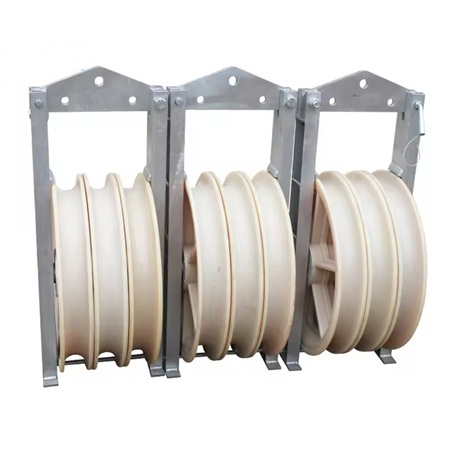
A snatch block works by guiding a rope or cable over a rotating sheave to change the direction of force. In basic pulley mechanics, the load follows the path of the line rather than the direction of the pulling device. This allows operators to pull around obstacles or align force with a safer anchor point. The snatch block does not generate power on its own. It manages how existing force is applied within a lifting or pulling system. By reducing friction at the turning point, it helps maintain smoother and more controlled movement under load.
How line reeving changes load paths and distributes force
Line reeving refers to how the rope is routed through a snatch block and connected back to the load or anchor. When the line passes through the block and returns toward the pulling source, the load path changes. Force is shared across multiple sections of rope instead of a single straight line. This distribution reduces the load carried by each line segment. As a result, the system can handle heavier loads without increasing the rated capacity of the pulling device.
Mechanical advantage: what increases, what decreases (force vs speed trade-off)
Mechanical advantage describes how a snatch block increases pulling force while reducing movement speed. When a single snatch block creates a two-part line, the available pulling force is roughly doubled. At the same time, the distance the load moves is reduced by half. This trade-off is predictable and can be summarized as follows:
System Change |
Result |
Added line segments |
Increased pulling force |
Increased force |
Reduced line speed |
Reduced speed |
Improved control |
Understanding this balance helps operators choose efficiency or power based on task needs.
Practical implications of mechanical advantage in real operations
In real operations, mechanical advantage allows smaller winches or manual tools to move heavier loads safely. It also improves control during slow, precise movements, such as positioning equipment or recovering vehicles. The reduced speed can be beneficial in confined or high-risk environments. However, it also means longer operation time and greater rope length requirements. Knowing how a snatch block affects force and speed helps users plan setups that match both safety and performance goals.
Key Components of a Snatch Block
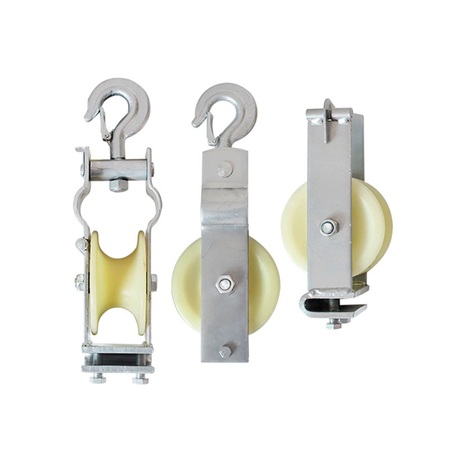
The sheave: load transfer, rope guidance, and friction considerations
The sheave is the rotating wheel inside a snatch block that supports the rope or cable under load. It transfers force from the pulling line to the load while guiding the line along a controlled path. The groove profile of the sheave must match the rope diameter to avoid pinching or uneven wear. Friction is another key factor. A well-machined sheave reduces resistance and heat buildup during operation. Lower friction improves efficiency and helps extend rope service life in repeated lifting or pulling tasks.
Cheek plates and opening mechanisms: function and structural role
Cheek plates form the outer frame of a snatch block and support the sheave during loading. In a snatch block, one or both plates can open to allow mid-line installation. The opening mechanism must lock securely once closed to maintain structural integrity. Under load, the cheek plates carry compressive and bending forces from the rope. Their thickness, material, and hinge design directly affect strength and resistance to deformation. A stable frame ensures the sheave stays aligned during operation.
Attachment points (hooks, shackles, eyes) and their influence on system stability
Attachment points connect the snatch block to anchors, slings, or pulling devices. Common options include hooks, shackles, and fixed eyes. Each option affects how the block aligns under load. Shackles and eyes provide stable, centered connections that reduce side loading. Hooks allow faster setup but may introduce movement if not properly seated. The choice of attachment point influences load distribution, alignment, and overall system stability. Proper selection helps keep the snatch block oriented correctly during force application.
How component design affects durability and safe operation
The design of each component contributes to how a snatch block performs over time. Material quality affects resistance to wear, corrosion, and fatigue. Precision in sheave and plate alignment reduces uneven stress on the rope and frame. Secure locking mechanisms prevent accidental opening during use. When components work together as intended, the system operates smoothly and predictably. Thoughtful design supports safer operation and consistent performance in demanding lifting and pulling environments.
Why Use a Snatch Block?
Situations where increasing pulling force is necessary without changing equipment
A snatch block is useful when existing pulling equipment reaches its force limit. In these cases, upgrading a winch or hoist may not be practical on site. By adding a snatch block to the line, the system can increase effective pulling force through mechanical advantage. This approach allows operators to move heavier loads using the same equipment. It is especially valuable in temporary or remote operations where tool changes are limited. The ability to increase force without new machinery improves flexibility and response time.
When directional redirection is required due to obstacles or site constraints
Many work environments prevent a straight-line pull. Obstacles, terrain, or structural elements often force a change in load direction. A snatch block allows the pulling line to be redirected toward a safer or more effective angle. This redirection helps align force with stable anchor points. It also reduces side loading on winches and ropes. In confined spaces, directional control improves both safety and precision during lifting or pulling.
How snatch blocks help reduce localized stress on ropes and anchors
Direct-line pulling concentrates force at a single point. This can increase wear on ropes, anchors, and attachment hardware. A snatch block spreads the load across multiple line segments. This distribution reduces peak stress on any single component. Lower localized stress helps extend rope service life and protects anchor points. It also lowers the risk of sudden failure during high-load operations.
Operational benefits compared to direct-line pulling
Compared to direct-line pulling, a snatch block offers greater control over force and movement. Reduced line speed allows smoother load handling. Redirected force paths improve alignment and stability. The table below summarizes key operational differences.
Aspect |
Direct-Line Pulling |
Snatch Block System |
Pulling force |
Limited to equipment rating |
Increased through line sharing |
Direction control |
Fixed |
Adjustable |
Load stress |
Concentrated |
Distributed |
Movement speed |
Faster |
Slower, more controlled |
When a Snatch Block Is — and Is Not — Appropriate
Scenarios where a snatch block provides clear functional value
A snatch block is most effective when force direction or capacity must change without replacing equipment. It adds value in recovery, lifting, or pulling tasks where loads exceed direct-line capability. Common scenarios include offset pulls, confined work areas, and controlled heavy lifts. In these cases, the snatch block helps manage force paths and improve control. It also supports safer operations by allowing flexible anchor placement. When load conditions vary, this adaptability becomes a practical advantage.
Situations where a snatch block offers little or no advantage
There are situations where adding a snatch block does not improve performance. Straight-line pulls with sufficient equipment capacity often gain little benefit. If space is limited and no redirection is needed, the system may become unnecessarily complex. Light loads may not justify the added friction and setup time. In these cases, direct pulling provides faster results with fewer components. Understanding these limits helps avoid inefficient or redundant setups.
Operational limits related to space, setup complexity, and efficiency
Every snatch block setup requires additional rope length and physical clearance. Limited space can restrict proper line routing and anchor placement. More components also increase setup time and inspection needs. Efficiency may decrease due to reduced line speed and added friction. These limits should be considered before choosing a snatch block. The table below summarizes common constraints.
Constraint |
Impact on Operation |
Limited space |
Restricts line routing |
Added components |
Increases setup time |
Reduced speed |
Slows task completion |
Extra rope length |
Requires planning |
Common misconceptions about “always doubling” capacity
A common belief is that a snatch block always doubles pulling capacity. In practice, results depend on configuration and line reeving. Friction, rope condition, and anchor strength all affect performance. Not every setup creates a two-part line. Some configurations only redirect force without increasing capacity. Recognizing these factors helps users apply a snatch block correctly and avoid unsafe assumptions.
Common Applications of Snatch Blocks
Construction and industrial lifting tasks
In construction and industrial settings, a snatch block is used to show and manage heavy loads during lifting or repositioning. It helps redirect pulling force around structural elements such as beams or equipment. This allows crews to work within tight spaces without relocating primary lifting devices. A snatch block also supports controlled movement when aligning materials or machinery. Its ability to share load across multiple line segments improves stability during complex lifts.
Utility and public service operations requiring controlled load movement
Utility and public service work often involves unpredictable environments. Crews may need to move equipment around poles, trenches, or existing infrastructure. A snatch block allows controlled redirection of force without disturbing nearby systems. It helps maintain safe distances between workers and moving loads. In these operations, precise load control matters more than speed. The snatch block supports careful positioning during installation or maintenance tasks.
Rescue and emergency scenarios involving heavy or awkward loads
Rescue and emergency teams rely on controlled force application. Loads are often irregular, unstable, or partially obstructed. A snatch block helps manage direction and speed during extraction or stabilization. It allows responders to position pulling devices away from hazardous zones. Slower, controlled movement reduces risk to both personnel and equipment. This controlled approach is critical in time-sensitive but high-risk scenarios.
Differences in application demands across these environments
Each application places different demands on a snatch block setup. Construction work prioritizes load alignment and repeatability. Utility operations focus on precision and safety near live systems. Rescue scenarios emphasize control and adaptability under pressure. The table below highlights key differences.
Environment |
Primary Demand |
Setup Focus |
Construction |
Stability |
Load alignment |
Utility services |
Precision |
Controlled movement |
Rescue operations |
Safety |
Adaptability |
Understanding these differences helps users apply a snatch block effectively in varied working conditions.
Conclusion
A snatch block is a simple tool designed to redirect force and manage heavy loads.
It helps lifting and pulling systems work with greater control.Understanding how it works, its limits, and proper use reduces risk.
Correct application improves efficiency and protects equipment.Manufacturers like JITAI Electric Power Equipment Co., Ltd. provide snatch blocks built for durability.
Their products support safe and reliable operations in demanding work environments.
FAQ
Q: What role does a snatch block play in industrial lifting systems?
A: A snatch block redirects force or increases mechanical advantage in controlled lifting and pulling operations.
Q: When should a snatch block be used instead of a direct-line pull?
A: A snatch block is used when load direction must change or available pulling force is insufficient.
Q: How does a snatch block affect efficiency and line speed?
A: A snatch block increases force capacity but reduces line speed due to mechanical advantage trade-offs.
Q: What maintenance factors matter for long-term snatch block use?
A: Regular inspection of the snatch block reduces wear, manages friction, and supports safe operation.


