Introduction
Pulley blocks and snatch blocks are often confused.
Their designs and uses differ significantly in lifting.
In this article, you will learn how a snatch block works and when to use each type.
The Role of Blocks in Lifting and Pulling Systems
How blocks contribute to force control and efficiency
Blocks play a crucial role in lifting and pulling operations by redirecting applied force along a more manageable path. Instead of relying on direct manual effort, blocks allow operators to:
● Change the line of pull for smoother and more controlled movement
● Reduce friction between rope and sheave, protecting both rope and equipment
● Distribute load forces evenly across multiple sections of rope
In addition, blocks work seamlessly with systems such as winches, hoists, and hand-operated pulling tools. This integration enables:
Equipment | Benefit with Blocks |
Winches | Improved load control and reduced effort |
Hoists | Precise positioning of heavy loads |
Hand Pullers | Enhanced mechanical advantage and operator safety |
These benefits ensure that even substantial weights can be handled safely while minimizing physical strain on operators.
Typical operating environments and constraints
Blocks are commonly used in challenging environments, including:
● Construction sites with uneven terrain
● Utility maintenance zones where access is limited
● Emergency response operations with dynamic load conditions
Key considerations for these environments include:
● Predictability: Consistent performance reduces risk of accidents
● Adaptability: The ability to adjust quickly to changing load directions
● Durability: Blocks must withstand dust, moisture, and temperature variations
Operators must understand these constraints to deploy blocks effectively. Choosing the right block type and configuration is critical for maintaining safety and operational efficiency.
Position of snatch blocks within lifting and pulling tool systems
Snatch blocks represent a specialized category of lifting and pulling tools. Their defining feature—a hinged side-opening plate—allows rope insertion mid-line, which provides:
● Faster setup in dynamic operations
● Flexibility to reroute loads without unthreading the entire rope
● Compatibility with other tools like lever hoists and hand pullers
Feature | Snatch Block | Standard Pulley Block |
Rope Insertion | Mid-line insertion possible | Must thread from rope end |
Setup Speed | Quick and adaptable | Slower setup |
Ideal Use | Temporary field operations | Stationary lifting systems |
Within industrial and utility contexts, Snatch Blocks from JITAI Electric Power Equipment Co., Ltd. are often integrated into multi-tool setups. They support complex rigging configurations while maintaining load control and efficiency, making them ideal for both temporary and controlled lifting tasks.
What Is a Pulley Block?
Basic structure and working principle of a pulley block
A pulley block consists of a grooved wheel mounted inside a fixed, enclosed housing. The side plates are permanently closed, requiring the rope or cable to be threaded from one end through the axle. This design ensures the rope remains securely guided along the sheave during lifting or pulling operations. The fixed housing provides durability and stability under load, making it suitable for repetitive or high-capacity applications. In operation, the rope moves over the sheave to change direction or reduce the force needed, allowing operators to lift heavy objects more efficiently while maintaining control.
Typical pulley block applications
Pulley blocks are commonly used in stationary lifting systems where the load direction and configuration remain consistent. Typical scenarios include factory hoists, construction cranes, and fixed rigging systems where repetitive lifting or guiding of materials is required. They are also utilized in marine or industrial settings where a stable and predictable lifting path is necessary. The consistent operation of a pulley block allows teams to perform tasks reliably without needing to adjust the setup for each lift, which is critical in high-volume or continuous operations.
Practical limitations of pulley blocks
Despite their reliability, pulley blocks have limited flexibility in dynamic environments. The requirement to thread the rope from the end of the line can make setup time-consuming, particularly for long cables or ropes with pre-attached terminations. They are less suitable for field operations where lifting points or load directions frequently change. Additionally, the fixed housing design makes pulley blocks heavier and less portable compared to tools like a snatch block. These constraints highlight why pulley blocks are better suited for permanent or stationary applications rather than mobile or rapidly changing work sites.
What Is a Snatch Block?
Snatch block definition and distinguishing design
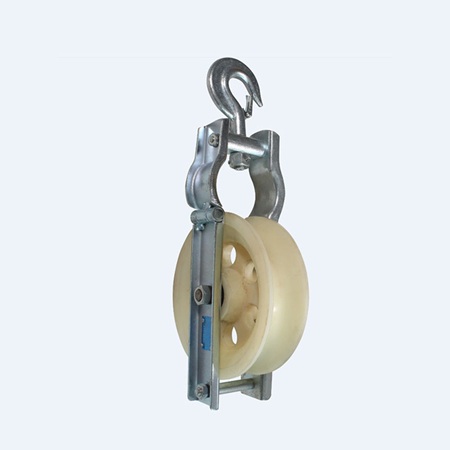
A snatch block is a type of pulley designed with a swing-open side plate that allows rope or cable insertion mid-line. This hinged design eliminates the need to thread the rope from the end, significantly reducing setup time during field operations. The sheave rotates around a central axle, guiding the rope smoothly while distributing load forces evenly. This configuration enhances adaptability, enabling operators to adjust the lifting path or pulling direction quickly without disassembling existing rigging. The design also maintains stability and load control under varying tension, making the snatch block suitable for dynamic lifting and pulling environments.
What a snatch block is used for
Snatch blocks are used primarily for temporary lifting, pulling, and recovery operations where flexibility and speed are critical. They allow operators to handle situations where rope ends are inaccessible or already terminated, such as when using pre-anchored cables or long utility lines. In addition, they facilitate mechanical advantage setups by doubling or redirecting the pulling force of winches or hoists. The ability to quickly add or remove the rope from the sheave reduces downtime and supports continuous operations in emergency response, construction, or industrial maintenance scenarios.
Snatch block applications in utilities, construction, and rescue
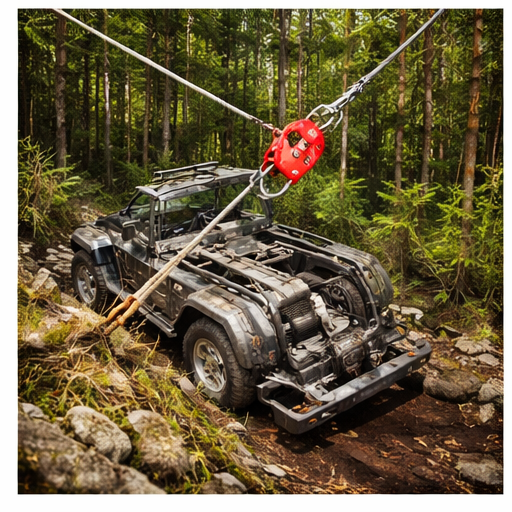
In utilities, snatch blocks assist with lifting and positioning heavy equipment on poles or towers and managing tension in transmission lines. In construction, they help redirect heavy loads around obstacles, improve winch pulling efficiency, and support complex rigging setups. During rescue operations, snatch blocks enable rapid vehicle recovery, tree removal, or debris handling, providing controlled force distribution in time-sensitive situations. Across these sectors, snatch blocks enhance operational efficiency, maintain load stability, and reduce manual effort while ensuring safety in challenging or constrained environments.
Snatch Block vs Pulley Block: Key Differences Explained
Structural differences and rope installation
The key structural distinction between a snatch block and a pulley block lies in their side plate design.
● Snatch block: Swing-open side plate allows mid-line rope insertion.
● Pulley block: Permanently closed housing requires threading the rope from the end.
Feature | Snatch Block | Pulley Block |
Side Plate | Hinged, opens for rope insertion | Fixed, fully enclosed |
Rope Setup | Mid-line insertion possible | Must thread from rope end |
Setup Time | Fast and flexible | Slower, requires end access |
This design difference directly affects setup efficiency and system flexibility. Snatch blocks allow quick adjustments in the field, while pulley blocks maintain secure, fixed guidance in static applications.
Efficiency in changing load directions
Snatch blocks provide superior efficiency when redirecting loads in dynamic environments.
● Quick reconfiguration: Rope can be rerouted without disassembling the system.
● Multiple angles: Supports directional changes in construction, utility, or rescue scenarios.
● Minimal downtime: Reduces time spent adjusting rigging compared to pulley blocks.
In contrast, pulley blocks are better suited for tasks where the lifting path remains constant, offering stability but limited adaptability.
Mechanical advantage and force distribution
Snatch blocks are often used to enhance pulling power and optimize load distribution:
1. Double-line setup: Splits load between two segments of rope, reducing tension per line.
2. Multi-line configuration: Further increases pulling capacity for heavier loads.
3. Load protection: Reduces strain on equipment and rope, prolonging service life.
Pulley blocks can also provide mechanical advantage but are less adaptable in temporary or rapidly changing setups. Using a snatch block, operators can dynamically configure lines to achieve optimal force distribution.
Portability and adaptability in field use
Snatch blocks excel in field operations where portability and speed are essential:
● Lightweight and compact for mobile lifting tasks.
● Quick rope insertion enables rapid deployment across multiple lifting points.
● Suitable for rescue, off-road recovery, and temporary utility work.
Pulley blocks, being heavier and requiring full rope threading, remain practical in permanent or semi-permanent installations. Their stability and reliability make them ideal for static lifting systems, such as factory hoists or fixed rigging.
Safety, Load Ratings, and Material Considerations
Understanding working load limits and safety margins
Working load limits (WLL) are critical for both pulley blocks and snatch blocks to ensure safe operation. Exceeding these limits can cause rope failure, equipment damage, or operator injury. A snatch block doubles the line tension when used in a multi-line configuration, effectively increasing forces on the system. Operators must account for these amplified loads and select blocks rated appropriately. Proper understanding of WLL allows crews to distribute weight safely, maintain control, and prevent overloading during lifting or pulling tasks.
Material strength and durability requirements
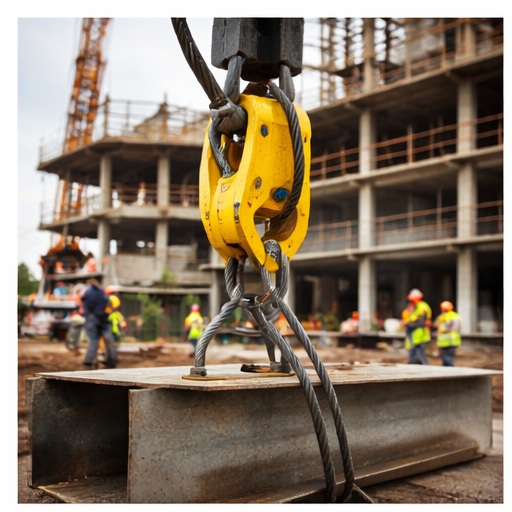
The materials used in snatch blocks determine their long-term performance and reliability. High-grade steel or alloy sheaves and reinforced housings provide resistance to deformation and wear under heavy loads. Components must endure repeated stress, environmental exposure, and friction from rope movement. JITAI Electric Power Equipment Co., Ltd. emphasizes strength and reliability in their snatch blocks, ensuring that the tools withstand harsh conditions while maintaining smooth operation. Choosing durable materials reduces maintenance needs and enhances operator confidence in the equipment.
Inspection and common safety risks
Regular inspection of snatch blocks is essential to maintain safe operation. Key risks include overloading, using improper rope sizes, and operating with worn or damaged sheaves. Crews should check for signs of abrasion, cracks, or side plate misalignment before each use. Neglecting inspections can lead to accidents, equipment failure, or compromised load control. Following a consistent inspection schedule, combined with proper maintenance, ensures snatch blocks perform reliably and safely in both lifting and rescue scenarios.
Choosing Between a Pulley Block and a Snatch Block
Decision factors based on task characteristics
When selecting between a pulley block and a snatch block, the nature of the task is critical. Consider whether the operation is stationary or dynamic:
● Stationary operations: Fixed lifting or hoisting systems with consistent load paths benefit from pulley blocks, which provide stability and reliability.
● Dynamic operations: Field operations where load directions frequently change require snatch blocks for quick setup and mid-line rope insertion.
Additionally, evaluate the frequency of configuration changes. Snatch blocks allow fast adjustments, while pulley blocks require threading from the rope end, making repeated reconfigurations slower and less practical.
Common misconceptions and selection mistakes
Operators sometimes assume pulley blocks and snatch blocks are interchangeable, which can compromise efficiency and safety. Common errors include:
● Misunderstanding mechanical advantage: Using a pulley block in a situation requiring a snatch block may limit load distribution and pulling capacity.
● Ignoring load ratings: Selecting a block without checking its working load limit (WLL) can lead to equipment stress or failure.
Recognizing these misconceptions ensures safer rigging and more effective lifting operations.
Matching the right block to real-world scenarios
Choosing the correct block depends on the specific requirements of each scenario:
● Pulley blocks are sufficient when the lifting path is fixed, loads are repetitive, and setup adjustments are minimal.
● Snatch blocks provide clear operational advantages in temporary setups, off-road recovery, rescue operations, or utility work where speed, flexibility, and mechanical advantage are needed.
By evaluating task conditions, load characteristics, and environment, operators can select the block that optimizes efficiency, safety, and control in real-world applications.
Conclusion
Pulley blocks and snatch blocks differ in design and use.
Snatch blocks offer mid-line rope insertion and flexible operation.
Application context guides the choice of block.
JITAI Electric Power Equipment Co., Ltd. provides reliable snatch blocks that enhance efficiency and safety.
FAQ
Q: What is a snatch block used for in industrial lifting?
A: A snatch block redirects rope mid-line, enabling mechanical advantage and flexible load handling in professional lifting operations.
Q: When should a snatch block be chosen over a pulley block?
A: Choose a snatch block when load direction changes frequently or rope ends are inaccessible, improving setup efficiency.
Q: How does a snatch block affect mechanical advantage?
A: Using a snatch block can double line tension, reducing required pulling force while distributing load across ropes.
Q: What are the limitations of a snatch block?
A: Snatch blocks may reduce line speed in multi-line setups and require careful inspection to prevent overloading.
Q: How do maintenance and lifecycle considerations impact snatch block use?
A: Regular inspection and high-quality materials extend the snatch block’s service life and maintain operational safety.


