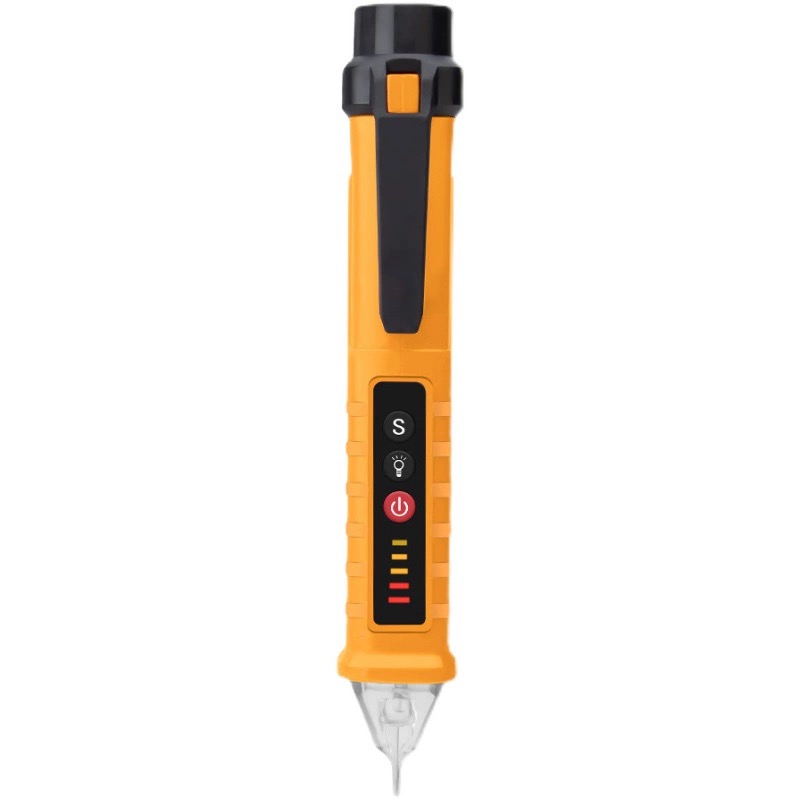
Field operations frequently stall when technicians encounter "phantom voltage" on utility poles or shared grounds. You might hear your tester beep frantically, but you feel no shock. Standard non-contact testers often misinterpret high-interference environments. They easily trigger false positives. Over time, these false alarms lead to dangerous alert fatigue. Crews might start making assumptions and brush off legitimate, lethal warnings.
Choosing between a foreign voltage detector and a standard tester is critical for safety. It requires understanding their distinct internal filtering capabilities. You must also evaluate their intended operational environments and absolute limits of detection. The right choice prevents workflow delays and catastrophic workplace accidents. In this guide, we explore how these tools process signals, where they excel, and why complex utility setups demand specialized equipment.
Key Takeaways
Standard voltage testers rely on simple capacitive coupling, making them ideal for residential diagnostics but overly sensitive to induced voltage in complex utility setups.
Foreign voltage detectors utilize advanced circuitry (like 20Hz notch filters) to block telecommunications signals and RF interference, isolating genuine high-current AC hazards.
Environmental variables—such as shared grounding between telecom and power lines—demand industrial-grade FVDs equipped with operator grounding cords to verify authentic threats.
Neither tool measures exact voltage; both act as preliminary screening devices that must be followed by proper Lockout/Tagout (LOTO) and multimeter verification procedures.
The Core Problem: Why "Phantom Voltage" Creates Dangerous Confusion
Electrical and telecommunication fields frequently overlap. This overlap creates hazardous working conditions for linemen and technicians. A primary source of confusion in these environments involves stray and phantom voltage.
Defining Stray and Phantom Voltage
Overhead high-voltage lines project invisible electromagnetic fields. These fields constantly expand and collapse. When de-energized cables run parallel to these power lines, they capture this energy. The magnetic field induces a measurable voltage in the completely dead wire. We call this phenomenon phantom voltage. It behaves like a ghost in the system. The wire contains voltage but lacks the amperage to cause fatal harm. However, basic testing tools cannot tell the difference between harmless induction and a lethal power fault.
The Risk of Alert Fatigue
Alert fatigue creates a massive safety liability. Highly sensitive standard testers frequently trigger positive readings on harmless utility poles. A technician might register 30V to 70V on a wooden pole. They quickly learn the pole poses no physical threat. After dozens of false alarms, the operator stops trusting the tool. They might eventually ignore a genuine high-current fault. This "cry wolf" scenario directly causes severe workplace injuries.
Cross-System Grounding Realities
Modern utility infrastructure often shares the exact same physical space. Telecommunications lines, broadband cables, and municipal power grids co-exist. Workers sometimes bond telecom ground wires directly to utility down-grounds. This shared infrastructure introduces stray voltage into areas where workers expect zero energy. Standard tools misinterpret these cross-system grounding loops. They ring out danger continuously. Crews lose hours trying to trace non-existent faults.
Standard Voltage Testers (NCVTs): Strengths and Critical Limitations
A standard non-contact Voltage Detector provides quick, preliminary diagnostics. It serves as a staple in every electrician's pouch. However, you must understand how it operates to avoid dangerous mistakes.
Operational Mechanism
Standard NCVTs rely on a baseline principle called capacitive coupling. The tool essentially acts as one half of a capacitor. The live wire acts as the other half. The air and the wire insulation serve as the dielectric medium between them. When you place the tester near an energized AC conductor, an electric field completes the circuit. The device detects this field and triggers a visual or audio alert. It detects the mere presence of an electric field, not the actual voltage level.
Optimal Use Cases
These tools shine in controlled, low-interference environments. You should use them for indoor commercial or residential applications. They excel at identifying live outlets quickly. You can easily trace simple wire runs behind drywall. They help you pinpoint breaks in extension cords or lighting circuits. In these isolated indoor scenarios, basic NCVTs offer unparalleled speed and convenience.
Where They Fail (The False Negative/Positive Trap)
Standard testers struggle outside controlled environments. You must watch out for specific failure points:
False positives: Hyper-sensitivity plagues consumer models. Nearby metal conduits, fluorescent lights, or running computers easily trigger false alarms.
False negatives: This represents the most dangerous flaw. Thick wire insulation completely blocks the electric field. Dead batteries render the device silent. Furthermore, if you isolate yourself from the ground—like standing on a dry wooden ladder—the capacitive circuit breaks. The tool stays quiet while you touch a live 277V wire.
UI/UX flaws: Consumer-grade models often feature poor interface designs. They might use a single-color LED for both "power on" and "hazard detected." This confusing feedback forces operators to guess the device state.
Foreign Voltage Detectors (FVDs): Engineered for Complex Utility Environments
Utility linemen and telecom technicians face unpredictable hazards. They require industrial-grade hazard isolation. Foreign voltage detectors provide a massive leap in diagnostic reliability.
Advanced Signal Processing
FVDs utilize highly sophisticated internal circuitry. They feature high-impedance operational amplifiers (op-amps). These op-amps process faint signals without drawing current from the source. FVDs also employ logarithmic response bar graphs. A standard tester offers binary feedback—it merely turns on or off. An FVD provides granular resolution. The graded display helps you track the exact proximity and strength of the voltage source.
Targeted Filtering Capabilities
Complex environments bombard sensors with electronic noise. FVDs use specialized hardware filters to ignore this noise. They incorporate 200Hz low-pass filters to block high-frequency interference. More importantly, they feature precise 20Hz notch filters. Telecom lines frequently carry telephone ringing signals. These signals operate around 20Hz. A standard tester flags a ringing phone as a lethal hazard. The FVD explicitly ignores the 20Hz ring and broadcast radio frequencies. It isolates only genuine high-current AC faults operating at 50Hz or 60Hz.
The Operator Grounding Protocol
Static electricity causes major diagnostic headaches outdoors. The human body acts as a massive capacitor. You accumulate static charge just by walking around. FVDs introduce a critical field test to combat this issue. Operators plug a ground cord directly into the tool. You hold the cord to bleed off your own static body capacitance. If the alarm stops immediately, the initial reading was harmless environmental static. If the alarm continues, you have found a physically energized hazard. This grounding protocol conclusively distinguishes between ghosts and real threats.
Head-to-Head Evaluation: FVD vs. Standard Voltage Tester
Understanding the fundamental differences helps you outfit your team properly. Below is a detailed evaluation comparing both device categories.
Accuracy & Interference Rejection
Standard testers detect the simple presence of any AC electric field. They remain highly susceptible to capacitive coupling interference. They cannot differentiate between a lethal 480V fault and a harmless 40V induced field.
FVDs employ active analog filtering. They isolate the specific frequencies associated with dangerous AC power faults. They actively reject ambient RF noise and telecom signals. This ensures operators only respond to authentic threats.
Physical Ergonomics & UI Feedback
Standard testers typically feature slim, pen-like profiles. Their probe geometries must fit deep into narrow receptacles. They rely heavily on binary audio or visual cues.
FVDs feature rugged, robust housings. They prioritize graded acoustic signals. As you move closer to the hazard, the pitch changes. They utilize multi-step LED bar graphs to indicate field strength. This dynamic feedback helps technicians pinpoint the exact location of a fault on a crowded pole.
Safety Compliance and CAT Ratings
Most standard testers reach CAT IV 600V or CAT III 1000V ratings. However, consumer models often fall short in industrial durability. They shatter easily if dropped from a bucket truck.
Manufacturers build FVDs for extreme outdoor utility compliance. They withstand severe drops, heavy rain, and freezing temperatures. Many specialized FVDs incorporate EX-proof (ATEX) standards. This makes them perfectly safe for hazardous, explosive, or highly combustible environments.
Summary Comparison Chart
Feature | Standard Voltage Tester | Foreign Voltage Detector (FVD) |
Detection Mechanism | Basic capacitive coupling | Filtered capacitive coupling with op-amps |
Signal Filtering | None (detects all fields) | 200Hz low-pass, 20Hz notch filter |
User Feedback | Binary (On/Off LED & Beep) | Logarithmic bar graph, graded audio |
Operator Grounding | Not available | Dedicated ground cord included |
Best Use Case | Indoor residential / commercial | Outdoor telecom / utility poles |
Procurement & EHS Considerations: Which Tool Fits Your Crew?
Equipment selection directly impacts your team's safety record. Environmental Health and Safety (EHS) managers must match the correct tool to the specific trade.
Aligning Tool to Trade
You must specify FVDs as mandatory equipment for external crews. Telecom line workers, utility linemen, and broadband technicians handle shared-pole infrastructure daily. They operate in high-interference zones. A standard tester will only frustrate them.
Conversely, you should recommend standard testers strictly for facility electricians. Indoor maintenance crews working on localized panels do not need heavy-duty notch filters. A slim, reliable non-contact pen perfectly suits indoor receptacle testing and localized troubleshooting.
Training & SOP Requirements
Merely buying the right tool solves only half the problem. You must address the false sense of security that non-contact tools create. Implement rigorous Standard Operating Procedures (SOPs). Require these mandatory steps:
Live-Dead-Live Testing: Crews must test the voltage detector on a known live circuit before use.
Target Verification: Test the target area carefully.
Post-Test Verification: Test the tool on the known live circuit again. This proves the tool did not fail during the inspection.
Remind your crew that absence of a beep does not guarantee safety. Environmental factors easily mask real voltage.
Complementary Tooling
Neither tool replaces a True RMS digital multimeter. FVDs and NCVTs act strictly as preliminary screening devices. They tell you if a hazard might exist. They do not establish zero-energy states. When performing Lockout/Tagout (LOTO) procedures, operators must use a multimeter or a specialized two-pole tester. Only physical contact tools provide definitive voltage measurement.
Conclusion
Transitioning from a standard tester to a foreign voltage detector marks a major shift. You move from basic continuity checking to industrial-grade hazard isolation. Phantom voltages and cross-grounding loops routinely confuse standard pens. They create dangerous alert fatigue in utility environments. FVDs solve this through advanced filtering and active operator grounding.
Equipment selection must align directly with the complexity of your electrical environment. Assess your work zones carefully. Equip indoor electricians with high-quality standard testers. Mandate FVDs for any crew tackling outdoor, shared-utility infrastructure. Finally, back up every purchase with rigorous EHS training. Teach your teams to verify tools continuously and rely on multimeters for definitive LOTO compliance.
FAQ
Q: Why does my voltage detector beep when touching a wooden utility pole?
A: Moisture inside the wood conducts electromagnetic fields generated by overhead high-voltage lines. This creates a measurable electric field, known as phantom voltage. Over-sensitive non-contact testers easily detect this ambient field. They alert you to a hazard, even though the pole itself cannot deliver a dangerous current. Using an advanced filtering device eliminates these false alarms.
Q: Can a foreign voltage detector give a false negative?
A: Yes. False negatives happen rarely, but they are possible. Dead batteries or physical sensor damage prevent the device from operating. Also, specific grounded metallic conduits can shield the AC voltage entirely. The electric field cannot penetrate the grounded shield. Always verify your device on a known live circuit before and after testing the target area.
Q: What is the difference between a standard non-contact tester and a two-pole voltage tester?
A: A non-contact tester detects ambient electric fields for preliminary screening. It does not require direct wire contact. A two-pole tester physically contacts the conductors to close a circuit. You must use a two-pole tester or multimeter to legally verify a zero-energy state. Non-contact pens only provide a quick warning, not a definitive measurement.
Q: Why do foreign voltage detectors have grounding cords?
A: Grounding cords allow operators to discharge their own built-up body capacitance. Human bodies accumulate static electricity. This static can trigger a false positive. If the alarm stops after you ground yourself, the initial reading was harmless static. If the alarm continues, the equipment remains dangerously energized. The cord decisively separates environmental noise from lethal hazards.


