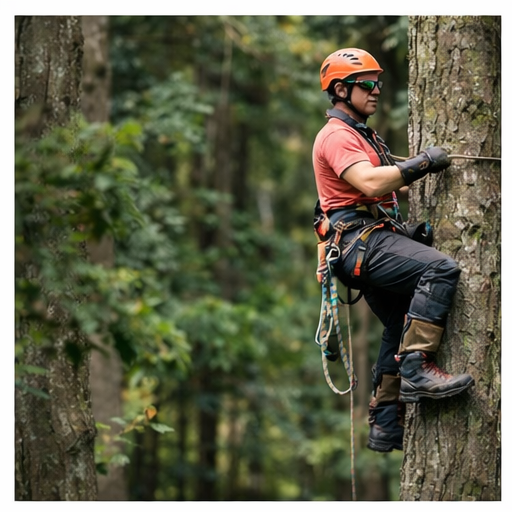
Introduction
Are tree climbing spikes truly safe, or just widely accepted?
Many professionals still debate their real risks.This article examines Tree Climbing Spikes from two angles.
Climber safety and tree health are not the same issue.You will learn who uses them, why risks exist,
and how proper context changes safety outcomes.
What Are Tree Climbing Spikes and How Are They Used?
Basic structure and working principle of Tree Climbing Spikes
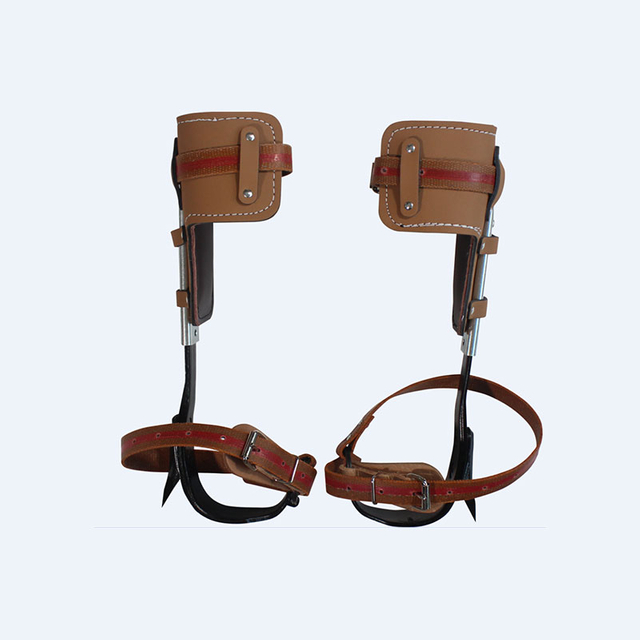
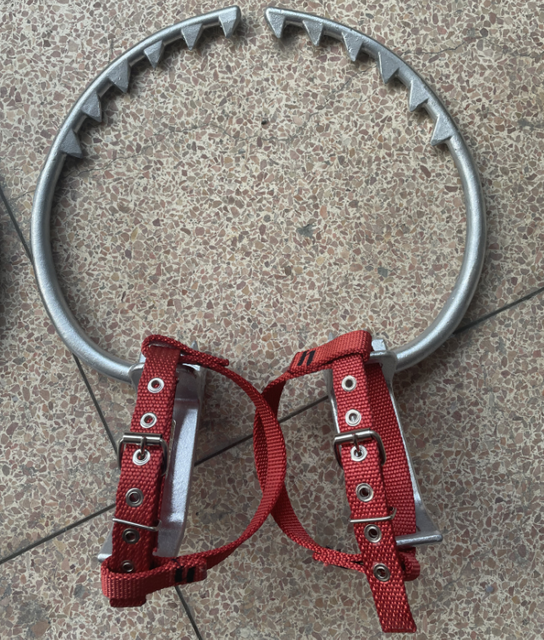
Tree Climbing Spikes are mechanical climbing aids designed to transfer body weight into a vertical support point on the tree trunk. Their structure allows the climber to maintain stable contact while ascending or repositioning. The core components work together to distribute load and control movement, reducing reliance on arm strength alone. The main structural elements include:
● Gaffs: sharp metal points that penetrate the outer bark and anchor into the wood
● Shanks: rigid frames that connect the gaffs to the lower leg
● Straps and pads: systems that secure the spikes to the climber’s calf and foot
● Load transfer path: body weight moves from the leg into the gaff, then into the trunk Vertical support comes from controlled penetration into wood fibers. When the gaff enters the trunk at the correct angle, it resists downward force and prevents slipping. Stability depends on wood density, bark thickness, and proper foot placement. This working principle explains why technique and surface conditions directly affect safety.
Common terminology and classifications
Tree Climbing Spikes are known by several terms, depending on region and profession. While the names vary, the function remains consistent across applications. Understanding terminology helps clarify discussions about safety, training, and equipment selection. Common terms include:
● Tree spikes: general industry term for spikes used on living or dead trees
● Climbing spurs: widely used in arboriculture and utility work
● Gaffs: the actual penetrating spike, often used to describe the whole tool These tools differ from pole climbers and concrete climbing tools. Pole climbers usually have shorter gaffs designed for uniform materials like utility poles. Concrete climbing tools rely on fixed steps or surface features rather than penetration. Tree Climbing Spikes require variable angle control because bark and wood conditions change with each step.
Typical professional use cases
Tree Climbing Spikes are used in specific professional contexts where vertical access is required and alternative methods are limited. Their use is task-driven rather than routine, and safety depends on matching the tool to the objective. Common professional scenarios include:
● Tree removal operations where long-term tree health is no longer a concern
● Emergency access and rescue situations requiring rapid ascent
● Utility and line-clearance work near conductors or restricted access zones In these cases, Tree Climbing Spikes provide fast trunk access and reliable positioning. However, their effectiveness relies on experience, surface assessment, and proper attachment systems. This explains why their use is often restricted to trained personnel and defined operational conditions.
Are Tree Climbing Spikes Safe for the Climber?
Tree climbing spikes safety risks for users
Tree Climbing Spikes provide direct vertical support, but that support depends on consistent contact with the wood surface. One primary risk is loss of purchase, commonly known as a gaff-out. This occurs when the spike slips out of the trunk under load, often without warning. Gaff-outs are influenced by bark condition, wood density, and foot placement accuracy. Another key risk comes from lower-limb strain and repeated impact forces. Because body weight transfers directly through the legs into the spikes, joints absorb repeated stress during ascent and descent. Over time, this load pattern can reduce stability and increase fatigue-related errors.
Key risk sources include:
● Uneven or decayed wood surfaces
● Incorrect spike angle during placement
● Repeated high-load steps without rest
Are tree climbing spikes dangerous for inexperienced users?
Tree Climbing Spikes demand more lower-body control than many rope-based systems. Inexperienced users often underestimate the balance and coordination required to maintain stable contact with the trunk. Small posture errors can quickly affect load distribution and foot security. Improper technique increases fall risk because beginners may rely on spikes as their only support. This often leads to shallow penetration, uneven stance width, or delayed corrective movements. Without experience, users may not recognize early signs of instability.
Common beginner challenges:
● Difficulty controlling foot rotation and angle
● Overloading one leg instead of balanced weight transfer
● Slow reaction to surface changes
Common accident scenarios
Accidents involving Tree Climbing Spikes tend to follow repeatable patterns rather than random failures. One frequent scenario involves incorrect gaff angle. If the spike enters the trunk at an unsuitable angle, it may not seat securely and can disengage under load. Another scenario involves missing or poorly positioned secondary attachment systems. Without a properly tensioned lanyard or rope, a single spike failure can lead to full loss of support. These incidents often occur during repositioning or lateral movement.
Typical accident triggers:
● Gaff placed too shallow on smooth bark
● Sudden weight shift during repositioning
● Inadequate lanyard tension
Required safety systems and personal protective equipment
Tree Climbing Spikes are not designed to function alone. Safe use depends on integrated safety systems that control movement and limit fall distance. Flip lines and lanyards provide lateral stability and allow controlled positioning around the trunk. Harnesses distribute load and support the torso during extended work. Maintaining two points of attachment is a fundamental safety principle. One point comes from the spikes, while the second comes from a rope or lanyard. This redundancy reduces the consequences of sudden loss of purchase.
Safety Component | Primary Function | Risk Reduced |
Flip line / lanyard | Lateral stability | Full fall after gaff-out |
Harness | Load distribution | Lower-back and hip strain |
Helmet | Head protection | Impact injuries |
Tree climbing spikes injury prevention practices
Injury prevention relies on consistent technique rather than force. Proper climbing posture keeps the body aligned and reduces uneven loading. Staying close to the trunk improves balance and minimizes torque on the legs. Step spacing should remain consistent to avoid sudden joint stress. Fatigue management is equally important. As muscles tire, fine motor control decreases. Planned pauses help maintain focus and allow climbers to reassess footing and attachment points before continuing upward.
Effective prevention habits:
● Maintain upright posture with hips close to the trunk
● Use consistent step height and spacing
● Pause regularly to reset balance and focus
Training, inspection, and maintenance factors
Training provides the foundation for safe use of Tree Climbing Spikes. It teaches proper placement, movement sequencing, and hazard recognition. Without structured training, users often develop habits that increase long-term risk. Inspection and maintenance directly affect holding reliability. Gaffs must remain sharp and free of deformation to penetrate wood effectively. Straps and pads should fit securely and show no signs of wear, as loose components can shift load unexpectedly.
Routine checks should cover:
● Gaff sharpness and alignment
● Strap tension and fastening points
● Pad condition and leg fit
Short-term stability vs long-term safety tradeoffs
Tree Climbing Spikes offer immediate stability and efficient vertical access. This makes them effective for short-duration tasks where speed and positioning matter. In the short term, experienced users can maintain controlled movement and stable footing. Long-term safety introduces different concerns. Repetitive climbs increase cumulative fatigue and joint stress. Over time, even correct technique may lead to reduced endurance, slower reactions, and higher injury risk. Balancing efficiency with recovery becomes essential for sustained safe use.
Safety for the Tree: Why Spikes Are Often Restricted
Biological damage caused by spike penetration
Tree Climbing Spikes penetrate through the outer bark and into living tissue beneath. Each puncture disrupts the cambium layer, which is responsible for transporting water and nutrients. When this layer is damaged, the flow between roots and canopy becomes less efficient. Even small punctures can interrupt localized vascular pathways. The injury does not close like a surface wound. Trees respond by isolating the damaged area, which limits recovery. Repeated spike penetration along a trunk multiplies these disruptions. Over time, the combined effect can reduce overall vitality and resilience.
Primary biological impacts include:
● Direct cambium disruption
● Localized vascular injury
● Reduced nutrient and water transport
Long-term consequences for living trees
The holes created by Tree Climbing Spikes remain as open access points during the early recovery period. These openings allow fungi, bacteria, and insects to enter internal tissues. Once pathogens establish themselves, decay may progress unseen beneath the bark. Structural weakness develops as damaged areas accumulate. Trees may form scar tissue around punctures, but this tissue does not restore original strength. Over years, repeated spike use can leave permanent scarring and internal defects. These changes increase failure risk, especially under wind or load stress.
Common long-term outcomes include:
● Increased disease susceptibility
● Internal decay zones
● Visible scarring and uneven bark texture
Why arboricultural standards limit spike use
Arboricultural standards draw a clear line between work that preserves a tree and work that removes it. During pruning and maintenance, the goal is long-term health. In these cases, spike use conflicts with preservation principles. Tree Climbing Spikes are therefore restricted to situations where future vitality is not a concern. Removal operations follow different rules. When a tree is scheduled for removal, biological damage no longer affects outcomes. Standards reflect this distinction by allowing spikes only in defined contexts. This approach aligns climbing methods with the intended life cycle of the tree.
Work Objective | Primary Goal | Spike Use |
Pruning and maintenance | Preserve health | Restricted |
Structural inspection | Minimize injury | Discouraged |
Tree removal | Safe access | Permitted |
When to Use Tree Climbing Spikes — and When Not To
When to use tree climbing spikes responsibly
Tree Climbing Spikes are most appropriate when the work objective does not involve preserving the tree. In full tree removal operations, trunk damage has no long-term consequence because the tree will be dismantled completely. In these cases, spikes provide direct access and stable positioning for controlled cutting. Dead or hazardous trees also fall into this category. Decay, instability, or structural failure already limits recovery potential. Using Tree Climbing Spikes allows climbers to reach critical sections while maintaining predictable footing. However, careful assessment remains essential because compromised wood can still affect spike holding strength.
Situations where responsible use is more common include:
● Complete removals scheduled for safety or site clearance
● Trees with extensive decay or structural failure
● Emergency access where speed outweighs preservation
Situations where spikes are discouraged
Tree Climbing Spikes are generally discouraged during routine pruning and tree health maintenance. These tasks aim to support long-term vitality, and spike penetration conflicts with that goal. Even limited use can introduce unnecessary injury to living tissue. Ornamental and landscape trees face similar concerns. Their value depends on appearance, structure, and longevity. Visible scarring or internal damage reduces both health and aesthetic quality. In these contexts, alternative access methods offer safer outcomes for the tree.
Common situations where spikes are avoided include:
● Crown thinning or structural pruning
● Preventive maintenance on healthy trees
● Work on high-visibility landscape specimens
Decision criteria professionals consider
Professionals evaluate several factors before choosing Tree Climbing Spikes. Tree condition is often the first consideration. Healthy trees with strong growth potential call for preservation-focused methods. Declining or dead trees may justify more invasive access. The work objective guides tool selection. Removal, rescue, or hazard mitigation prioritize access and control. Maintenance work prioritizes minimizing injury. Access limitations also influence decisions. Confined sites, proximity to obstacles, or lack of lift access may affect the final approach.
Evaluation Factor | Key Question | Influence on Spike Use |
Tree condition | Is long-term health a priority? | Healthy trees discourage use |
Work objective | Is the tree being removed? | Removal permits use |
Access limitations | Are lifts or ropes feasible? | Limited access may favor spikes |
Safety Guidelines and Industry Practice
General tree climbing spikes safety guidelines
Tree Climbing Spikes require consistent inspection and hygiene to reduce both user risk and environmental impact. Equipment inspection intervals should be based on usage intensity rather than calendar time. Frequent climbing accelerates wear on gaffs, straps, and attachment points. Visual and tactile checks help identify deformation or looseness before failure occurs. Cleaning is equally important, especially when moving between different trees or sites. Residue on gaffs can carry pathogens from one tree to another. Basic cleaning reduces disease transfer and preserves surface integrity.
Recommended routine practices include:
● Inspect gaffs before each climb for sharpness and alignment
● Check straps and fasteners weekly for wear or slippage
● Clean gaff surfaces after each job, especially on diseased trees
Misuse risks and compliance expectations
Improper use of Tree Climbing Spikes introduces risks that extend beyond normal operational hazards. Misuse often involves applying spikes in situations where preservation methods are expected. This creates avoidable damage and increases liability exposure. Common deviations from accepted practice include relying on spikes during routine pruning or skipping secondary attachment systems. These actions reduce safety margins and conflict with established guidelines. Compliance expectations focus on matching tools to tasks rather than convenience or speed.
Misuse-related consequences often include:
● Increased fall risk due to inadequate backup systems
● Accelerated equipment wear from improper loading
● Long-term tree damage outside removal contexts
Alignment with professional tool systems
Tree Climbing Spikes function as part of a broader set of Climbing Tools rather than as standalone safety solutions. Professional workflows integrate spikes with harnesses, lanyards, ropes, and positioning systems. Each component addresses a specific aspect of stability, movement, or load control. This system-based approach reduces reliance on any single tool. When spikes are used, they complement rope-based support rather than replace it. Integration within a full tool system reflects industry emphasis on redundancy and controlled movement.
Tool Category | Primary Role | Relationship to Spikes |
Harness systems | Load distribution | Supports body positioning |
Lanyards and ropes | Secondary attachment | Limits fall distance |
Tree Climbing Spikes | Vertical access | Provides trunk contact |
Manufacturing considerations affecting user safety
Design and manufacturing choices directly influence how Tree Climbing Spikes perform under load. Manufacturers such as JITAI Electric Power Equipment Co., Ltd. focus on durability, structural stability, and predictable load transfer. These factors affect how reliably spikes maintain contact during ascent and repositioning. Material quality plays a key role in resisting deformation and fatigue. Ergonomic design also matters, as poor fit or imbalance can increase strain and reduce control. When manufacturing prioritizes controlled load bearing and consistent geometry, it supports safer, more repeatable climbing behavior.
Conclusion
Tree Climbing Spikes are safe only in specific situations. Safety depends on who uses them, how they are used, and why.
Proper training and clear boundaries reduce climbing risks. Informed choices protect both climbers and trees over time.
Products from JITAI Electric Power Equipment Co., Ltd. emphasize durability and stability. Their equipment supports safe use through reliable design and performance.
FAQ
Q: In professional operations, are Tree Climbing Spikes considered safe equipment?
A: Tree Climbing Spikes are safe when used by trained staff under defined removal or emergency conditions.
Q: When should Tree Climbing Spikes be avoided in industrial tree work?
A: Tree Climbing Spikes should be avoided during pruning or maintenance where long-term tree health matters.
Q: What operational risks do Tree Climbing Spikes introduce for crews?
A: Tree Climbing Spikes increase fall and fatigue risk without proper technique and secondary attachment systems.
Q: How do maintenance and inspection affect Tree Climbing Spikes safety?
A: Tree Climbing Spikes require regular gaff inspection, strap checks, and cleaning to manage lifecycle risk.
Q: Are rope systems safer alternatives in some use cases?
A: Tree Climbing Spikes offer faster access, while rope systems reduce tree damage in preservation-focused work.


