Introduction
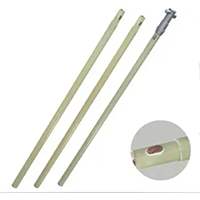
In the high-stakes world of electrical utility maintenance, safety isn't just a priority; it is a fundamental requirement. One of the most critical tools in a lineman's arsenal is the link stick. But what exactly is its purpose? At its core, this specialized tool serves as a life-saving mechanical and electrical bridge. It allows technicians to manipulate energized components from a safe distance, ensuring that they remain isolated from lethal currents.
As power grids become more complex, the demand for high-performance Fiberglass link sticks has surged. These aren't simple poles; they are engineered masterpieces designed to withstand immense electrical stress while providing the mechanical strength needed to lift heavy conductors. Whether you are dealing with routine maintenance or emergency repairs, understanding the specific applications of an Insulated link stick is essential for anyone involved in power distribution. In this guide, we will explore the versatile roles this tool plays, the materials that make it effective, and why it remains a non-negotiable asset for High voltage operations.
Primary Function: Safe Distance and Electrical Isolation
The most fundamental answer to "What is a link stick used for?" is the provision of distance. In High voltage environments, electricity can "arc" or jump across air gaps. Linemen cannot simply reach out and grab a wire or a piece of hardware. They need a buffer. This tool acts as that buffer. It extends the reach of the worker while providing a high-dielectric barrier that prevents current from traveling back to the operator.
Constructed typically from Fiberglass reinforced with epoxy resin, the tool is designed to be non-conductive. When a technician needs to pull a fuse or open a disconnect switch, they attach the necessary hardware to the end of the stick. By doing so, they maintain a "Minimum Approach Distance" (MAD). This is a calculated safety zone where the risk of accidental electrocution is virtually zero. Without the Portable link stick, working on live lines would be impossible without shutting down the entire grid, which would cause massive outages.
Supporting and Tensioning Energized Conductors
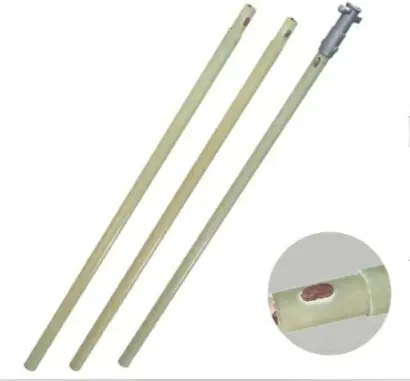
Beyond simple switching, a link stick is frequently used to provide mechanical support. When utility crews need to replace an insulator or a crossarm on a pole, they cannot simply let the energized wire hang loose. They must maintain the tension of the line to prevent it from sagging or touching other wires. Here, the tool acts as a temporary structural member.
Specifically, the Insulated link stick is inserted into the tensioning string. It holds the weight of the conductor while providing the necessary electrical insulation. This allows the crew to work on the "cold" side of the insulator string while the line remains "hot." This capability is vital for "Live Line" or "Hot Stitch" work. Because it is made with high-quality epoxy resin, it can support thousands of pounds of mechanical tension without snapping, all while keeping the electricity exactly where it belongs—in the wire and away from the workers.
Material Excellence: Why Fiberglass and Epoxy Resin Matter
The effectiveness of a link stick is entirely dependent on its material composition. You might wonder why we don't use wood or simple plastics. The answer lies in dielectric strength and weight. Modern sticks are almost exclusively made of Fiberglass tubes filled with closed-cell foam or solid rods saturated with epoxy resin.
The Advantage of Epoxy Resin
This material isn't just a glue; it is a high-performance insulator. When combined with glass fibers, it creates a tool that is incredibly stiff and resistant to bending. This stiffness is crucial when a lineman is trying to hook a tiny loop on a fuse barrel sixty feet in the air. If the stick was floppy, the task would be dangerous and frustrating. Furthermore, epoxy resin provides a smooth surface that resists the buildup of contaminants like salt or dust, which could potentially conduct electricity.
Weight and Portability
Despite their strength, these tools are remarkably Portable. A ten-foot Fiberglass link stick is light enough to be handled by a single person, yet strong enough to lift a heavy copper cable. This portability ensures that crews can carry them up buckets or climb poles without excessive fatigue.
| Property | Fiberglass/Epoxy Stick | Traditional Wood (Obsolete) |
| Dielectric Strength | Extremely High | Low/Unpredictable |
| Moisture Resistance | high moisture-proof | Absorbs Water |
| Weight | Lightweight & Portable | Heavy |
| Maintenance | Simple Wipe-down | Needs Sanding/Varnishing |
Operational Versatility: Beyond Simple Lifting
We often see a link stick used in various configurations to solve specific field problems. It isn't a "one-trick pony." Depending on the attachments used, it can cut, pull, or hold.
Using Attachments
The end of the stick usually features a universal "spline" or "sunrise" connector. This allows the user to swap out heads. One minute, it might be a hook for a disconnect switch; the next, it could be a wire cutter or a cleaning brush. This modularity makes the link stick the "Swiss Army Knife" of the electrical world.
Mechanical Pulling
In some cases, the stick is used in conjunction with a hoist. The Insulated link stick is placed between the hoist and the live wire. This setup allows the crew to apply massive mechanical force to pull a wire into position while keeping the hoist (and the person operating it) electrically isolated. It is this combination of mechanical toughness and electrical resistance that makes the tool so unique.
Critical Protection in Harsh Environments
Electrical equipment doesn't always live in perfect weather. Linemen often work in rain, snow, or high humidity. This is where a high moisture-proof design becomes a literal lifesaver. Standard materials might become conductive when wet, but a professional-grade link stick is engineered to shed water.
High Moisture-Proof Engineering
The surface of a high-quality link stick is treated with special coatings that cause water to bead up rather than form a continuous film. If water forms a "path" from the hot end to the handle, the insulation is compromised. By being high moisture-proof, these sticks maintain their high dielectric rating even in a downpour. This allows emergency crews to restore power safely during storms when the risk of electrical failure is at its peak.
Resistance to UV and Chemicals
Exposure to the sun can degrade many plastics, making them brittle. However, the epoxy resin used in these tools often includes UV inhibitors. They can sit in the back of a utility truck for years without losing their structural integrity. They also resist hydraulic fluids and ozone, which are common in industrial environments.
Deep Dive: High Voltage and Insulation Standards
To truly understand what a link stick is used for, we must look at the rigorous standards it must meet. Working with High voltage means there is zero room for error. A tiny crack or a bit of moisture inside the tube could lead to a catastrophic failure.
Testing and Certification of Insulated Tools
Every Insulated link stick must undergo rigorous dielectric testing before it ever reaches the field. These tests usually involve applying 100,000 volts per foot of the stick to ensure no current leaks through the material.
Standard ASTM F711: This is the gold standard for Fiberglass tools used in live line work. It ensures the tool can handle both the electrical load and the mechanical stress.
Periodic Field Testing: It isn't enough for the tool to be safe when it's new. Safety regulations require that these sticks be tested every year. Crews use portable testers to check for internal conductivity. If a stick fails, it is immediately taken out of service.
Cleaning Protocols: To maintain the high moisture-proof status, the sticks must be cleaned with specific silicone-impregnated cloths. This removes microscopic dirt that could hold onto moisture.
Voltage Ratings and Application Specifics
Not all link sticks are created equal. They are rated based on the maximum voltage they can safely handle. A stick designed for a 15kV distribution line is much shorter and lighter than one meant for a 500kV transmission tower. Using the wrong tool for the voltage level is a fatal mistake. Experts always check the "Sticker" on the tool which indicates its safe working limit. This is why the link stick is a precision instrument, not just a piece of utility hardware.
Emergency Response and Fault Clearance
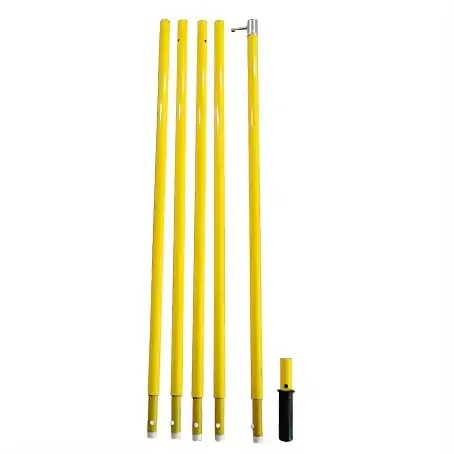
When a tree falls on a line or a transformer blows, the link stick is usually the first tool out of the truck. It is used to clear debris from energized lines and to "tag out" equipment so that it can be safely repaired.
Clearing "Fuzz" and Debris
Sometimes, a line isn't broken, but a branch is leaning against it, causing a "ground fault." A lineman can use an Insulated link stick to push the branch away without getting close to the arc. This quickly restores power to the neighborhood without the need for a full line shutdown.
Grounding Operations
Before a worker can touch a line with their bare hands—even if they think the power is off—they must "ground" the line. They use a link stick to attach heavy grounding cables to the wire. This ensures that if someone accidentally turns the power back on, the electricity goes straight into the earth rather than through the worker. In this scenario, the tool acts as the "hand" that safely places the protective equipment.
Maintenance and Inspection: Ensuring Reliability
Since we rely on the link stick for our lives, we must treat it with extreme care. Maintenance isn't just about keeping it shiny; it's about preserving its chemical and structural properties.
Visual Inspection: Before every single use, a lineman "walks" the stick. They look for scratches, nicks, or "carbon tracking" (burnt lines on the surface). Even a deep scratch can hold enough moisture to conduct electricity at High voltage.
Storage: They should never be thrown on the floor of a truck. They are stored in specialized padded bags or racks to prevent abrasion.
Waxing: Periodically, the stick is waxed with a specialized non-conductive wax. This enhances the high moisture-proof characteristics and makes it harder for contaminants to stick to the Fiberglass.
Conclusion
The link stick is the unsung hero of the modern electrical grid. It provides the essential bridge between human skill and dangerous electrical energy. By utilizing high-tech materials like Fiberglass and epoxy resin, it offers a lightweight, Portable, and incredibly strong solution for High voltage maintenance. From supporting heavy lines to providing Insulated protection in wet weather, its applications are as varied as they are vital. When we understand what this tool is used for, we gain a deeper appreciation for the safety protocols that keep our lights on and our utility workers safe.
FAQ
Q: Can I use a regular wooden pole instead of a Fiberglass link stick?A: Absolutely not. Wood can absorb moisture and contain natural minerals that conduct electricity, especially at High voltage. Modern sticks use epoxy resin and glass to ensure a consistent, non-conductive barrier.
Q: How often should an Insulated link stick be tested?A: Most industrial standards require a professional dielectric test at least once every 12 months. However, a visual inspection should be performed before every use.
Q: What makes a link stick high moisture-proof?A: It is a combination of the smooth, non-porous epoxy resin finish and specialized hydrophobic coatings that prevent water from forming a continuous conductive path on the surface.
Q: Are these tools only for power companies?A: While primarily used by utilities, large industrial plants with their own high-voltage substations also keep Portable link sticks on hand for emergency switching and maintenance.
As a dedicated manufacturer in the power safety industry, we have spent years perfecting the art of electrical insulation. Our factory is not just a production line; it is a hub of engineering excellence where we specialize in high-performance Fiberglass and epoxy resin solutions. We understand the life-saving role our products play, which is why we implement the most rigorous testing protocols for every Insulated link stick we ship.
We are a B2B-focused powerhouse, serving utility companies and industrial giants worldwide. Our strength lies in our ability to provide Custom lengths and configurations that meet specific grid requirements, all while maintaining a high moisture-proof standard that exceeds international benchmarks. When you partner with us, you are not just buying a tool; you are investing in a legacy of safety and reliability backed by years of factory expertise and a deep commitment to protecting those who work on the front lines of our power infrastructure.


