In utility environments, from substations to overhead lines, verifying the absence of voltage is a life-or-death operational requirement. Crews routinely transition from enclosed substations to exposed outdoor environments. They face immense danger if they accidentally touch a live conductor. Procurement mistakes often stem from confusing general-purpose low-voltage tools with specialized utility-grade equipment. Buyers mistakenly assume a basic tester can handle complex utility grids. This assumption puts lives at serious risk.
Selecting the right high voltage detector requires navigating stringent compliance standards. You must understand the strict limitations of proximity testing. You also need to match the tool's core technology to your specific operational environment. A proper selection process goes far beyond checking a maximum voltage rating on a spec sheet. It demands a deep understanding of industry regulations, field realities, and interference challenges. We will guide you through making an informed, life-saving choice. You will learn how to identify the exact equipment your team needs to stay secure.
Key Takeaways
A standard Non-Contact Voltage Tester (NCVT) is not a substitute for a utility-grade high voltage detector.
Selection must prioritize compliance with authoritative standards (like ASTM F1796 and IEC 61243-1) over simple voltage range claims.
Effective procurement evaluates tools based on interference resistance (to prevent phantom voltage false positives), hot stick compatibility, and display clarity.
Equipment selection must seamlessly integrate with standard operating procedures, particularly the mandatory "Live-Dead-Live" verification process.
The critical distinction: High Voltage Detectors vs. Standard NCVTs
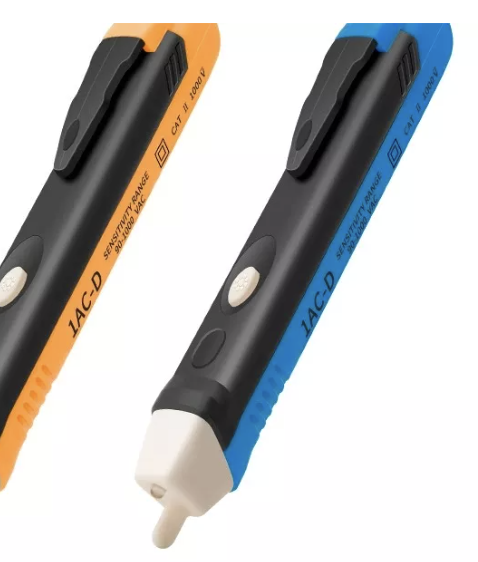
Many procurement officers commit a common, highly dangerous error. They assume a standard Non-Contact Voltage Tester (NCVT) carrying a high CAT IV rating is sufficient for utility-scale screening. A 1000V rating sounds robust to an untrained buyer. However, this rating addresses transient overvoltage spikes. It does not qualify the tool for sustained utility line contact. This fundamental misunderstanding causes catastrophic accidents.
Manufacturers design standard NCVTs under IEC 61010-1 guidelines. They build them for everyday indoor commercial or residential low-voltage screening. These basic tools typically handle voltages up to 1000V. They are highly prone to false readings in complex environments. Cable shielding easily blocks their sensing capabilities. Local grounding heavily influences their accuracy. You cannot trust an NCVT to verify a transmission line. They simply lack the ruggedness and specialized sensing arrays required for outdoor grid work.
Conversely, specialized utility tools serve a completely different purpose. Manufacturers build a dedicated Voltage Detector for direct capacitive contact or proximity detection on formal utility systems. These robust units handle extreme ranges from 600V to 800kV and beyond. Strict industry standards, specifically ASTM F1796 and IEC 61243-1, regulate their entire design. Engineers design them specifically to integrate onto insulated hot sticks. This hardware integration is crucial. It allows operators to maintain mandatory Minimum Approach Distances (MAD). Using the right tool ensures your operators stay safely outside the lethal arc flash boundary.
Evaluating primary technology types for utility applications
Utility environments demand different testing mechanisms based on the specific task. You must match the equipment to the environment. Let's examine the four primary technology categories you will encounter in the field.
Multi-Range Voltage Detectors (MRVD - Analog)
These units function as direct contact detectors. They utilize a traditional analog needle display to show readings. They work best for environments requiring distinct phase-to-phase readings. Crews use them extensively on overhead lines and underground installations. They also perform perfectly on capacitive test points. A major operational benefit is battery independence. Analog needles provide reliable baseline readings even if the onboard battery dies. This makes them highly dependable in remote locations.
Auto-Ranging Voltage Indicators (ARVI - LED)
These LED-based units require direct contact. However, they completely eliminate the manual range selector switch. They utilize bright LED light bands alongside loud audible alerts. We strongly recommend them for high-stress or low-light utility operations. Minimizing manual settings significantly reduces human error. When an operator faces a blinding storm, auto-ranging features simplify the process. They instantly display the correct voltage tier without manual intervention.
Multi-Range Voltage Indicators (MRVI - Smart/Digital)
These smart, digital units represent a technological leap. They use stepper-motor driven digital interfaces. They often feature Bluetooth integration to broadcast live readings directly to a smartphone or tablet. They excel during complex troubleshooting scenarios. Multiple crew members must often verify phase-to-phase or phase-to-ground data. Bluetooth allows the foreman to view the data safely from a distance. They are also phenomenal tools for training new apprentices.
Proximity Voltage Indicators (PVI)
These devices offer purely non-contact detection. They indicate voltage presence via flashing LEDs and beeping alarms. Use them for initial "do not touch" verification sweeps. They are ideal before executing formal grounding procedures. Crews also use them when physical contact with the conductor remains impossible due to physical barriers.
Technology Comparison Chart
Technology Type | Detection Mechanism | Best Field Use Case |
MRVD (Analog) | Direct contact, analog needle | Phase-to-phase readings, remote areas needing battery independence |
ARVI (LED) | Direct contact, auto-ranging | High-stress or low-light tasks, reducing manual selection errors |
MRVI (Smart) | Digital interface, Bluetooth | Apprentice training, team verification from safe distances |
PVI (Proximity) | Non-contact, visual/audio alerts | Initial safety sweeps, physically inaccessible conductors |
Core decision criteria for procurement and safety officers
Selecting the perfect instrument involves more than just picking a basic technology type. Procurement officers must evaluate several strict decision criteria to ensure maximum safety.
Standard Compliance and Certification
Regulatory compliance forms the absolute foundation of field safety. Your chosen tool must align strictly with ASTM F1796. This document serves as the Standard Specification for Portable Capacitance-Type Voltage Detectors. Alternatively, look for the internationally recognized IEC 61243-1 certification. Always check your specific regional safety mandates before authorizing a bulk purchase.
Managing "Phantom Voltage" and False Positives
Older utility infrastructure frequently induces phantom voltage. Parallel live lines create strong electromagnetic interference. A poorly calibrated tool will trigger a false positive alarm. These false alarms confuse operators and drastically slow down operational efficiency. To prevent this, your instruments must feature appropriate sensitivity thresholds. Many premium units offer dual-range capabilities. This filtering tech easily ignores harmless background inductance.
Hot Stick Compatibility and Ergonomics
A utility instrument must feature standard universal splines. This critical hardware ensures secure attachment to various fiberglass hot sticks. Weight distribution matters immensely during operation. Heavy units sitting at the end of a long hot stick cause severe operator fatigue. Fatigue makes it harder to hold the stick steady. This instability can easily compromise the Minimum Approach Distance (MAD). Always prioritize lightweight designs to reduce physical strain.
Durability and Environmental Tolerance
Utility crews subject their tools to harsh physical abuse. Equipment must survive frequent drop impacts from bucket trucks. They need to withstand extreme weather, including driving rain and freezing winter temperatures. The external housing must remain totally intact even if accidental brush-contact occurs on live components.
Implementation realities and operational risks
Even the most advanced electronic tool requires strict procedural compliance. Superior technology alone cannot protect a careless crew. We must address daily field implementation realities.
The "Live-Dead-Live" SOP
High-end equipment is useless without standardized operating procedures. The "Live-Dead-Live" test is non-negotiable for every lineman. First, you perform a fast, reliable test on a known live source to verify functionality. Next, you test the target circuit you intend to work on. Finally, you must end by testing the initial live source again. This crucial final step ensures the tool did not fail internally mid-test.
Testing Location Variables
These instruments function essentially as highly sensitive field strength meters. External factors easily distort their readings. An operator's physical body proximity can significantly skew the result. Nearby grounded equipment, like a steel utility pole, pulls the electrical field away from the sensor. For the most accurate result, the optimal testing location is at the midspan of the conductor. The midspan sits far away from poles, transformers, and other interference sources.
PPE Limitations
Personal Protective Equipment has strict operational limits. A worker holding an instrument while wearing insulated rubber gloves remains in terrible danger. Gloves are never a substitute for proper hot stick isolation. When dealing with primary high voltage, you must use an insulated stick. Standoff tools guarantee you maintain safe distances from potential arc flashes.
Shortlisting logic: How to make your final choice
Now we can condense these engineering principles into actionable procurement steps. Follow this logical sequence to finalize your safety equipment roster.
Step 1: Audit your voltage ranges. Begin by mapping your exact grid specifications. Ensure the tool's minimum and maximum thresholds cover both your distribution and transmission line profiles. Do not buy a limited tool lacking the upper-end capacity you might encounter during storm restoration.
Step 2: Assess the operating environment. Utility crews often work in terrible environmental conditions. Choose high-visibility LED models for bright, glaring daylight. Demand exceptionally loud audible alerts for noisy outdoor environments near humming transformers. Operators must see and hear the alarms clearly over ambient noise.
Step 3: Evaluate long-term maintenance and ruggedness. Look closely at the hardware's lifespan. Evaluate the required calibration cycles carefully. Assess the expected battery lifecycle in freezing winter conditions. Choose units proven to survive severe physical drops from aerial buckets. Ensure the housing resists moisture intrusion.
Best Practices and Common Mistakes
Best Practice: Always store your instruments in padded, moisture-resistant protective cases to preserve delicate calibration integrity.
Common Mistake: Attempting to use a non-contact proximity tester on a fully shielded underground cable. The metallic shielding completely blocks the electric field, causing a deadly false negative.
Best Practice: Conduct a rigorous visual inspection of the universal spline and hot stick attachment points before every single shift.
Conclusion
Selecting a highly reliable unit is a strategic investment in life-safety. It also dictates your daily operational efficiency. This is never an appropriate place to cut procurement corners. You must focus heavily on ASTM and IEC compliance over flashy marketing claims. By thoroughly understanding the different technology categories, you can easily match the right tool to the right job.
Always align your newly purchased equipment with rigorous field procedures. The mandatory Live-Dead-Live testing method remains essential for baseline verification. When you integrate high-quality measurement tools into strict safety cultures, utility teams can confidently secure their work environments. You will minimize catastrophic risk, streamline your grounding procedures, and ensure every worker returns home safely at the end of their shift.
FAQ
Q: Why is my voltage detector falsely alarming on a de-energized line?
A: This confusing phenomenon is known as "phantom voltage." It happens due to capacitive coupling or electromagnetic inductance from adjacent, parallel live lines. The electric field bleeds over into your de-energized target conductor. Choosing an instrument with appropriate sensitivity thresholds, or utilizing a lower-range interference filter, helps mitigate these false positive alerts.
Q: Can I use a high CAT-rated multimeter or NCVT instead of a dedicated high voltage detector?
A: Absolutely not. Standard NCVTs follow IEC 61010-1 regulations intended for low-voltage indoor environments. They cannot safely verify heavy utility lines. Utility-grade equipment strictly follows ASTM F1796. It also integrates securely with insulated hot sticks. Using a basic NCVT on high-voltage transmission lines violates core safety protocols and puts operators at extreme risk.
Q: How often do utility-grade high voltage detectors require calibration or testing?
A: You should always follow specific manufacturer recommendations. Most manufacturers suggest an annual formal factory calibration. However, daily field testing remains equally critical. You must perform the Live-Dead-Live verification process before every single use. This habit ensures the tool is functioning correctly right at that exact moment in the field.


