Introduction
When working around high-voltage equipment, a split-second mistake can lead to catastrophic electrical arcs. This is where switchboard matting becomes a literal lifesaver. Often referred to as insulated rubber runners, these mats are specifically engineered to protect personnel from ground shocks by providing a non-conductive barrier. However, not all mats are created equal. The American Society for Testing and Materials (ASTM) established the D178 standard to ensure that every roll of electrical safety matting meets rigorous dielectric strength requirements.
This ultimate guide breaks down the complexities of the ASTM D178 standard. We will explore the different classes, color codes, and physical specifications you need to know to remain compliant and safe. Whether you are outfitting a new power plant or performing a safety audit on an industrial control room, understanding these specifications is the first step toward a zero-incident workplace.
What is ASTM D178 and Why It Rules Electrical Safety
ASTM D178 is the gold standard for switchboard matting. It specifically covers the manufacturing and testing requirements for insulated rubber matting designed to be used as a floor covering near electrical apparatus. Its primary purpose? To prevent the worker from becoming part of an electrical circuit to the ground. Without this non-conductive protection, even a small leak in current could prove fatal.
Compliance with ASTM D178 means the matting has undergone "Proof Testing." Manufacturers subject the material to a specific voltage across its entire surface to ensure there are no physical defects or "pinholes" that could allow electricity to pass through. In an industrial setting, using non-certified mats is more than just a safety risk; it is a regulatory violation that could lead to heavy fines and legal liabilities. It provides a reliable safety net that workers depend on every single day.
Breaking Down the Five Classes of Switchboard Matting
The most critical part of the ASTM D178 standard is the classification system. It divides switchboard matting into five distinct classes (Class 0 through Class 4). Each class corresponds to a maximum use voltage. Selecting the wrong class is a common mistake that compromises electrical safety. You must match the mat's rating to the peak voltage of the equipment being serviced.
Each class represents a significant jump in dielectric strength. For instance, while Class 0 is perfect for low-voltage control panels, it would be useless—and dangerous—near high voltage transformers. We always suggest choosing a class higher than your equipment's nominal voltage to account for unexpected surges. This proactive approach to industrial safety ensures that the insulated rubber remains an effective barrier even under stress.
Understanding Voltage Ratings and Classifications
To make the right choice, you need to understand the difference between "Proof Test Voltage" and "Maximum Use Voltage." The Proof Test is what the mat is tested at in the factory, while the Maximum Use Voltage is the safe limit for daily operations.
| ASTM Class | Max Use Voltage (AC) | Proof Test Voltage (AC) | Typical Application |
| Class 0 | 1,000 Volts | 5,000 Volts | Low voltage panels |
| Class 1 | 7,500 Volts | 10,000 Volts | Control rooms |
| Class 2 | 17,000 Volts | 20,000 Volts | Substation floors |
| Class 3 | 26,500 Volts | 30,000 Volts | High voltage areas |
| Class 4 | 36,000 Volts | 40,000 Volts | Power generation plants |
The Critical Safety Margin
Why is there such a large gap between the test voltage and the use voltage? It serves as a safety buffer. Factors like moisture, surface dirt, or mechanical wear can degrade the non-conductive properties of the switchboard matting. By staying within the "Max Use" limit, you ensure the electrical safety of your team even if the environment isn't perfectly clean or dry.
Physical Specifications: Thickness and Material Composition
ASTM D178 doesn't just care about electricity; it also dictates the physical durability of the insulated rubber. In a busy industrial environment, mats are stepped on, rolled over by heavy carts, and sometimes exposed to chemicals. If the material cracks or tears, the electrical protection is gone. Therefore, the standard sets strict rules for tensile strength and elongation.
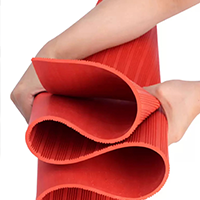
Thickness is often the easiest way to identify the class of switchboard matting at a glance. Generally, as the voltage rating increases, so does the thickness of the mat. A Class 4 mat is significantly thicker and heavier than a Class 0 mat. This thickness isn't just for insulation; it provides the mechanical "heft" needed to withstand the rigors of power plants and factory floors. High-quality switchboard matting usually features a corrugated or "ribbed" surface. This texture serves two purposes: it increases the surface area to dissipate energy and provides slip resistance for workers.
Environmental Resistance: Fire, Oil, and Ozone
Standard rubber can degrade quickly when exposed to harsh conditions. This is why ASTM D178 includes optional "Type" ratings. While Type I matting is made of general-purpose rubber, Type II offers additional resistance to environmental factors. For many industrial users, Type II is the only logical choice.
Fire Resistant Properties: In the event of an electrical arc, you don't want your floor to become fuel. Fire resistant matting is designed to self-extinguish or resist ignition.
Ozone Resistance: High-voltage equipment often creates ozone. Over time, ozone causes standard rubber to "check" or crack. Non-conductive mats rated for ozone resistance stay flexible and safe for much longer.
Oil and Chemical Resistance: If your switchgear is near hydraulic systems or cooling oils, you need a mat that won't turn into a slippery, degraded mess when splashed.
Choosing a fire resistant and oil-resistant switchboard matting ensures that your safety investment lasts for years. It reduces the frequency of replacements and ensures the barrier remains uncompromised by the surrounding atmosphere.
Proper Installation and Maintenance for Electrical Safety
Even the best high voltage matting will fail if it is installed or maintained incorrectly. You cannot simply throw a piece of insulated rubber over a dirty floor and call it a day. The area underneath must be clean, dry, and free of debris that could puncture the mat from below.
We recommend a regular inspection schedule for all switchboard matting. Workers should look for signs of "tracking"—small carbon paths burned into the surface—which indicate that electricity has tried to jump across the mat. If you see any cuts, deep abrasions, or cracks, the mat must be replaced immediately. Cleaning should only be done with mild soap and water. Harsh solvents can strip the protective oils from the rubber, leading to premature aging and the loss of its non-conductive properties.
Key Maintenance Steps
Daily Visual Checks: Look for surface contamination like oil or metal shavings.
Keep it Dry: Water on the surface of an electrical safety mat can create a conductive path over the top of the insulation.
Avoid Overlapping: Mats should be butt-jointed, not overlapped, to prevent tripping hazards and ensure a level working surface.
How to Choose the Right Switchboard Matting for Your Facility
Selecting the right switchboard matting involves more than just looking at a chart. You need to evaluate your specific industrial environment and the tasks being performed. Are workers standing in one spot for hours? You might want to look for mats that offer anti-fatigue properties alongside their high voltage insulation.
Consider the layout of your room. If you have a long row of switchgear, buying a continuous roll of insulated rubber is better than using multiple small mats. This eliminates seams where a worker might accidentally step off the protected area. Always check for the "Brand" or "Stamp" on the back of the mat. Every yard of ASTM D178 compliant switchboard matting must be clearly marked with the manufacturer's name, the class, and the ASTM designation. If the stamp is missing, you cannot verify its electrical safety rating.
Comparative Analysis: ASTM D178 vs. Other Standards
While ASTM D178 is the primary standard in the United States, you might encounter other certifications like IEC 61111 (international) or military specs. It is important to know the differences, especially if you operate global facilities. ASTM D178 is generally considered more robust in terms of physical durability requirements, whereas IEC 61111 focuses heavily on the electrical testing categories.
For most North American industrial applications, sticking with ASTM D178 ensures you meet OSHA requirements. OSHA 1910.269 and 1910.303 frequently refer back to these types of standards for maintaining a safe working environment. Using a recognized, locally-supported standard like ASTM D178 makes it easier to pass inspections and ensures that your switchboard matting is compatible with standard electrical safety gear used by your contractors.
| Feature | ASTM D178 (USA) | IEC 61111 (International) |
| Testing | Proof tested per roll | Tested by category |
| Material | Rubber-based | Rubber or Plastic |
| Classes | 5 Classes (0-4) | 5 Classes (0-4) |
| Durability | High physical stress focus | Focused on dielectrics |
Conclusion
Understanding the classes and specifications of ASTM D178 is not just a technical necessity; it is the foundation of a safe industrial work culture. By choosing the correct class of switchboard matting, ensuring it is non-conductive, and maintaining it properly. Don't settle for "general purpose" rubber when high voltage risks are present. Invest in certified insulated rubber that meets the rigorous demands of the modern electrical landscape.
FAQ
Q: Can I use switchboard matting for anti-fatigue purposes?
A: Yes, many Class 0 and Class 1 mats are designed with extra cushioning. However, never prioritize comfort over the required voltage class.
Q: How often should switchboard matting be replaced?
A: There is no set expiration date, but ASTM suggests replacing it if there is any sign of physical damage, "checking," or if it fails a periodic dielectric test.
Q: Is all rubber matting non-conductive?
A: Absolutely not. Many industrial mats contain carbon black, which can actually be conductive. Only use mats specifically labeled as ASTM D178 insulated rubber.
Q: Does switchboard matting protect against DC voltage?
A: Yes, though the ratings are typically based on AC voltage. Check the manufacturer's specifications for the equivalent DC rating to ensure electrical safety.
Our Strength and Factory Capacity
As a leading manufacturer in the power safety industry, I take great pride in our factory's capabilities and our commitment to quality. Our production facility is equipped with the latest vulcanization and testing technology, allowing us to produce switchboard matting that consistently exceeds ASTM D178 requirements. We don't just "make" mats; we engineer safety solutions. Our strength lies in our rigorous quality control—every single meter of our insulated rubber undergoes high-voltage proof testing before it leaves our warehouse.
We understand the needs of our B2B partners, offering custom lengths, widths, and specialized Type II compositions that are both fire resistant and ozone resistant. Because we control the entire manufacturing process, we can guarantee competitive lead times and provide full technical documentation for every order. When you work with us, you are not just buying a product; you are gaining a partner dedicated to your facility's long-term electrical safety and operational excellence.


