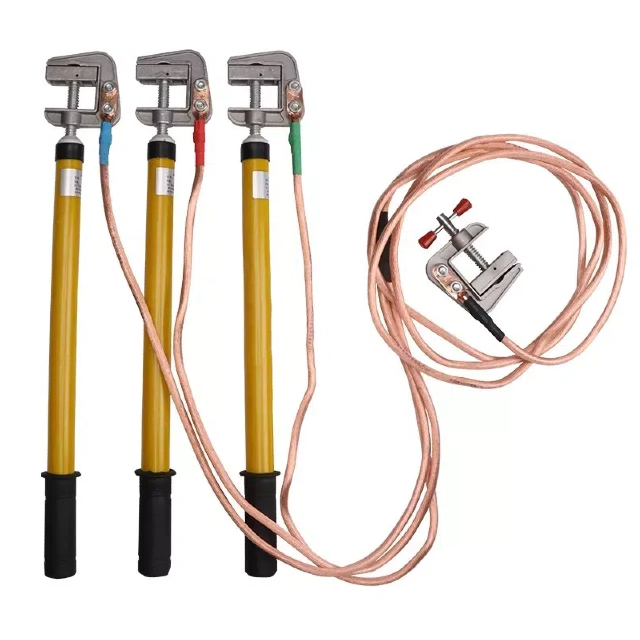
Short-circuit earth wire kits are a critical safeguard for power networks, enabling maintenance teams and engineers to ground live systems safely during work. These kits are not generic pieces of equipment; they are engineered to withstand specific electrical stresses and must be carefully matched to fault current levels and site conditions. At JITAI, we provide portable earthing kits that meet international expectations for safety and performance. This article explains how ratings are determined, what IEC standards signify, and how to size a short circuit earth wire kit for your network environment.
Understanding short-circuit ratings (kA and time duration)
When evaluating earthing kits, the most important numbers on a datasheet are the short-circuit ratings. These ratings are expressed in kiloamperes (kA) and linked to a specific time duration, often one second. A kit rated at “20 kA/1s” means it can carry a fault current of 20,000 amperes for one second without damage. The time element matters because fault currents are rarely instantaneous; protection relays and breakers require a fraction of a second to operate. If the kit cannot hold the fault until disconnection, catastrophic failure may occur.
Consider a mismatch: if a 15 kA-rated kit is applied to a network where fault levels can reach 25 kA, the earthing cable could overheat or clamps may lose integrity. The result is not only damage to equipment but also a direct threat to worker safety. This is why both the current rating and the duration need to be checked carefully against the site’s prospective fault levels.
Typical rating examples include:
16 kA/1s for medium voltage distribution systems
25 kA/1s for high-capacity urban substations
40 kA/0.5s for heavy industrial switchyards
By aligning the rating with system protection characteristics, specifiers ensure the kit will operate within its designed safety envelope.
Key standards and certification to watch for
Engineers and procurement teams often ask: what standards govern portable earthing kits? The most widely referenced are IEC standards, which provide globally recognized test methods and minimum performance thresholds.
Key documents include:
IEC 61230 – The international standard for portable equipment for earthing or earthing and short-circuiting. It defines mechanical and electrical test procedures to validate the safety of earthing kits.
IEC 61472 – Guidance for live working, often used in parallel for clearance and insulation requirements.
Manufacturers should not only claim compliance but also provide evidence. Buyers should request test certificates issued by accredited laboratories, ideally with type-test reports confirming the fault current capacity and mechanical strength of clamps and rods. Genuine certification ensures the product has been independently verified, not just internally tested.
Markings also matter. Each component should carry identification such as rated current, conductor cross-section, and manufacturer code. Proper documentation is equally important: specifiers should ask for technical data sheets, certificate copies, and maintenance guidance to ensure ongoing compliance in the field.
Component design considerations that affect performance
The performance of a short circuit earth wire kit depends on its components, not only on headline ratings. Several design features deserve close attention:
Conductor cross-section
Larger cross-sectional areas allow greater current flow without overheating. Flexible copper braid is commonly used for portability, while solid copper may be specified for certain permanent or semi-permanent applications. Flexibility also helps reduce mechanical stress during installation.
Clamp design and contact resistance
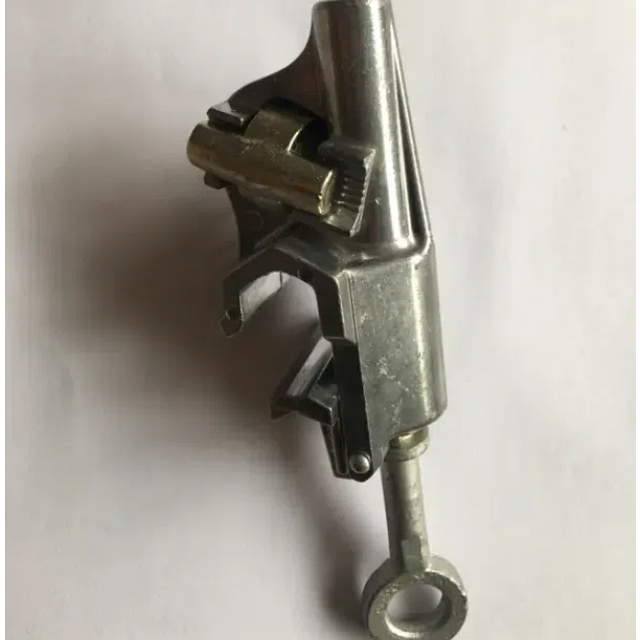
The clamp is the frontline connection to conductors or busbars. High-quality clamps provide firm grip, minimize contact resistance, and maintain conductivity even under fault stress. Poor-quality clamps can slip, arc, or introduce dangerous heating.
Insulation and operation rods
Dielectric rods allow workers to connect and disconnect earthing leads safely. The material and construction must meet relevant voltage withstand levels to prevent flashover. Insulating sleeves on cables also play a role, not only for operator safety but also for mechanical durability.
Heat dissipation, resistance stability, and long-term corrosion resistance are all part of a kit’s engineering. For a product to remain safe after years in service, these details cannot be overlooked.
How to size a kit for your network
The correct sizing of a short circuit earth wire kit begins with understanding your network’s prospective fault level. This is usually provided by system studies or protection engineers. Once you know the kA value and fault duration, you can match these to the rated capacity of available kits.
Practical steps include:
Collect site fault data – Fault level values at substations, feeders, or switchgear points.
Apply safety margins – For example, if a site has a calculated fault of 18 kA/1s, a 20 kA-rated kit may suffice, but many engineers prefer to step up to 25 kA to account for aging equipment and uncertainty.
Consider derating factors – Heat, repeated use, and environmental exposure can reduce effective performance over time.
Adjust cable length – Longer cables increase resistance and heating, so larger cross-sections may be required for extended runs. Custom solutions can be supplied to meet these needs.
Sizing is not only a technical necessity but also a legal and safety responsibility. By ensuring the earthing kit rating exceeds expected fault conditions, you reduce risk to both personnel and equipment.
Case study examples
To illustrate how ratings and standards apply in real-world settings, here are two short scenarios:
Suburban 11 kV overhead maintenance
A distribution utility plans to carry out routine work on 11 kV feeders. The fault level at the substation is 13 kA, with protection expected to clear within 0.5 seconds. For this application, a kit rated at 16 kA/1s is appropriate, providing sufficient margin. Lightweight, flexible copper braid and universal clamps enable line crews to install the earthing quickly and safely.
132 kV substation switching operations
In a high-voltage substation, the prospective fault level exceeds 30 kA. Protection clearing times are designed for one second. Here, a robust 40 kA/1s kit is specified, often with reinforced clamps designed to attach securely to thick busbars. Custom cable lengths may be supplied to span between phases and the earthing bar. Insulating rods with higher dielectric strength are also included due to the voltage class.
These examples show how different environments demand tailored solutions, and why specifiers must go beyond “one size fits all” when selecting portable earthing kits.
Conclusion
Portable earthing kits are indispensable safety tools, but their reliability depends on correct specification and compliance with international standards. Ratings expressed in kA and duration, verified by IEC certification, are the benchmarks that engineers and procurement teams must consider. Component design details, from conductor cross-section to clamp quality, directly influence safety and performance. By gathering site fault data, applying appropriate margins, and requesting documentation such as test certificates, you ensure that the chosen short circuit earth wire kit is up to the job.
At JITAI, we supply portable earthing kits that combine rigorous engineering with compliance to international standards, giving technical buyers confidence in every application. To learn more or to request detailed specifications, please contact us today.


