Introduction
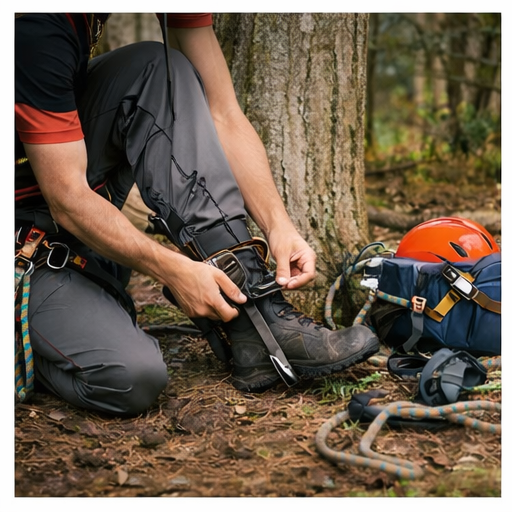
Have you ever wondered why climbing feels unstable even with good gear? Incorrect setup often causes safety risks and wasted effort. This guide explains how to set up Tree Climbing Spikes correctly. You will learn safer positioning, better control, and efficient climbing basics.
What Are Tree Climbing Spikes and When Are They Used?
Basic structure and working principle of Tree Climbing Spikes
Tree Climbing Spikes are leg-mounted climbing tools designed to support vertical movement on tree trunks.Each unit typically consists of a metal shank, a replaceable gaff, a foot stirrup, and upper and lower straps.The gaff penetrates the bark surface to create a temporary anchor point, while the shank transfers body weight to the leg.The working principle relies on controlled gaff engagement and stable leg positioning rather than pulling force.During climbing, the user alternates foot placement, allowing the spikes to support upward movement with minimal upper-body strain.
Typical applications in tree maintenance, removal, and emergency access
Tree Climbing Spikes are commonly used in tasks where direct trunk access is required.They are widely applied in tree removal operations where bark damage is acceptable.They also support maintenance work on dead or hazardous trees that cannot be climbed using ropes alone.In emergency access scenarios, spikes allow rapid ascent when time and access options are limited.These applications share a need for reliable footing, controlled movement, and predictable tool behavior.
Situations where climbing spikes should and should not be used
Climbing spikes are suitable when tree preservation is not a priority.Their use is generally avoided on healthy trees during routine pruning.The gaff penetration can damage bark and underlying tissue, which affects tree health.For this reason, spikes are typically reserved for removals, storm-damaged trees, or utility-related access.Understanding when not to use Tree Climbing Spikes is as important as knowing how to use them correctly.
How tool purpose influences setup requirements
The intended task directly affects how Tree Climbing Spikes should be set up.Gaff length selection depends on bark thickness and trunk surface conditions.Strap tension and shank height may vary based on climb duration and movement frequency.For removal work, stability and penetration depth take priority over comfort.For short emergency access, faster adjustment and secure initial fit become more important.Setup decisions should always reflect the specific working objective rather than a fixed configuration.
Preparing Tree Climbing Spikes Before Setup
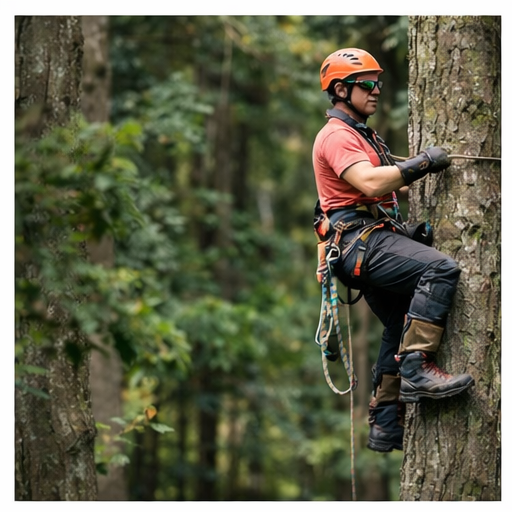
Inspecting gaffs, straps, pads, and shanks before use
Before setting up Tree Climbing Spikes, each structural component should be checked carefully.Gaffs must be sharp, firmly mounted, and free from bends or cracks.Straps and buckles should show no signs of tearing, stiffness, or weakened stitching.Pads need to sit flat against the leg and provide even pressure without deformation.The shank should remain straight and securely connected, as it carries most of the load during climbing.
Understanding gaff length selection for different bark conditions
Gaff length affects how Tree Climbing Spikes interact with the tree surface.Thicker bark requires longer gaffs to reach solid wood beneath the outer layer.Thin or smooth bark benefits from shorter gaffs to prevent over-penetration and instability.Common selection logic can be summarized as follows:
Bark condition | Typical gaff length | Setup focus |
Thick or rough bark | Long gaff | Penetration depth |
Thin or smooth bark | Short gaff | Controlled placement |
Mixed surfaces | Medium gaff | Balance and adaptability |
Selecting the correct length improves control and reduces unnecessary leg movement.
Matching climbing spikes to boots and leg dimensions
Tree Climbing Spikes must align closely with both the boot and the lower leg.The stirrup should sit just in front of the heel without shifting during movement.Boot soles should be firm enough to support the spike without flexing.Strap placement should follow the leg contour, allowing secure tension without pressure points.Proper matching helps maintain balance and ensures consistent gaff placement while climbing.
Identifying early signs of wear that affect setup accuracy
Wear can change how Tree Climbing Spikes fit and perform, even before visible failure.Common early indicators include loosened straps, uneven pad compression, and shifting gaff alignment.Minor deformation in the shank can alter foot angle and reduce stability.Regular checks help detect these issues early, preventing setup errors that affect climbing control and safety.
Step-by-Step Setup of Tree Climbing Spikes
Positioning Tree Climbing Spikes correctly on the inside of the leg
Tree Climbing Spikes must be positioned on the inner side of each leg to match natural climbing mechanics.This position allows the gaff to engage the tree trunk directly under body weight.Correct placement improves balance and reduces unnecessary leg rotation.
Key positioning checks include:
● The gaff faces inward toward the trunk
● The foot sits flat in the stirrup without tilt
● The spike follows the leg’s natural walking line
When placement is correct, upward movement feels stable and controlled rather than forced.
Adjusting shank height relative to the knee
Shank height affects leverage, comfort, and joint movement during climbing.The top of the shank should sit just below the knee joint to avoid contact when stepping.If the height is incorrect, fatigue and instability increase quickly.
General height guidance:
● Too high: restricts knee movement and causes pressure
● Too low: reduces control and increases slipping risk
● Correct height: allows straight-leg stance with stable gaff contact
Securing ankle straps for stability without restricting movement
Ankle straps anchor Tree Climbing Spikes to the boot and lower leg.They must prevent side-to-side movement while allowing natural ankle motion.A well-adjusted strap keeps the spike stable during each step.
Effective ankle strap setup should:
● Hold the stirrup firmly against the boot
● Prevent rotation during weight transfer
● Avoid cutting off circulation or limiting flex
Setting calf straps to balance support and circulation
Calf straps provide upper-leg support and help distribute load evenly.They should follow the leg shape and keep the shank upright without pressing into muscle tissue.Improper tension often leads to discomfort during longer climbs.
Signs of correct calf strap tension:
● Even pressure across the pad
● No numbness or sharp pressure points
● Stable spike position during movement
Verifying gaff alignment and penetration angle
Gaff alignment determines how Tree Climbing Spikes interact with the tree surface.The gaff should angle slightly inward when the leg is straight.This supports consistent penetration and reliable footing.
Typical alignment considerations are shown below:
Setup factor | Correct condition | Result |
Gaff direction | Slight inward angle | Stable engagement |
Penetration depth | Controlled, not excessive | Predictable footing |
Leg position | Mostly straight | Reduced fatigue |
Performing a final pre-climb setup check
A final setup check ensures all adjustments work together.Before leaving the ground, the climber should load each spike lightly to test stability.This step reduces the need for mid-climb corrections.
Pre-climb checks include:
● Strap tension at ankle and calf
● Shank height clearance near the knee
● Gaff orientation and firmness
Distinguishing initial setup from minor adjustments during climbing
Initial setup establishes the primary fit and alignment for Tree Climbing Spikes.This should be completed fully on the ground before climbing.Once climbing begins, only minor adjustments should be made.
The difference is practical:
● Initial setup: fit, height, alignment, strap routing
● Minor adjustments: comfort tuning, adapting to trunk diameter
Achieving Proper Fit and Long-Term Comfort
How proper fit affects balance, efficiency, and fatigue
Proper fit directly influences how Tree Climbing Spikes support the body during movement.When the spikes align with the leg, balance improves and energy loss decreases.A poor fit forces the climber to compensate through extra muscle effort.This increases fatigue and reduces efficiency over time.Stable alignment allows weight to transfer smoothly from the leg to the gaff and into the trunk.
Adjusting Tree Climbing Spikes for extended work periods
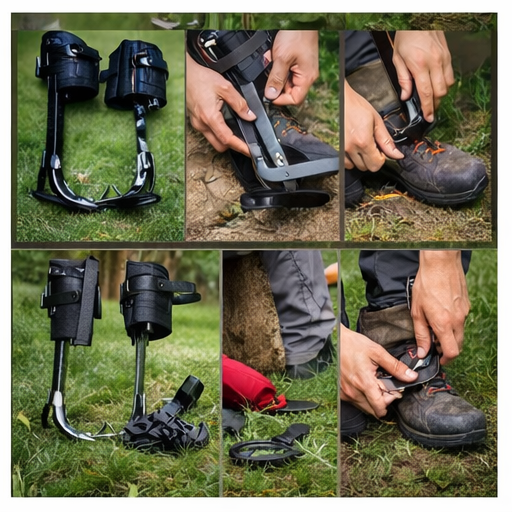
Extended work requires small adjustments to maintain comfort and control.Tree Climbing Spikes should remain secure while allowing natural leg movement.Minor strap tension changes can reduce pressure buildup during long climbs.These adjustments should be deliberate and minimal to avoid destabilizing the setup.
Common adjustment focus areas include:
● Strap tension as muscles fatigue
● Shank contact points along the leg
● Boot and stirrup alignment after repeated steps
Role of pads and cuffs in pressure distribution and leg support
Pads and cuffs act as the primary interface between the leg and the spike.They spread load across a wider surface to reduce pressure concentration.Proper pad placement improves comfort and prevents localized soreness.Cuffs also help keep the shank upright and aligned with the leg.
The table below outlines their functional roles:
Component | Primary role | Effect on comfort |
Pad | Load distribution | Reduced pressure points |
Cuff | Upper-leg stability | Improved alignment |
Strap interface | Fit control | Balanced support |
Recognizing fit-related discomfort that signals the need for readjustment
Discomfort often indicates a fit issue rather than normal fatigue.Warning signs should be addressed early to prevent injury or instability.Common signals include numbness, uneven pressure, or shifting spikes.
Typical indicators include:
● Tingling or loss of circulation
● Hot spots under pads
● Increased effort to maintain balance
Recognizing these signs helps maintain safe and effective use of Tree Climbing Spikes over time.
Using Tree Climbing Spikes Safely After Setup
Coordinating climbing spikes with harness and lanyard systems
After setup, Tree Climbing Spikes must work together with the harness and lanyard system.The lanyard provides a secondary attachment point and helps control body position.It should remain above the knees to support upward movement and prevent backward pull.The harness distributes load across the hips rather than the legs alone.Proper coordination allows the spikes to support movement while the lanyard maintains balance and security.
Effective coordination relies on:
● Consistent lanyard height relative to the trunk
● Even load sharing between spikes and harness
● Smooth adjustment during ascent
Maintaining correct body posture and controlled movement
Body posture directly affects how Tree Climbing Spikes engage the tree.The hips should stay close to the trunk to keep weight centered.The legs remain mostly straight to drive the gaffs effectively.Excessive bending or leaning increases fatigue and instability.Controlled movement improves accuracy and reduces sudden load shifts.
Good posture habits include:
● Small, deliberate steps
● Balanced weight transfer between feet
● Minimal upper-body pulling
Consistent posture supports predictable gaff placement and safer climbing.
Managing gaff angle and foot placement during ascent and descent
Gaff angle and foot placement determine stability on the trunk.The gaff should enter the bark at a controlled angle that supports the body’s weight.Foot placement should remain level and evenly spaced to maintain balance.During descent, controlled steps prevent sudden disengagement.
Key movement principles are summarized below:
Phase | Focus point | Practical effect |
Ascent | Consistent gaff angle | Stable upward movement |
Descent | Shallow, controlled steps | Reduced slip risk |
Both | Even foot spacing | Improved balance |
Adapting setup and technique as tree diameter or surface changes
Tree diameter and surface texture change as climbing progresses.These changes affect how Tree Climbing Spikes engage the trunk.Minor adjustments to stance or strap tension may be needed.Smooth bark requires precise placement, while rough bark may demand deeper engagement.
Common adaptation strategies include:
● Narrowing stance on smaller diameters
● Adjusting gaff pressure on uneven surfaces
● Repositioning the lanyard more frequently
Diagnosing and Correcting Common Setup Errors
Identifying incorrect gaff positioning and stability issues
Incorrect gaff positioning often leads to unstable contact with the tree surface.Tree Climbing Spikes should engage the trunk at a consistent inward angle.If the gaff sits too flat or points outward, slipping becomes more likely.Unstable placement usually feels uneven during weight transfer and stepping.Early detection prevents repeated missteps that increase fatigue and risk.
Common indicators of gaff-related issues include:
● Frequent repositioning during each step
● Uneven pressure between left and right legs
● Difficulty maintaining a steady stance
Addressing these signs early helps restore reliable footing.
Effects of over-tightened or under-tightened straps
Strap tension directly affects comfort and control.Over-tightened straps restrict circulation and reduce ankle mobility.This often causes numbness or delayed muscle response.Under-tightened straps allow the spike to shift, which reduces precision and stability.Tree Climbing Spikes perform best when straps hold the leg firmly without compression.
The table below highlights common strap issues:
Strap condition | Typical effect | Result during climbing |
Too tight | Restricted movement | Faster fatigue |
Too loose | Excessive shifting | Reduced control |
Proper tension | Stable support | Consistent footing |
Problems caused by improper shank height alignment
Shank height determines how force transfers from the leg to the gaff.If the shank sits too high, it can press into the knee and limit motion.If it sits too low, leverage decreases and stability suffers.Improper alignment often leads to awkward stepping and increased strain.Correct height allows the leg to remain straight while maintaining strong contact.
Practical checks to correct setup issues before they escalate
Simple checks help correct setup errors before climbing begins.These checks require only a few moments and reduce the need for mid-climb adjustments.Tree Climbing Spikes should feel secure and balanced during light ground testing.
Effective pre-climb checks include:
● Applying body weight to each spike while standing
● Confirming strap tension symmetry
● Visually checking gaff alignment
● Moving the leg through a short stepping motion
Consistent checks support safer and more predictable climbing performance.
Maintenance Considerations Related to Setup
How setup quality influences gaff wear and service life
Setup quality has a direct impact on how gaffs wear during use.Tree Climbing Spikes that are aligned correctly engage the trunk evenly.Poor alignment increases uneven contact and accelerates edge wear.Excessive penetration or slipping also shortens service life.Consistent setup helps distribute load evenly and reduces unnecessary metal stress.
Post-use inspection and cleaning practices
After use, Tree Climbing Spikes should be inspected before storage.Dirt, sap, and debris can hide damage and affect future setup.Cleaning also helps preserve moving parts and strap flexibility.
A basic post-use routine includes:
● Removing debris from gaffs and shanks
● Checking straps and pads for moisture
● Inspecting fasteners for loosening
Regular inspection supports accurate setup during the next use.
Sharpening gaffs to maintain consistent penetration
Sharp gaffs ensure predictable penetration and reduce climbing effort.Dull edges require more force and increase slipping risk.Sharpening should follow the original gaff profile to maintain performance.
The table below outlines sharpening considerations:
Condition | Action needed | Effect |
Minor dulling | Light sharpening | Restored penetration |
Uneven edge | Corrective filing | Balanced engagement |
Excess wear | Replacement | Reliable performance |
Storage methods that preserve fit, alignment, and components
Proper storage protects Tree Climbing Spikes from deformation and moisture.Straps and pads should remain dry to prevent stiffness.Gaffs benefit from protective covers to avoid accidental damage.
Recommended storage practices include:
● Storing in a dry, ventilated space
● Keeping straps relaxed, not tensioned
● Separating spikes from heavy tools
Good storage preserves setup accuracy and extends overall service life.
Conclusion
Consistent and accurate setup of Tree Climbing Spikes is a critical professional skill. Review fit, alignment, and strap tension before every climb. Proper setup improves control, efficiency, and safety during tree work. Products from JITAI Electric Power Equipment Co., Ltd. deliver reliable value through durable construction and stable performance.
FAQ
Q: Why is correct setup critical for Tree Climbing Spikes in professional operations?
A: Proper setup ensures Tree Climbing Spikes deliver stable load transfer and reduced safety risk.
Q: Under what conditions should climbing spikes be used in industrial tree work?
A: Tree Climbing Spikes suit removals or hazardous access, not preservation-focused maintenance.
Q: How does improper setup affect efficiency and fatigue during climbing?
A: Incorrect setup reduces control, increasing fatigue when using Tree Climbing Spikes.
Q: What maintenance factors impact the lifecycle cost of climbing equipment?
A: Regular inspection extends Tree Climbing Spikes service life and lowers replacement frequency.


