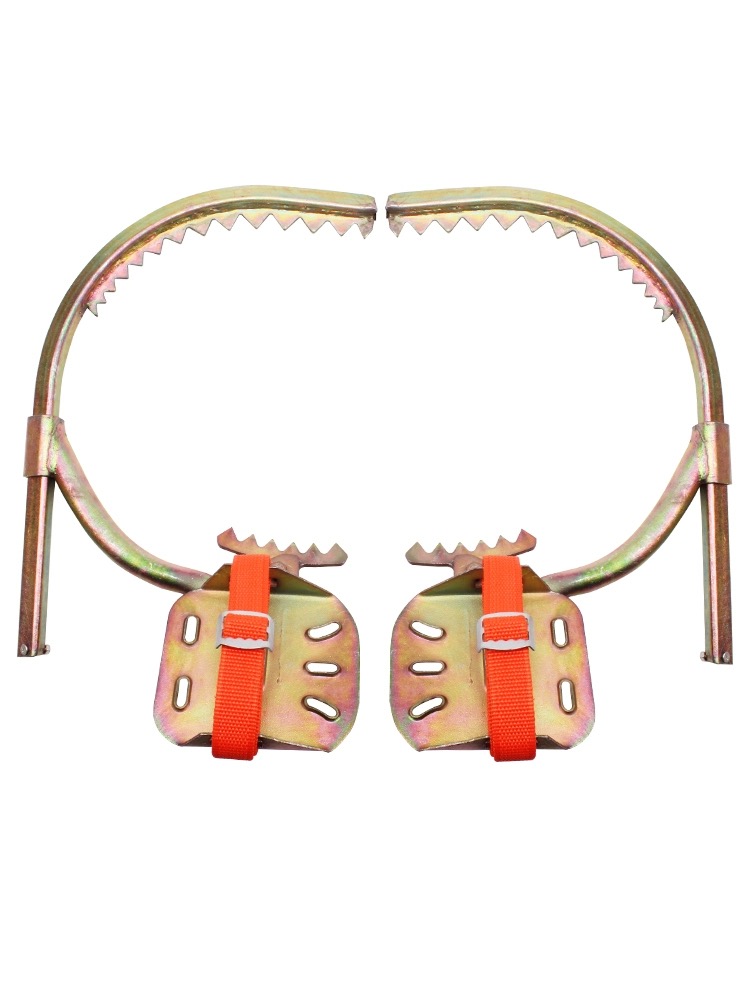
Arborists tackle severe heights and unpredictable environments every single day. They require highly reliable climbing tools to mitigate fall risks and manage physical fatigue during complex ascents. Ropes and harnesses deliver essential baseline fall protection. However, securing a rigid stance on vertical wood demands a highly specialized approach. These sharp metal attachments lock the climber into the trunk.
Industry standards provide a strict baseline for compliance. The International Society of Arboriculture (ISA) dictates clear usage rules. Operators must reserve these attachments strictly for tree removals, emergencies, or dead wooding. They puncture bark deeply. This causes irreversible vascular damage to living cambium. Professionals never use them on trees targeted for preservation.
We built this article to offer an evidence-based breakdown. You will discover exactly how tree climbing spikes physically enhance climber safety. We also provide a practical decision framework. You will learn how to evaluate and select the safest, most effective gear for your professional crew.
Key Takeaways
Purpose-Driven Safety: Spikes drastically reduce upper-body fatigue and provide a rigid, three-point stance during heavy rigging or chainsaw operation.
Strict Application Use: Industry standards mandate spikes only be used for removals or dead trees to prevent pathogen entry and vascular damage.
Gaff Selection is Critical: Choosing between tree gaffs (longer, for thick bark) and pole gaffs (shorter, for thin bark/poles) dictates slip resistance and overall safety.
System Compatibility: Effective spike safety relies heavily on compatible, stiff-shanked climbing boots and high-quality harness integrations.
The Operational Role of Spikes Among Modern Climbing Tools
Climbing a tree represents only the first phase of an arborist's job. Modern operators must move beyond basic ascent. They need to achieve a highly stable, hands-free position. Hazardous tasks require extreme balance. Block rigging, dropping heavy tops, and running large chainsaws demand absolute stability. You cannot safely perform these tasks while swinging from a rope alone.
It helps to view these devices correctly within your gear ecosystem. They do not replace your primary rope systems. Whether you use Stationary Rope Technique (SRT) or Doubled Rope Technique (DdRT), ropes remain your primary life support. Spikes function as a supplementary foundational support. They secure your lower body during removals. They anchor you directly into the wood. This creates a solid platform where natural branches do not exist.
Professional credibility relies heavily on strict compliance. ISA standards clearly ban their use on live trees targeted for preservation. The reasons are purely biological. The metal tips pierce the cambium layer. This introduces harmful pathogens, fungi, and bacteria directly into the tree's vascular system. It leaves open wounds.
Improper application carries heavy risks. Commercial tree care companies face massive liability if they damage client property. Furthermore, reputational damage happens quickly. Educated clients know the industry rules. If your crew spikes a live pruning job, you risk losing future contracts. Trust forms the foundation of commercial tree care. Strict adherence to proper use cases protects both the tree and your business reputation.
Core Safety Mechanisms: How Tree Climbing Spikes Mitigate Risk
Understanding the biomechanics of climbing helps explain why these devices remain essential. Fatigue is the silent enemy of aerial safety. When a climber relies solely on upper body strength, arm muscles fail rapidly. Prolonged, multi-hour removals push the human body to its limits.
Fatigue Reduction and Ergonomics
These attachments completely change the physical load distribution. They transfer the climber’s weight from the arms directly into the skeletal structure of the legs. The legs contain the largest, most durable muscles in the human body. By stepping into the wood, you remove the constant tension from your shoulders and forearms. This ergonomic shift prevents catastrophic muscle failure late in the day. You remain alert, strong, and capable of operating heavy machinery safely.
Enhanced Anchor Stability
Vertical spars present a unique danger. When you strip a tree of all its branches, you lose all natural footholds. You face a bare, vertical column of wood. Spikes create a reliable work platform anywhere on the trunk. They offer immediate benefits:
Three-point stance creation: You combine your flipline and your two feet to form a locked triangle.
Lateral shift prevention: The metal tips bite deep, stopping your boots from slipping sideways.
Pendulum swing elimination: Operating a heavy chainsaw introduces immense rotational force. Spikes hold you completely stationary against the reactive forces of the saw.
Emergency Rescue Viability
Safety also encompasses worst-case scenarios. Aerial rescue demands immediate action. When a climber sustains an injury aloft, seconds matter. Setting complex rope friction savers takes too much time. Spikes allow a rescuer to execute a rapid, linear ascent. They can climb a bare trunk directly to the injured worker. This speed often dictates the difference between a successful rescue and a tragedy.
Evaluation Dimensions: Choosing Spikes for Maximum Security
Selecting the right gear requires a clear understanding of your daily operational needs. Not all designs suit all environments. The physical features directly dictate the outcome of your climb.
Gaff Length and Profile (Feature-to-Outcome)
The metal spike itself is called a gaff. Its length determines penetration and grip. You must match the length to your specific environment.
Tree gaffs typically measure between 2 ¾ inches and 3 ¼ inches. They are absolutely essential for thick, deeply furrowed bark. Think of mature Oaks, Pines, or Cottonwoods. The extra length punches through the thick outer bark. It reaches the solid sapwood underneath. If you use short tips on thick bark, you will slip.
Pole gaffs measure shorter, usually between 1 ½ inches and 1 ¾ inches. They are safer for thin-barked trees or bare utility poles. Shorter tips prevent over-penetration. If a long tip sinks too deep into a hard utility pole, it gets stuck. This forces the climber to violently wrench their ankle to break it free. Over time, this causes severe joint injuries.
Material Construction & Scalability
Manufacturers use three primary materials. Your choice impacts daily fatigue and your purchasing budget.
Climbing Gear Material Comparison Chart
Material Type
Weight Characteristics
Durability & Strength
Primary Best Use Case
Steel
Heaviest option. Increases leg fatigue.
Maximum durability. Withstands severe abuse.
Entry-level climbers or crews on strict budgets.
Aluminum
Lightweight. Great strength-to-weight ratio.
Highly durable for daily professional wear.
Industry standard for commercial daily removals.
Carbon Fiber
Ultra-lightweight. Virtually zero drag.
Extreme structural integrity. Premium build.
Specialized lead climbers prioritizing joint health.
Pad & Shank Ergonomics
Shin pressure causes major discomfort during long climbs. The pad rests directly against your upper leg. You must evaluate wrap-around pads versus standard T-pads. Wrap-around designs distribute the pressure across a wider surface area. They reduce localized bruising. Additionally, you need adjustable shank lengths. The shank must align accurately with the climber’s specific calf and knee mechanics. A poor fit leads to altered climbing angles and reduced safety.
Implementation Realities: Common Risks and Avoidable Pitfalls
Even the best gear fails if applied incorrectly. Human error and poor maintenance introduce severe hazards into the canopy. You must recognize these risks to protect your crew.
The "Gaff Out" Hazard
A "gaff out" happens when the metal tip unexpectedly slips out of the wood. The climber instantly drops, shocking their fall arrest system. This usually stems from a poor climbing angle. If you stand too close to the trunk, the tip points straight down instead of angling into the wood. The metal simply slides down the bark. Dull tips also cause slipping. They crush the bark rather than piercing it. You must maintain a slight outward lean to drive the point effectively.
Equipment Incompatibility
Your footwear plays a massive role in system safety. Flexible-sole boots present a distinct danger. When you stand on a narrow metal stirrup, all your body weight focuses on the middle of your foot. Flexible boots will bend around the metal. This causes immediate foot arch collapse. The resulting pain is blinding. It accelerates leg fatigue and drastically increases slipping risks. You must pair your gear with specialized, rigid-shank climbing boots. A steel or composite shank keeps the foot perfectly flat and fully supported.
Maintenance Neglect
Ignoring maintenance invites disaster. You must sharpen your gear correctly. Improper filing ruins the factory angle. If you change the bevel, the tip will either bounce off the wood or sink in too deep. Always use a specialized manufacturer gauge when filing.
Strap degradation poses another hidden risk. Leather and synthetic straps hold the metal frame to your leg. You must inspect them daily for micro-tears. UV exposure, sweat, and sawdust degrade these materials fast. A snapped lower strap mid-climb leaves you dangling with a loose, dangerous blade strapped to your knee.
Shortlisting Logic: Procurement Next Steps for Your Crew
Buying gear for a professional team requires strategic thinking. You need to balance safety, budget, and daily utility.
Assess the Workload Scope
Look closely at your company's service matrix. Determine the exact ratio of removals versus pruning. If your team only does removals 10% of the time, heavy steel units might suffice. However, if you run a dedicated removal crew operating five days a week, you must invest in premium aluminum or carbon fiber. The fatigue reduction easily pays for the higher initial price tag.
Standardization vs. Personalization
Decide how you will assign the gear. If you have a rotating crew where multiple ground workers occasionally climb, buy universal adjustable sets. They fit various heights and leg shapes. Conversely, your lead climbers deserve custom-fit, premium sets. Personalized gear prevents ergonomic injuries and maximizes their daily output.
Verify Certifications
Never purchase unbranded or untested safety equipment. Ensure all shortlisted brands meet or exceed ANSI and OSHA standards. These certifications guarantee structural integrity. They prove the metal will not snap under the sudden dynamic load of a slip.
Actionable Next Step
Before you finalize any purchase, audit your current setups. Check your footwear first. Do your climbers own rigid-shank boots? Next, check their harnesses. Do they have proper D-rings for sturdy flipline attachment? Ensure a seamless, safe integration across all components before introducing new hardware into the field.
Conclusion
Securing a stable stance in the canopy remains non-negotiable for professional arborists. These specialized attachments act as a critical extension of the climber's body. They drastically reduce upper-body fatigue and lock the operator firmly into the trunk. For heavy removals and complex rigging, they remain completely unparalleled in safety and efficiency.
However, the hardware is only one piece of the safety puzzle. You must prioritize proper sizing, rigorous maintenance, and strict adherence to ISA standards. Audit your boots, check your straps daily, and never spike a live tree meant for preservation. Keep your gear sharp and your training sharp, and your crew will return home safely every single day.
FAQ
Q: When is it safe to use tree climbing spikes on a live tree?
A: Only during an emergency aerial rescue, or if the tree is definitively scheduled for full removal. Otherwise, it violates ISA standards due to cambium damage. Puncturing the bark introduces lethal pathogens and destroys the tree's vascular health.
Q: What is the difference between pole gaffs and tree gaffs?
A: Pole gaffs are shorter (around 1.5 inches) for thin bark and utility poles. Tree gaffs are longer (up to 3+ inches) to safely penetrate thick bark and grip the solid wood underneath. Using the wrong length causes severe slipping hazards.
Q: Can I use standard work boots with tree climbing spikes?
A: No. Safe use requires boots with a reinforced, rigid steel or composite shank. Standard boots will bend, causing severe foot pain, arch collapse, extreme fatigue, and a significantly higher risk of slipping off the trunk.
Q: How often should tree climbing spikes be replaced or sharpened?
A: Straps and pads should be replaced when frayed or excessively worn. Gaffs must be filed (using a specialized gauge to maintain the correct angle) whenever they become dull, and replaced when they wear past the manufacturer's safe length limit.