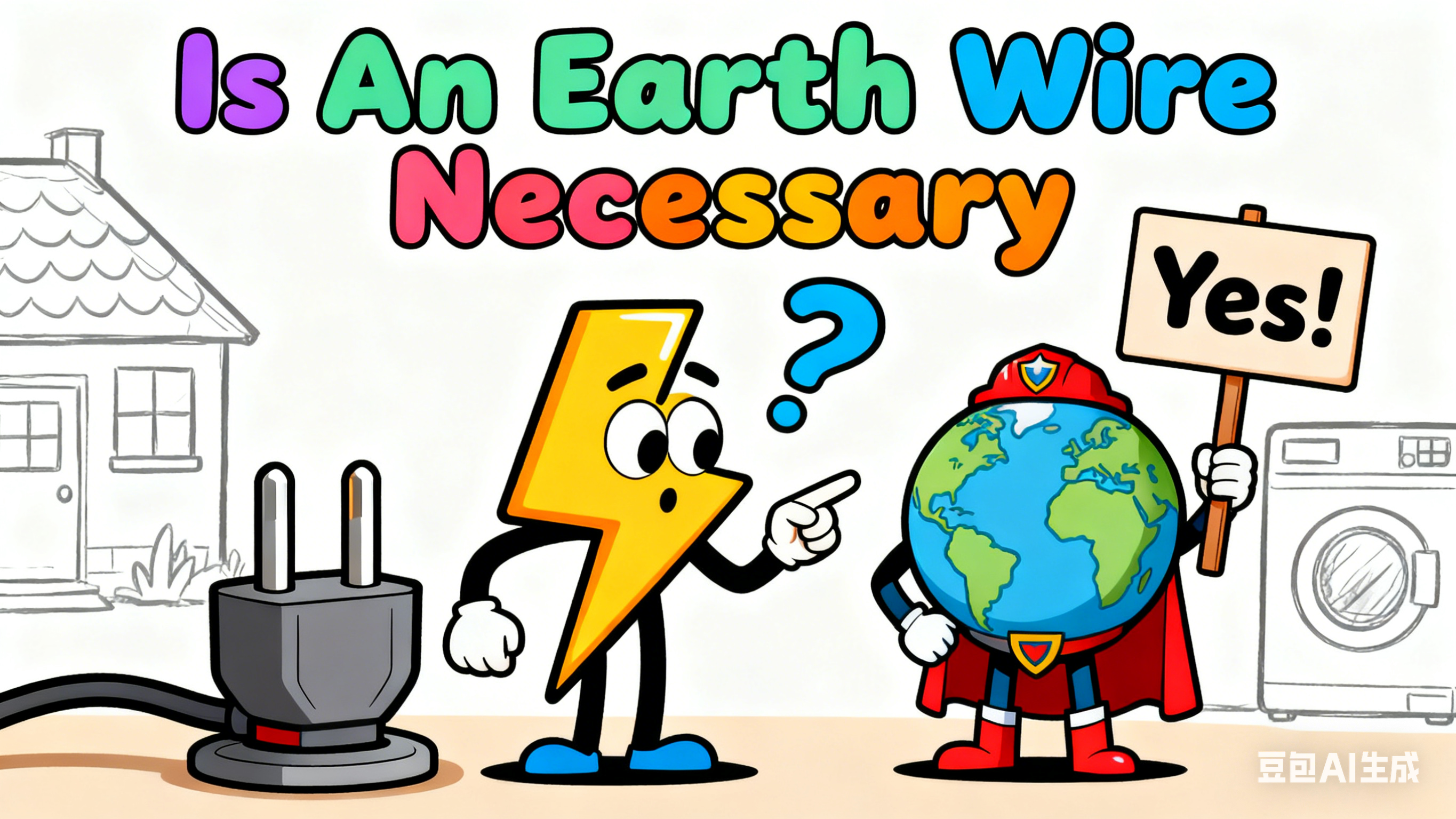
If you’ve ever looked at a plug and wondered why some have two pins while others have three, you’ve already encountered the concept of earthing. For many homeowners and DIY enthusiasts, the “earth wire” (often recognized by its distinctive green and yellow casing) can seem like an optional extra—a wire that doesn’t appear to “do” anything active like the live wire does.
However, questioning whether an earth wire is necessary is a bit like asking if seatbelts are necessary in a car. You can technically drive without one, but if something goes wrong, it becomes the most critical component in the system.
In the world of electricity, grounding is not optional; it is a fundamental safety mechanism designed to save lives and protect expensive property. This guide will break down exactly why the earth wire is mandatory for most electrical systems, how it works to prevent electrocution and fire, and what happens when this invisible shield is missing. By the end, you’ll understand why that third pin is the most important one of all.
The straightforward answer is yes: an earth wire is absolutely necessary for the safety and stability of modern electrical circuits. While your lights might turn on and your toaster might heat up without one, operating electrical equipment without a proper ground connection removes the critical fail-safe that protects you from fatal accidents.
Legal and Safety Standards That Require Grounding
Electrical codes and standards globally—such as the NEC in the US or BS 7671 in the UK—mandate grounding for good reason. These regulations aren’t just bureaucratic red tape; they are written in response to historical data on electrical fires and fatalities. In many regions, standard GB2681 (mentioned in technical documentation) stipulates strict color coding and connection protocols: yellow-green for ground, light blue for neutral, and specific colors for phase wires. These standards ensure that any qualified electrician can instantly identify the safety path in a circuit.
Why Modern Appliance Design Assumes a Working Earth Wire
Most modern appliances are built with metal casings or internal components that conduct electricity. Manufacturers design these devices assuming that a ground path exists. If a fault occurs inside a washing machine or a refrigerator—say, a live wire comes loose and touches the metal frame—the earth wire is designed to immediately divert that current away. Without it, the metal casing itself becomes “live,” waiting for a human touch to complete the circuit.
When grounding is mandatory vs rare cases where it’s optional
Grounding is mandatory for almost all standard household circuits, especially those powering heavy appliances like ovens, heaters, and washing machines. The rare exception applies to “double-insulated” devices. These appliances (often marked with a square-within-a-square symbol) are designed with two layers of insulating material between the live parts and the user, meaning they effectively remove the risk of the casing becoming live. This is why you might see a vacuum cleaner or a phone charger with only two pins. However, for the fixed wiring of your home and any major appliance with a metal chassis, the earth wire is non-negotiable.
What Exactly Does an Earth Wire Do?
To understand necessity, we must understand function. The earth wire—often referred to as a lightning protection wire in specific contexts—is a highly conductive path used to direct unwanted current safely into the ground.
Prevents Electric Shock by Diverting Fault Current
The primary role of an earth wire is personal safety. Electricity always seeks the path of least resistance to the ground. In a properly grounded system, the earth wire provides a pathway with very low resistance. If a device malfunctions and leaks current, that electricity flows rapidly down the earth wire rather than through you. This surge of current is typically high enough to trip the circuit breaker or blow a fuse instantly, cutting off the power and removing the danger.
Protects Appliances from Damage and Voltage Instability
Beyond saving lives, earth wires save wallets. Electrical systems can experience voltage surges or “transients” due to lightning strikes, grid switching, or even large appliances turning on and off. A solid ground connection helps stabilize voltage levels, providing a reference point for the entire electrical system. This reduces the stress on sensitive electronic components, preventing them from frying during minor electrical disturbances.
Reduces Electromagnetic Interference (EMI) and Improves Performance
In our digital age, electromagnetic interference (EMI) is a silent nuisance. Without proper grounding, “noise” from stray electrical signals can interfere with the operation of computers, Wi-Fi routers, and audio-visual equipment. Braided earth cables are often used in specific applications to act as an electrostatic screen. This shielding effect helps maintain signal clarity and operational stability, ensuring your smart TV doesn’t flicker and your internet connection remains stable.
Stabilizes the Entire Electrical System During Faults
When a fault occurs, the electrical system can become wildly unstable. The earth wire acts as an anchor. By ensuring that the non-current-carrying metal parts of an installation stay at or near ground potential, it prevents dangerous voltages from appearing where they shouldn’t. This stabilization is crucial not just for the faulty circuit, but for preventing the fault from cascading into other parts of the home’s electrical infrastructure.
How to Know If Your Home or Appliance Has an Earth Wire
You don’t need to be a certified electrician to spot the initial signs of grounding issues, though professional verification is always best.
Checking Socket Design (3-pin vs 2-pin)
The easiest visual check is the outlet itself. Modern three-pin sockets generally include a specific hole for the earth connection (usually the top or middle pin, depending on your country’s standard). If your home still relies on two-pin outlets for main power, it is highly likely that the circuit lacks a dedicated earth wire.
Using Ground Testing Instruments (Resistance + Continuity)
For a definitive answer, professional circuit testing instruments are required. A socket tester (a small, inexpensive device you plug in) can indicate if the ground is connected. However, to ensure the ground is good—meaning it has low resistance—an electrician will use a resistance tester. This ensures that the path to the earth is clear and conductive enough to handle a fault current.
Reviewing Building Electrical Drawings
If you have access to them, the original circuit wiring diagrams or building design drawings are invaluable. They should indicate the grounding method used (such as TN-S or TN-C) and where the grounding electrodes are physically located. If the drawings show no earth provision, your home likely relies on outdated wiring methods.
Signs of Improper or Missing Grounding
Beyond testing, look for physical symptoms. If you feel a slight tingle or “buzz” when touching a metal appliance, that is a major red flag that the device is not grounded and is leaking current. Other signs include loose wall outlets, flickering lights that don’t resolve with bulb changes, or surge protectors that show a “Not Grounded” warning light.
What Makes a “Good” Earth Wire?
Just having a wire isn’t enough; it must be the right wire, installed correctly.
Correct Material (Copper vs Aluminum)
Conductivity is key. Earth wires must be made of highly conductive and corrosion-resistant materials. Copper is the industry gold standard due to its efficiency and durability. Aluminum is also used, particularly in older or larger gauge installations, but requires careful maintenance to prevent oxidation. The material must be capable of carrying a sudden, massive surge of current without melting.
Low Ground Resistance Requirements
The path to the ground must offer less resistance than your body. If the ground wire is too long, too thin, or poorly connected, its resistance increases. If the resistance is too high, the fault current might split, with some going down the wire and some going through you. Regulations specify maximum resistance values (often measured in Ohms) to ensure the safety path is always the easiest path.
Proper Connections and Corrosion-Free Terminals
A ground wire is only as good as its connection. Terminals must be tight and free of rust or paint. A loose screw on a grounding busbar can render the entire safety system useless. In damp environments, corrosion can creep in between connections, breaking the circuit and leaving the system ungrounded without anyone realizing it.
Regular Inspection and Maintenance
Grounding systems are buried and forgotten, which is dangerous. Ground rods driven into the soil can corrode over decades; connections in walls can vibrate loose. Regular electrical inspections (often recommended every 3-5 years for homes) involve testing the resistance of the earth rod to ensure it still effectively dissipates current into the soil.
Frequently Asked Questions About Earth Wires
Can an appliance work without an earth wire?
Yes, technically. The motor will spin and the heating element will glow. However, the safety mechanisms will not work. If a fault occurs, the appliance will remain powered and dangerous.
Why do some devices have only two pins?
These devices are “Class II” or double-insulated. They are designed with reinforced insulation so that no single failure can make the casing live. Because the risk of shock is engineered out of the device itself, an earth wire is not required.
Is it safe to use adapters that bypass the ground pin?
No. “Cheater plugs” or adapters that convert a 3-pin plug to fit a 2-pin outlet are dangerous. They disconnect the safety ground from an appliance that was designed to rely on it. If that appliance faults, the safety ground is gone, and the risk of shock is immediate.
What should I do if my home has old ungrounded wiring?
Do not ignore it. You should consult a licensed electrician. Options typically include rewiring the home (the best but most expensive option) or installing Ground Fault Circuit Interrupter (GFCI) outlets, which can provide shock protection even without a ground wire (though they do not protect equipment from surges).
Conclusion — Yes, an Earth Wire Is Necessary
When you strip away the technical jargon, the earth wire is a silent guardian. It prevents a momentary malfunction from becoming a tragedy. It protects your expensive electronics from invisible surges and shields your family from electric shock. While electricity drives modern life, it is the earth wire that makes it safe to live with.
If you suspect your home lacks proper grounding or you are relying on old two-prong outlets, treat it as a priority. Check your sockets, look for the signs, and bring in a professional. Because when it comes to electrical safety, the only optional component is the risk you are willing to take.
Join global professionals trusting JITAI for safety and quality—Get in touch now for a tailored quote and start protecting your team and equipment.


