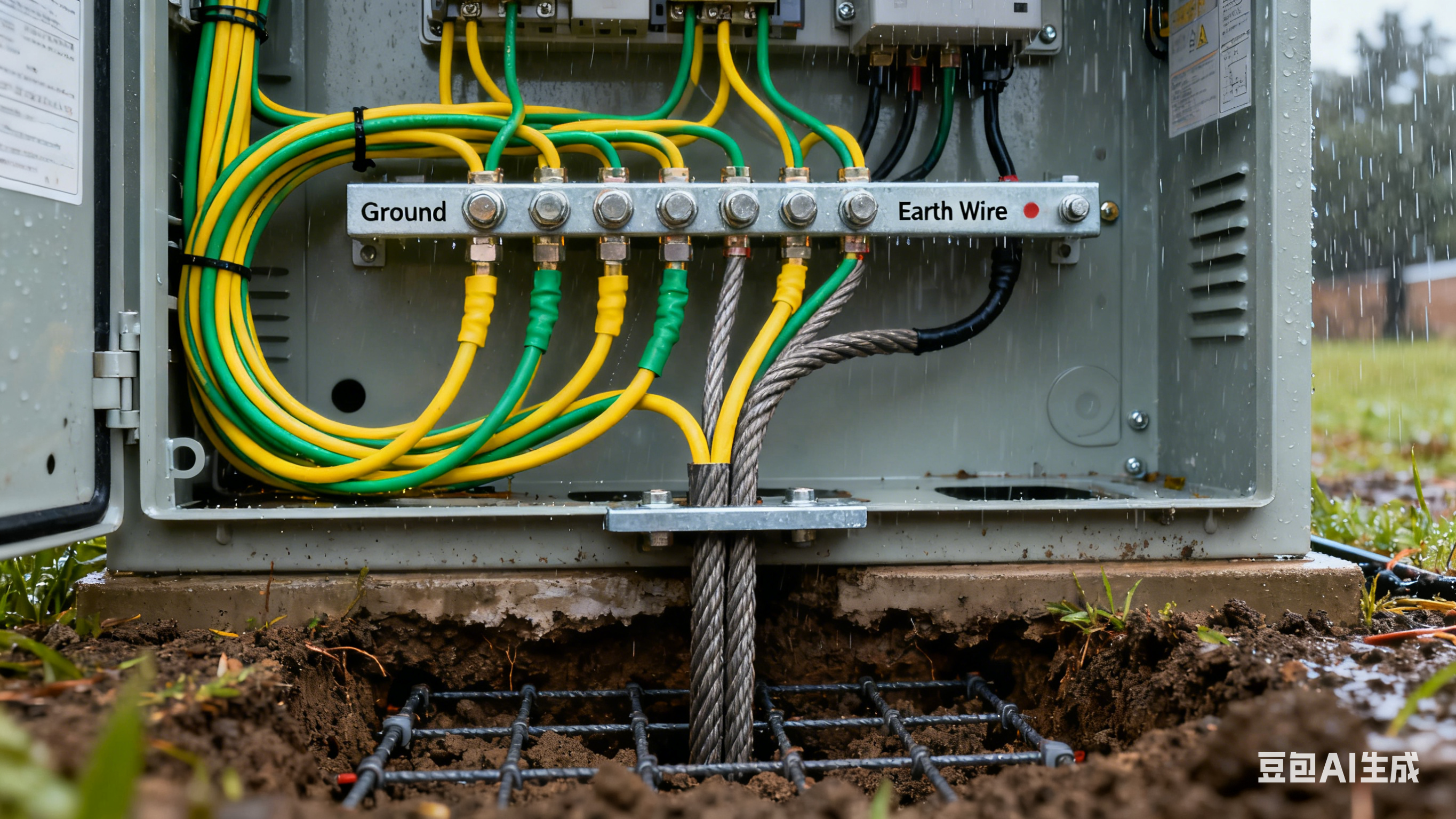
If you have ever attempted a DIY electrical project or simply stared at the back of a new appliance, you might have noticed some confusing terminology. Some manuals refer to a “ground wire,” while others insist on an “earth wire.” For those without a degree in electrical engineering, this can be more than just a matter of semantics—it can feel like a safety hazard waiting to happen.
The confusion is understandable. Electricity is invisible, powerful, and potentially dangerous, so precision in language matters. When you are dealing with circuits that power your home, knowing whether you are connecting a “ground” or an “earth” is crucial for peace of mind. But why do these two terms exist if they seem to describe the exact same function?
The short answer lies in geography rather than physics. While the science of diverting dangerous electrical currents away from you remains constant, the words we use to describe that process change depending on which side of the Atlantic Ocean you are standing on. However, digging deeper reveals that while the names are often used interchangeably, understanding the specific roles of these wires is the most fundamental safety strategy for any electrical system.
This guide will break down the definitions, the regional differences, and the critical safety roles these wires play in preventing electric shock and fire hazards.
What Does the Term “Ground Wire / Earth Wire” Mean?
Before diving into the differences, it is essential to establish exactly what these wires do. In the simplest terms, a ground or earth wire is a safety valve for electricity.
Definition
A ground (or earth) wire is a conductive path designed to connect the exposed metal parts of electrical equipment directly to the physical earth. Under normal operating conditions, this wire does absolutely nothing. It does not carry current to power your toaster or light up your living room. It sits in wait, acting as a silent guardian.
Its moment to shine comes only when something goes wrong. If insulation fails or a loose wire touches the metal casing of an appliance, the exterior of that appliance becomes “live.” Without a ground wire, touching that appliance would make you the path to the ground, resulting in a shock. The ground wire provides an alternative, low-resistance path for that errant electricity.
Function
The primary function is creating a “low-impedance path for fault current.”
Electricity always seeks the path of least resistance (or technically, impedance). If a fault occurs—meaning electricity leaks where it shouldn’t—the ground wire offers an incredibly easy highway for that current to escape into the earth. Because this path is so efficient, the sudden surge of current (fault current) is high enough to instantly trip your circuit breaker or blow a fuse. This cuts off the power immediately, neutralizing the danger.
Regional Naming Differences
This is where the vocabulary lesson begins. The physical concept—connecting metal to the dirt outside—is universal. The label is cultural.
United States (NEC): The National Electrical Code refers to this as Grounding. You will see green or bare copper wires referred to as “ground wires.”
United Kingdom / Europe / IEC: The International Electrotechnical Commission and British standards refer to this as Earthing. You will typically see wires with green and yellow stripes referred to as “earth wires.”
Despite the different labels, a washing machine plugged into a socket in London uses “earthing” to protect the user in the exact same way a washing machine in New York uses “grounding.”
Are a Ground Wire and an Earth Wire the Same Thing?
If you are looking for a straightforward verdict: Yes, they are functionally identical.
Whether you call it an earth wire or a ground wire, the component serves the same master: safety. The confusion arises almost exclusively from the terminology used in different regulatory standards (British vs. American systems).
Why the Terminology Differs
The split in language dates back to the development of electrical grids. In the US, the focus was on the concept of the circuit being tied to the “ground.” In the UK and Commonwealth countries, the focus was literally on the connection to “Mother Earth.”
In American electrical theory (governed by the NEC), you will often hear about “grounding electrodes” and “equipment grounding conductors.” In the UK, you will hear about “earth bonding” and “earthing conductors.”
However, the endgame is the same: “To mitigate risks, such current is provided with a low-resistance path and directed to the earth via the ground/earth wire.”
If you are buying a replacement cord for a device or reading a wiring diagram, you can generally treat “Earth” and “Ground” as synonyms. The electrons flowing through the copper certainly don’t know the difference.
How Do “Earthing” and “Grounding” Differ Conceptually?
While the wires are the same, there is a nuanced technical difference in how engineers sometimes discuss the acts of earthing versus grounding. It gets a bit academic here, but it is useful for understanding the broader electrical system.
According to Cable Source and other technical definitions, the explanations are differentiated as follows:
Earthing (The People Protector)
Conceptually, “earthing” refers to connecting the non-current-carrying metal parts of equipment (like the metal casing of a microwave) to the earth.
Goal: To keep the metal casing at “ground potential” (zero volts).
Result: If you touch the metal case during a fault, you don’t get shocked because the case is at the same voltage as the floor you are standing on.
Primary Focus: Protecting people.
Grounding (The System Protector)
In strict technical terms, “grounding” can refer to connecting a specific part of the circuit itself (usually the neutral point) to the earth.
Goal: To stabilize the voltage of the system relative to the ground.
Result: It ensures that the “neutral” wire stays at zero volts, preventing voltage spikes from lightning or line surges from frying the entire system.
Primary Focus: Protecting the equipment and the electrical system.
The Reality in Household Wiring
Despite these high-level conceptual distinctions, in your home’s wall socket, the “ground wire” performs the function of earthing. It connects the metal parts of your lamps and appliances to the ground rod outside your house.
Therefore, if an electrician tells you your outlet “needs a ground,” they are saying it needs a safety wire to protect you (earthing). If they say the “system is grounded,” they might be referring to how the main panel connects to the earth rod. For the average homeowner, the terms remain effectively interchangeable.
Why Does the Earth/Ground Wire Matter?
You might wonder, if the ground wire doesn’t carry electricity to power devices, can’t I just ignore it? Absolutely not. The ground wire is the unsung hero of electrical safety. Without it, your electrical system is working without a safety net.
Preventing Electric Shock
This is the most immediate benefit. Imagine a “hot” wire inside your metal coffee maker comes loose and touches the inside of the metal casing.
Without a ground wire: The metal casing becomes charged with 120 volts (or 230V in Europe). The casing looks normal. But the moment you touch it to pour a cup of coffee, that electricity rushes through you to get to the ground. This is a potentially fatal shock.
With a ground wire: The moment the loose wire touches the casing, the electricity rushes through the ground wire instead of waiting for you.
Preventing Electrical Fires
Ground wires are essential for the mechanics of circuit breakers. Circuit breakers are designed to trip when current gets too high (an overload).
If a fault occurs in an ungrounded system, the electricity might leak slowly into framing or nearby materials, heating them up without drawing enough current to trip the breaker. This is how electrical fires start silently inside walls.
In a grounded system, the ground wire provides such a fast, easy path for electricity that the current spikes instantly (a “short circuit”). This massive spike triggers the magnetic trip function in your breaker box, cutting power in a fraction of a second. The ground wire essentially forces the breaker to do its job.
Protecting Sensitive Electronic Equipment
Modern electronics—computers, smart TVs, and gaming consoles—are incredibly sensitive to voltage fluctuations. Static electricity buildup or minor surges can fry delicate microchips. A proper ground connection allows this excess charge to drain away harmlessly, extending the life of your expensive gadgets.
As Cable Source reiterates, proper earthing/grounding is the most fundamental safety strategy for electrical systems. It is the baseline requirement for a safe home.
Common Misconceptions About Ground/Earth Wires
Because electrical wiring is hidden behind drywall, myths tend to propagate. Let’s clear up a few dangerous misunderstandings.
Misconception 1: “Ground and Neutral are the same”
Verdict: Incorrect.
While both wires eventually connect to the earth at the main panel, they serve very different roles.
Neutral (White/Blue): The return path for the current. It is meant to carry electricity during normal use.
Ground (Green/Bare): The emergency path. It should never carry current unless there is a fault.Connecting these two incorrectly (known as a “bootleg ground”) creates a serious shock hazard. If the neutral wire ever disconnects, the casing of your electronics could become live.
Misconception 2: “With an RCD/GFCI, a ground wire is not needed”
Verdict: Incorrect.
A GFCI (Ground Fault Circuit Interrupter) or RCD (Residual Current Device) can indeed protect you from shock even without a ground wire. It detects when current goes missing (i.e., flows through you) and shuts off.
However, surge protectors require a ground wire to function. Without a ground, your expensive surge protector is just a glorified extension cord. Furthermore, a ground wire clears faults faster and more reliably than relying solely on a GFCI sensor.
Misconception 3: “Plastic-cased equipment does not need a ground wire”
Verdict: Partially True.
You might notice some power tools or lamps only have two prongs. These are likely Class II or “double insulated” devices. They are designed with two layers of insulation so that a single failure cannot make the outer casing live. In this specific instance, a ground wire isn’t required by code. However, this does not mean the outlet doesn’t need a ground; it just means that specific device doesn’t utilize it.
Misconception 4: “Bare copper ground wires are unsafe”
Verdict: Incorrect.
If you open a US electrical box, you will often see the ground wire is just bare copper without insulation. This is explicitly permitted by the US National Electrical Code (NEC). Since the ground wire should never carry current under normal circumstances (and is at zero volts potential), it does not strictly require insulation like the hot and neutral wires do. However, in the UK and IEC standards, green/yellow insulation is required for identification and protection. Both are safe when installed according to their respective local codes.
Conclusion — Same Safety Mission, Different Names
When you strip away the regulatory jargon and the color-coded insulation, the answer is clear: the ground wire and the earth wire are siblings with different names.
Whether you call it “grounding” (US style) or “earthing” (UK/IEC style), the physics remain consistent. Both systems rely on a low-resistance conductor to connect non-current-carrying metal parts to the mass of the earth. This connection is vital for diverting leakage current, tripping circuit breakers during faults, and ultimately ensuring that a touch of a switch doesn’t turn into a trip to the hospital.
While the terminology differs, the fundamental consistency is what matters. A missing or broken ground wire—regardless of what you call it—poses a serious risk to both property and life.
If you are ever unsure about the wiring in your home, or if you notice outlets that don’t seem to be grounded, do not rely on guesswork. Electricity is unforgiving of mistakes. Users with concerns are always advised to have a professional electrician inspect the equipment to ensure your home is properly earthed—or grounded—for safety.


