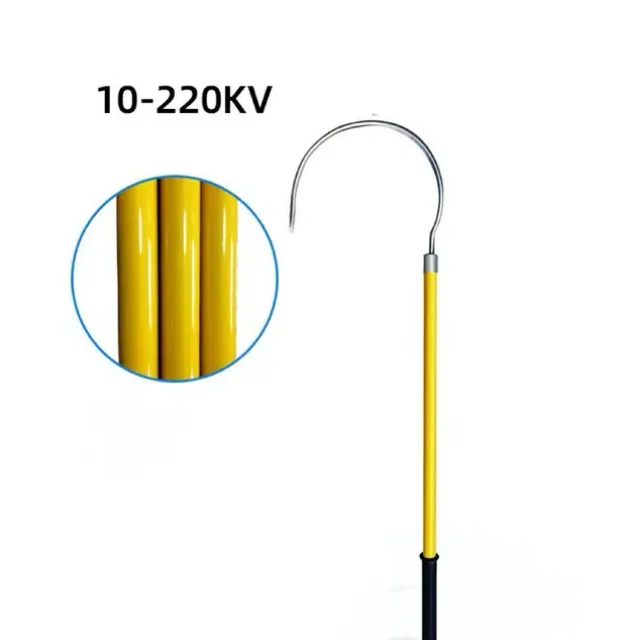
Working near live power lines is inherently dangerous. One wrong move can lead to severe injury or death, which is why linemen rely on purpose-built insulating tools to keep themselves at a safe distance from energized conductors. A hot stick is the essential insulating tool used to operate equipment, change hardware, and perform many live-line tasks without direct human contact with energized parts. At JITAI we manufacture a range of insulating tools including hot sticks and link sticks that meet international quality standards and help utilities keep crews safe while maintaining service reliability.
The role of insulation in electrical safety
Why direct contact with live conductors is impossible
Electricity follows the path of least resistance. Human skin and tissue conduct enough current to cause burns, nerve damage, cardiac arrest, and fatal electrocution when exposed to power-line voltages. Because of that fundamental danger, utilities and safety regulators require strict procedures that eliminate or minimize any risk of direct contact with energized parts. Direct contact with live conductors is therefore prohibited in routine work and only allowed under controlled live-line techniques using approved insulating equipment and trained personnel.
Hot sticks as a means to keep safe distance
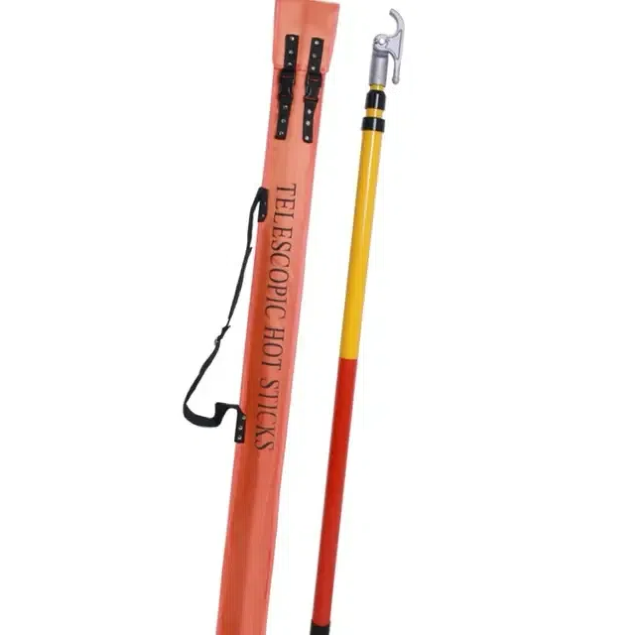
The hot stick functions as an extension of the lineman’s arms. Constructed from high-dielectric materials such as fiberglass with specialized resin systems, a hot stick provides electrical insulation that maintains separation between the worker and the energized conductor. The tool’s length creates a controlled standoff distance which reduces electric field strength at the operator’s position and prevents arcing. Telescopic hot sticks allow crews to select appropriate reach for the task while preserving the insulating barrier, enabling actions such as switching, cutting, or replacing components from the ground or from an insulated aerial platform.
Comparison with other insulating tools
Insulating gloves, rubber blankets, dielectric boots, and insulated aerial buckets are all critical components of an overall safety program. Each has its strengths. Gloves and sleeves provide a last line of defense for workers who need to make contact, blankets and covers shield exposed equipment during work, and insulated buckets allow elevated access with protection. Hot sticks are unique in their ability to combine reach, modular attachments, and mechanical leverage to perform a wide range of tasks without elevating workers into direct proximity with live conductors. In many situations, hot sticks complement rather than replace other insulating gear, forming part of a layered approach to electrical safety.
Key purposes of a hot stick
Operating switches and disconnects
One of the most common uses for a hot stick is operating switches and disconnects on energized circuits. Hot sticks are fitted with hooks, insulators, or switch-operating heads that let a trained crew open or close sectionalizing switches and load-break disconnects safely. This capability is invaluable during load switching, fault isolation, and sectionalizing work because it allows service to be reconfigured without exposing technicians to direct contact with live parts.
Replacing fuses and cutouts
Fuse replacement is a routine yet high-risk task when a fuse has blown on an energized feeder. Hot sticks equipped with specialized fuse-puller attachments allow crews to remove blown fuses and install replacements while keeping the operator insulated and at a safe distance. Modern hot sticks can be adapted for a variety of fuse and cutout designs, enabling safer, faster restoration of feeders without waiting for a full de-energize and re-energize sequence.
Installing or removing protective covers
Protective covers and insulating blanks are used to shield energized components while adjacent equipment is worked on. Hot sticks fitted with clamps, hooks, or magnetic adapters make it possible to install or remove these covers precisely from the ground. Using a hot stick to handle protective coverings reduces the need for awkward close-up maneuvers and ensures the cover is seated properly, maintaining system safety during maintenance.
Enhancing efficiency in field operations
Reducing outage time with live-line work
Restoring customers quickly is a core operational priority for utilities. Hot sticks enable many interventions to be done without shutting down feeders, which shortens outage durations and improves service continuity. By performing switching and limited repairs live, crews can restore power faster to large segments of the grid while isolating only the affected elements. That efficiency translates directly into improved reliability metrics and better customer satisfaction.
Allowing crews to work without cutting power
There are many scenarios where de-energizing an entire line is impractical because it would leave critical customers without service. Hot sticks make it feasible to conduct targeted work without global outages. Well-planned hot-stick operations allow technicians to isolate faults, swap components, or reconfigure circuits while the remainder of the network continues to operate, preserving essential services for hospitals, communications, and other critical infrastructure.
Expanding range of tasks from the ground
Hot sticks broaden what crews can accomplish without climbing or elevating personnel into the danger zone. From adjusting guy wires to pulling fuses, operating sectionalizers, and positioning temporary grounding equipment, the right hot stick with the correct head or attachment turns many elevated tasks into safe ground-level procedures. This reduces reliance on bucket trucks and climbing, lowers risk, and can decrease the number of crew members needed for certain jobs.
Beyond power lines: other uses of hot sticks
Substation applications
While often associated with overhead distribution lines, hot sticks are also valuable in substations. Substation hot sticks are typically shorter and designed for precise operations on switchgear, busbars, and disconnects inside fenced areas. They provide a safe way to operate live equipment, place insulating barriers, and perform switching in coordination with control room procedures.
Training and safety demonstrations
Hot sticks are essential training aids. New linemen learn live-line protocols and how to manipulate insulated tools under controlled conditions. Simulated switching exercises and safety demonstrations using hot sticks develop muscle memory and procedural discipline that translate directly to safer on-the-job performance. Having high-quality training-grade hot sticks helps training departments keep learners safe while teaching real-world techniques.
Emergency scenarios
In post-storm restoration and emergency response, time and safety are paramount. Hot sticks allow rapid, controlled intervention when lines are still energized and crews need to make fast decisions to re-route power or isolate damaged segments. Using hot sticks in emergencies minimizes additional hazards for response teams and allows utilities to restore safety and power more rapidly.
Practical features that matter when choosing a hot stick
Length, material, sectional construction, attachment compatibility, and dielectric rating are critical selection criteria. Telescopic models offer compact transport and flexible extension for variable heights. Replaceable heads and multi-function tool interfaces increase utility in the field. Ease of cleaning and clear markings for voltage class and testing dates support safe maintenance. At JITAI we emphasize durable manufacturing and strict inspection standards to ensure each hot stick performs reliably under field conditions.
Maintenance, testing, and safe use
A hot stick’s insulating qualities can deteriorate from contamination, moisture, micro-cracking, or impact damage. Regular visual inspections, cleaning with approved materials, and scheduled dielectric testing are mandatory parts of a hot-stick program. Linemen must also follow established live-line work procedures and keep tools dry and well-stored when not in use. Proper maintenance preserves dielectric strength, prolongs service life, and protects crews.
Conclusion
The purpose of a hot stick is twofold: preserving worker safety through reliable electrical insulation and enabling operational continuity by allowing many live-line tasks to be done without taking equipment out of service. For utilities that value safety and uptime, high-quality hot sticks and related insulating tools are indispensable. JITAI designs and manufactures a broad range of insulating tools including hot sticks, link sticks, and other safety equipment to meet international needs while adhering to strict quality controls. If you want to learn more about hot stick models, length options, and attachments suitable for your crews, contact us to discuss your requirements and get the right insulating tools for safe, efficient field operations.


