Introduction
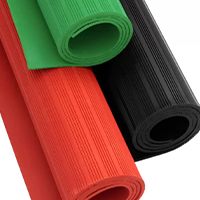
In any facility handling significant electrical loads, safety isn't just a suggestion; it is a legal and moral mandate. When technicians work around live equipment, the risk of "grounding" becomes a life-or-death matter. This is where high voltage switchboard matting enters the picture. It acts as a final line of defense, preventing a lethal current from passing through a human body to the floor.
Standard rubber mats won't cut it here. You need insulated rubber switchboard matting specifically engineered to withstand thousands of volts without breakdown. This guide explores the top five critical environments where this specialized electrical safety tool is non-negotiable. We will dive into the technical requirements, the specific risks of each sector, and why industrial switchboard matting is the cornerstone of a modern risk-mitigation strategy. By the end, you will understand exactly where and why these mats must be deployed to protect both your personnel and your infrastructure.
Power Generation and Distribution Substation Hubs
Power plants and substations represent the most volatile environments for electrical discharge. Here, the sheer volume of energy being converted and redirected is staggering. Operators frequently interact with massive control panels, making high voltage switchboard matting an essential component of their daily PPE (Personal Protective Equipment) environment.
The Danger of Step Potential
In a substation, "step potential" is a silent killer. If a fault occurs, the voltage on the ground can vary significantly between two points. By laying down insulated rubber matting, you create an isolated zone. It keeps the technician’s feet at the same potential, effectively neutralizing the risk of a shock moving through the legs.
Why Material Grade Matters
In these settings, we don't just look for any mat. We look for ASTM D178 or IEC 61111 compliant switchboard matting. These standards ensure the rubber won't crack or lose its dielectric strength under the environmental stresses found in outdoor or semi-exposed substations. High-grade non conductive switchboard matting is tested to withstand up to 30,000V or more, depending on the class (Class 0 through Class 4).
Data Centers and Mission-Critical Server Rooms
It might surprise you, but data centers are high-risk zones for electrical mishaps. These facilities house thousands of servers supported by massive Uninterruptible Power Supply (UPS) systems. These UPS units often operate at high DC voltages, requiring specialized electrical safety switchboard matting to protect maintenance crews.
High-Density Power Protection
As racks become more power-dense, the switchgear behind them becomes more complex. Technicians must often work in tight spaces behind energized panels. Using industrial switchboard matting in these aisles provides a "safe zone" during hot-swapping or circuit testing. Since data centers are prone to heat buildup, choosing fire resistant switchboard matting is a smart strategic move. It ensures that if a fire does break out, the floor protection won't contribute to the smoke or flame spread.
Static Control vs. Dielectric Protection
A common mistake in data centers is confusing ESD (Electrostatic Discharge) mats with switchboard matting. ESD mats are designed to protect the equipment by bleeding off static. Conversely, insulated rubber matting is designed to protect the human. In server rooms with high-voltage inputs, you need the dielectric strength of high voltage matting to ensure the floor doesn't become a path to ground during a major fault.
Large-Scale Manufacturing and Industrial Plants
Modern manufacturing relies on heavy-duty machinery like CNC centers, robotic arms, and massive hydraulic presses. Each of these machines is fed by high-voltage control cabinets. In these industrial settings, the floor is often damp or oily, which significantly increases electrical conductivity.
Durability in Harsh Conditions
Standard mats degrade when exposed to cutting fluids or oils. However, premium industrial switchboard matting is often engineered to be oil-resistant. It maintains its non conductive properties even when the surface is contaminated. We recommend a diamond-plate or corrugated surface texture to provide slip resistance along with electrical insulation.
The Maintenance Factor
Maintenance teams in factories are often under pressure to fix machines quickly. This pressure can lead to shortcuts. By having permanent switchboard matting installed in front of every high-voltage cabinet, the safety is "built-in." The technician doesn't have to remember to bring a portable mat; the electrical safety zone is already established.
| Feature | Industrial Grade Matting | Standard Utility Matting |
| Dielectric Strength | Up to 50kV (Tested) | None/Minimal |
| Oil Resistance | High (Optional) | Low |
| Material | Insulated Rubber | Recycled Vinyl/Foam |
| Certification | ASTM D178 / IEC 61111 | None |
Marine and Offshore Oil Rig Platforms
Offshore environments are arguably the most challenging for electrical equipment. Salt air, moisture, and constant vibration make electrical faults more likely. On a ship or an oil rig, the entire structure is made of steel—a perfect conductor. This makes high voltage switchboard matting a critical life-saving tool in engine rooms and control centers.
Corrosive Atmosphere Protection
Saltwater is highly conductive. If a leak occurs in a marine electrical room, a wet floor becomes an immediate hazard. Insulated rubber switchboard matting provides a dry, isolated platform for the marine engineer. It must be thick enough to prevent "arc-over" even in humid conditions.
Space Constraints and Custom Fits
Marine control rooms are famously cramped. Often, a standard rectangular mat won't fit. This is where custom switchboard matting becomes valuable. You can cut the insulated rubber to fit perfectly around the base of the switchgear, ensuring there are no gaps where a worker might accidentally touch the conductive steel floor while working on a live circuit.
Healthcare Facilities and Hospital Power Vaults
Hospitals are high-stakes environments where power failure is not an option. Behind the scenes, massive switchgear rooms manage the transition between grid power and emergency backup generators. These vaults house high-voltage transformers and switchgear that require regular testing—often while energized.
Ensuring Continuity of Care
Because hospital maintenance often happens in "live" environments to avoid shutting down life-support systems, the technicians are at higher risk. High voltage switchboard matting is essential in these hospital power vaults. It allows for "hot" maintenance to be conducted with a significantly lower risk of a grounding accident.
Fire Safety Compliance
Hospitals have the strictest fire codes in the world. Using fire resistant switchboard matting in these power rooms is often a requirement of the building’s insurance policy. These mats are designed to self-extinguish and produce minimal smoke, which is vital in a building where evacuation is a complex and slow process.
The Technical Deep-Dive: Understanding Dielectric Classes
When selecting switchboard matting, you cannot guess. You must match the class of the mat to the maximum voltage of the environment. Using the wrong class is as dangerous as using no mat at all.
Class 2 vs. Class 4 Matting
Class 2 insulated rubber switchboard matting is the most common for standard industrial use. It is tested to 30,000V and usually rated for a maximum use voltage of 17,000V. This is plenty for most factory 480V or 4160V systems.
However, in utility substations or heavy power generation, Class 4 high voltage matting is required. Class 4 is tested at 50,000V and is rated for a working voltage of 36,000V. The difference in thickness and material density is significant. We always suggest erring on the side of a higher class if the voltage fluctuates or if "transient surges" are expected in the system.
Inspection and Maintenance Protocols
Even the best non conductive switchboard matting will fail if it isn't maintained. You should inspect your mats every six months.
Visual Check: Look for cracks, cuts, or embedded metal shavings. Even a tiny piece of copper wire embedded in the rubber can turn the insulated rubber into a conductor.
Cleaning: Use mild soap and water. Avoid harsh chemicals that could dry out the rubber and lead to "ozone cracking."
Testing: In some high-risk sectors, the mats must be periodically lab-tested to ensure their dielectric strength hasn't degraded over time.
Why "Non Conductive" Isn't Just a Label
Many people assume any rubber mat is non conductive. This is a dangerous myth. Many comfort or "anti-fatigue" mats are made with carbon black or recycled materials that can actually conduct electricity.
True electrical safety switchboard matting is made from a specialized virgin rubber compound. Every square inch of the mat is "proof-tested" at the factory. This means the manufacturer applies high voltage across the entire surface to ensure there are no weak spots or pinholes. If you buy a cheap mat labeled "rubber," you are betting your life on a material that was never designed to stop an arc flash or a high-voltage grounding event. Always look for the stamped certification on the back of the mat to confirm its industrial pedigree.
FAQ: Common Questions About Switchboard Matting
Q: How thick should switchboard matting be?
A: Thickness depends on the voltage rating. Class 2 mats are usually 1/4 inch (6.4mm) thick, while Class 4 mats can be up to 1/2 inch (12.7mm) thick. Never judge a mat by its thickness alone; always check the voltage rating.
Q: Can I use switchboard matting on top of carpet?
A: It is not recommended. Switchboard matting should be placed on a hard, flat surface to prevent it from shifting or bunching, which could create a trip hazard or leave a gap in protection.
Q: Is "Insulated Rubber" the same as "Dielectric Rubber"?
A: Yes, in the context of switchboard matting, these terms are used interchangeably. They both refer to the material's ability to resist the flow of electric current.
Q: Does switchboard matting expire?
A: While rubber doesn't have a specific "expiration date," it does age. Environmental factors like UV light and ozone can cause it to become brittle. If it loses its flexibility or shows visible cracks, replace it immediately.
Conclusion
Whether you are managing a skyscraper in a city or a drill ship in the ocean, electrical safety is a constant battle against the laws of physics. High voltage switchboard matting is one of the simplest yet most effective ways to tip the scales in favor of your employees. By identifying these five critical environments and deploying the correct grade of insulated rubber matting, you create a culture of safety that values human life above all else. Don't wait for a "near-miss" to audit your floor protection. Invest in high-quality switchboard matting today and ground your safety program in reality.
Professional Strength and Factory Expertise
Our factory specializes in the production of high-performance switchboard matting and other essential electrical protection tools. With decades of manufacturing experience, we operate a facility that combines rigorous quality control with massive production capacity. We don't just sell products; we provide certified solutions that have been tested in the world's most demanding industrial environments. Our strength lies in our commitment to "Proof-Testing" every roll that leaves our floor, ensuring that when we say a mat is non conductive, it is a guarantee backed by science. We understand the needs of B2B clients and large-scale projects, offering the reliability and technical support required to keep your critical environments safe and compliant.


