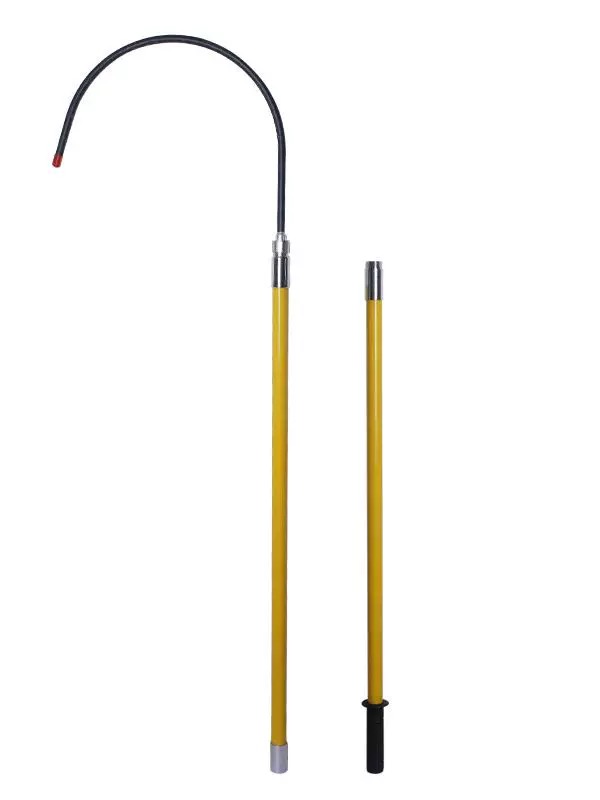
In high-voltage energized line work, maintaining mechanical tension while ensuring absolute electrical isolation is a non-negotiable safety requirement. Utilizing substandard or incorrectly specified rigging tools during conductor hoisting, pulling, or dead-ending operations introduces catastrophic risks. These include arc flash incidents, mechanical failure, and prolonged grid downtime. Linemen rely on specialized equipment to bridge the gap between high mechanical loads and lethal electrical currents.
Selecting the appropriate hot line tools requires a rigorous evaluation of working load limits, dielectric properties, and specific rigging configurations. Equipment failure under tension can cause severe injuries and widespread power outages. This guide outlines the technical criteria for evaluating and procuring Link Sticks for utility maintenance operations, ensuring safety and operational efficiency on the lines.
Dual-Functionality: Link sticks serve as critical isolating intermediaries, providing both high mechanical tensile strength and verified dielectric insulation between energized conductors and grounded rigging equipment.
Configuration Specificity: Selecting the correct termination hardware—such as a triangle link stick, roller, or spiral head—is dictated by the specific mechanical load, conductor size, and required rigging geometry.
Compliance is Mandatory: Procurement must strictly adhere to OSHA regulations, ASTM F711 standards for fiberglass-reinforced plastic (FRP) tools, and IEEE 978 guidelines for in-service maintenance and testing.
Tension vs. Bending Limitations: Link sticks are engineered strictly as tension-member tools; exposing them to bending, shear, or cantilever forces can lead to catastrophic structural failure.
Lifecycle Management: Management must account for mandatory routine dielectric testing, specialized storage requirements, and strict pre-use inspection protocols to mitigate implementation risks.
The Role of Link Sticks in Energized Line Work
The primary operational necessity is isolating linemen and hoists from energized lines during tensioning tasks. Success in this environment is measured by zero electrical tracking and zero mechanical deformation under maximum rated loads. When crews pull heavy conductors, they need absolute confidence that the tool will not snap or conduct electricity back to the bucket or pole. The margin for error in live-line rigging is non-existent, demanding tools that perform flawlessly under extreme stress.
Fiberglass pole construction requires a precise engineering balance. The material must simultaneously handle intense lateral and tensile stress while preventing current tracking along its surface. Manufacturers achieve this through specialized resins and internal foam cores that block moisture ingress. This ensures the stick remains a reliable insulator even under heavy mechanical strain. The pultrusion process used in manufacturing aligns the fiberglass strands longitudinally, maximizing tensile strength while maintaining a lightweight profile suitable for manual handling by linemen.
Primary operational use cases extend across various phases of line maintenance and construction. Understanding these applications helps crews select the right equipment for the job.
Hoisting and tensioning conductors during insulator replacements to maintain line clearance.
Pulling slack and executing dead-ending operations on distribution and transmission lines.
Providing supplementary insulation for rope blocks, strap hoists, and wire grips during complex rigging setups.
Facilitating safe bypass operations during structural modifications or emergency line repairs following storm damage.
To further illustrate the operational demands, consider the following table detailing common rigging scenarios and the corresponding mechanical requirements.
Rigging Scenario
Primary Mechanical Demand
Critical Safety Focus
Dead-End Insulator Replacement
High static tensile load
Absolute dielectric isolation from the grounded structure
Conductor Sagging
Dynamic tension adjustment
Smooth operation without damaging the conductor jacket
Emergency Line Splicing
Rapid deployment under variable loads
Compatibility with standard hoists and grips
Crossarm Change-Out
Temporary holding of energized phases
Stability against wind-induced lateral movement
Core Types of Link Sticks and Their Applications
Link sticks come in various structural variations, each mapped to specific field applications. Understanding these differences ensures crews deploy the right tool for the specific mechanical challenge they face on the pole. Using the wrong configuration can lead to equipment damage or compromise the safety of the rigging system.
Strain Link Sticks
Strain link sticks typically feature standard eye-to-eye configurations. Crews use them primarily for straight-line tensioning and supporting heavy conductor loads. They are the go-to tool for dead-end insulator string isolation, providing a straightforward, high-strength connection point between the hoist and the conductor grip. The simplicity of the eye-to-eye design minimizes potential failure points, making them highly reliable for heavy-duty pulling operations.
Roller Link Sticks
Roller link sticks integrate non-conductive rollers into the end fittings. This design is crucial for applications requiring the conductor to move or feed through the stick. The rollers prevent damage to the wire jacket, protective coatings, and the tool itself during dynamic pulling operations where the wire must glide smoothly. This is particularly important when working with covered conductors or fiber optic ground wires (OPGW) where surface integrity is critical.
Spiral Link Sticks
Spiral link sticks utilize spiral-shaped ferrules designed for temporary lifting or holding. This unique shape allows linemen to easily capture and release conductors without removing overall system tension. It provides a quick, secure method to manage wire position during complex insulator change-outs or crossarm replacements. The spiral design acts as a fail-safe, ensuring the conductor cannot easily slip out of the fitting even if the line experiences sudden movement.
Triangle Link Stick Configurations
The Triangle link stick offers specific utility in complex rigging systems. The triangular end-hardware prevents axial twisting and mechanical flipping during high-tension pulls, maintaining stability. It accommodates multiple clevis attachments simultaneously, facilitating balanced load distribution during multi-directional pulls. This capability is vital for maintaining control over heavy, energized lines, especially when navigating angles or executing complex phase-shifting maneuvers.
Evaluation Dimensions: Technical Specifications and Performance
Mapping technical specifications directly to safety and operational efficiency is critical when evaluating these tools. A tool's physical properties determine its safe application limits in the field. Ignoring these specifications can result in catastrophic rigging failures.
Working Load Limits (WLL) and Safety Factors
Evaluating safe working loads requires understanding the difference between ultimate breaking strength and WLL. Dynamic loading, such as wind, ice accumulation, or sudden tension release, significantly impacts tool selection. Crews must never exceed the WLL, as dynamic forces can quickly spike the actual load well beyond static measurements. A standard safety factor of 5:1 is often applied, meaning the ultimate breaking strength is five times the stated WLL, providing a necessary buffer against unexpected field conditions.
Dielectric Strength and Fiberglass Ratings
Closed-cell polyurethane foam-filled fiberglass construction is vital to prevent moisture ingress and internal condensation, which can compromise dielectric strength. Tools must be evaluated against the 100kV-per-foot testing standard (ASTM F711). For high-voltage applications, typically 115kV and above, corona shields on metal end fittings are required. These shields prevent localized air ionization and dielectric breakdown, which can degrade the fiberglass over time and pose a shock hazard to the operator.
Structural Mechanics
Link sticks are designed exclusively for tensile performance. They must never be subjected to bending or cantilever loads. Applying lateral force to a tension-rated fiberglass pole concentrates stress on the fibers, leading to rapid, catastrophic failure that can drop energized conductors and endanger crews. Linemen must ensure the rigging geometry maintains a straight line of pull to maximize the structural integrity of the tool.
Hardware Materials and Metallurgy
End fittings dictate the tool's durability and weight. The choice of material impacts both the physical exertion required by the lineman and the longevity of the tool in harsh environments.
Material Type
Primary Advantage
Operational Consideration
Heat-Treated Aluminum Alloy
Lightweight, reduces operator fatigue
Lower ultimate strength compared to steel
Forged Steel
Maximum tensile strength and durability
Heavier, requires more effort to position
Galvanized Steel
Excellent corrosion resistance
Added weight, potential for zinc coating wear
Procurement Considerations and Overall Value Influencing Factors
Procurement teams must balance upfront costs against operational longevity. Investing in high-quality tools reduces replacement frequency and improves overall crew safety. Selecting the right equipment requires a comprehensive understanding of how the tools will perform over years of rigorous field use.
UV exposure, chemical contaminants, and physical abrasions degrade fiberglass over time. This degradation leads to "fiberglass blooming," where fibers become exposed, trapping dirt and moisture, resulting in a loss of dielectric performance. Selecting tools with robust protective coatings extends their safe operational lifespan. Regular maintenance and proper storage are essential to mitigate these environmental factors.
New tools must integrate seamlessly with current utility fleets. Compatibility with shotgun sticks, universal splines, specific hoist hooks, and standard lineman hot-line grips ensures crews can deploy the equipment without needing custom adapters or entirely new rigging setups. Standardization across the fleet simplifies training and reduces the likelihood of mismatched equipment being used in the field.
High-gloss polyurethane or silicone coatings ensure hydrophobic surface properties. This prevents water sheeting during unexpected inclement weather, forcing water to bead up and roll off. This characteristic maintains the tool's insulating properties even in light rain, providing an added layer of safety when weather conditions deteriorate rapidly during an operation.
Purchasing from manufacturers that provide serial-level traceability, certified test reports, and clear warranty terms is essential. This authoritativeness guarantees the tools meet stated safety standards and provides a clear path for accountability if defects arise. Traceability allows utilities to track the lifecycle of each tool, ensuring timely testing and retirement.
Implementation Risks and Safety Mitigation
Managing operational risks after procurement is just as important as selecting the right tool. Proper handling and maintenance keep the equipment safe for daily use. A robust safety culture demands strict adherence to inspection and testing protocols.
Linemen must perform visual and tactile inspections prior to every deployment. They must check for gouges, deep scratches, fiberglass blooming, and hardware deformation. Any tool showing signs of mechanical damage or surface degradation must be immediately removed from service and tagged for repair or disposal. The tactile inspection is crucial, as running a gloved hand over the surface can detect micro-abrasions that might not be immediately visible.
A strict lifecycle testing framework is mandatory. This includes annual or bi-annual laboratory testing in accordance with IEEE 978 to verify micro-ampere leakage limits. Routine dielectric testing ensures internal moisture or invisible structural damage has not compromised the tool's insulating capabilities. Utilities must maintain detailed records of these tests to comply with safety regulations.
Specialized hot stick trailers and moisture-resistant storage bags are necessary to protect the tools from physical damage and environmental exposure during transport. Regular application of silicone-based moisture repellents helps maintain the hydrophobic surface and prevents electrical tracking. Tools should never be stored directly on the ground or in areas where they might be subjected to heavy impacts.
Conclusion
Audit your current rigging fleet immediately to identify and remove any damaged or outdated fiberglass tools.
Define the maximum expected dynamic loads for all upcoming projects to ensure procured equipment meets the necessary Working Load Limits.
Request certified testing documentation and serial-level traceability from prospective manufacturers before finalizing any equipment orders.
Implement a strict, documented pre-use inspection protocol for all field crews handling tension-rated insulating tools.
FAQ
Q: What is the standard working load limit of a link stick?
A: Working load limits vary significantly based on diameter and hardware, typically ranging from 1,500 lbs to over 6,000 lbs. Always verify the manufacturer's specific WLL stamped on the tool before use.
Q: How often do fiberglass link sticks require dielectric testing under IEEE 978?
A: IEEE 978 generally recommends routine dielectric testing at least annually, or more frequently depending on usage frequency, environmental exposure, and utility-specific safety protocols.
Q: What is a triangle link stick used for in power line rigging?
A: It prevents axial twisting and mechanical flipping during high-tension pulls. The triangular shape accommodates multiple clevis attachments, allowing for balanced load distribution during complex, multi-directional rigging operations.
Q: Can link sticks be safely used in wet weather conditions, and how does hydrophobicity affect safety?
A: While generally avoided in heavy rain, hydrophobic coatings cause water to bead rather than sheet. This prevents a continuous conductive water path, maintaining the tool's dielectric strength in damp conditions.
Q: Why are link sticks vulnerable to bending or cantilever loads?
A: The fiberglass pultrusion process aligns fibers longitudinally for maximum tensile strength. Applying lateral or bending forces concentrates stress across the fibers, leading to rapid structural failure and snapping.
Q: What safety standards govern the manufacturing of link sticks?
A: Manufacturing and testing are primarily governed by ASTM F711 for fiberglass tools, alongside relevant OSHA regulations for workplace safety and IEEE 978 for in-service maintenance and testing.