You may ask if a grounding clamp can really keep you safe from electrical shock. Many people think grounding alone removes all risks. In truth, a grounding clamp lowers the danger, but it does not give full protection. Always use the right safety steps when working with electricity.
Key Takeaways
Grounding clamps help make electrical shock less likely, but they do not stop it completely. Always use safety steps when you work with electricity.
Pick the right grounding clamp for your work. Make sure it fits your system and is made of the right material. This helps keep the connection safe.
Check grounding clamps often for damage or rust. The connection must be tight and have low resistance to keep you safe.
How grounding clamps work
Electrical shock prevention
A grounding clamp is important for electrical safety. It connects a metal object to the earth. This link helps stop electrocution and keeps equipment safe. When you use a grounding clamp, electricity can move safely into the ground. This helps protect you, especially in places like factories or workshops.
Tip: Always make sure your grounding system is tight before you start any electrical job.
Using a grounding clamp lowers the risk of electrical shock in different ways:
It gives electricity a direct path to the earth, so charge does not build up in equipment.
It cuts down on stray voltages that could cause shocks.
It keeps you safe by lowering the voltage between metal parts and the ground.
Some grounding devices have high-resistance parts to limit current flow. This makes them safer if something goes wrong. Safety grounding jumpers use insulated cables and clamps. They can short-circuit and ground a circuit if it gets energized. This keeps you and your equipment safe.
It is important to have the right ground resistance values for safety. You should check ground resistance carefully to make sure your grounding system works well.
Types of grounding clamp
There are many types of grounding clamps. Each one is made for a special job. The table below shows common types and what they do:
Type of Grounding Clamp
Description
Typical Applications
Ground Rod Clamp
Connects a grounding rod to a wire for secure grounding.
Used in buildings, factories, and communication towers.
Welding Ground Clamp
Handles high currents from welding operations, redirecting current to ground.
Common in welding shops and construction sites.
Electrical Ground Clamp
Connects electrical devices to the earth, redirecting fault currents.
Used in residential wiring and industrial circuits.
Pipe Ground Clamp
Attaches grounding systems to metal pipes for safe current flow.
Ideal for plumbing and electrical conduits.
Ground Wire Clamp
Secures grounding wires to the electrical system for reliable current flow.
Essential in control panels and communication networks.
Grounding Beam Clamp
Connects large metal structures to a grounding system.
Widely used in power stations and manufacturing plants.
You might use a static grounding clamp to control static electricity. This type is used in places with flammable materials. Static grounding clamps help stop sparks by moving static charges safely to the ground.
New grounding clamp technology has made things safer. Makers now use better materials like copper and aluminum. Some clamps have smart technology to check the connection and voltage. You can find clamps that meet tough safety rules, like IEC 62305 and UL 467. Many new clamps do not rust and work with different conductors, like solid, stranded, and tape. Some top models have smart monitoring to keep resistance low, which is very important for good grounding.
Choosing the right grounding clamp
Application and requirements
You need to pick the right grounding clamp for your job. First, check how much electricity your system uses. Also, know what kind of system you have. Homes usually use rods or outlets for grounding. Factories need stronger systems and sometimes ground fault detection. Make sure your clamp fits the grounding electrode. It should also match the wire’s material. This helps you get a good connection with low resistance. It keeps your grounding system safe.
Tip: Always follow the National Electrical Code for sizing and installation.
Material and environment
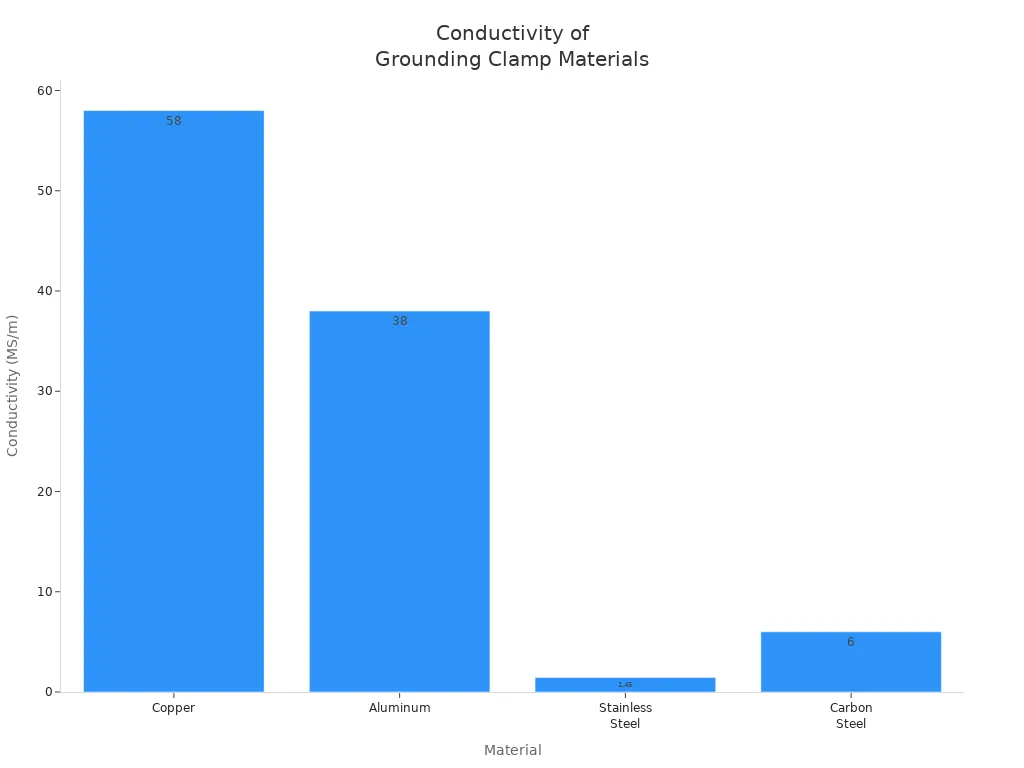
Choose strong materials for your grounding clamp. The right material makes grounding work well. It also helps stop rust. Here is a table to help you pick:
Material
Properties
Copper
Great conductivity, good for dry areas. Needs coating in harsh places.
Stainless steel
Strong and resists rust. Good for wet or coastal sites.
Tin/Nickel plating
Stops rust and keeps conductivity high.
Aluminum
Light and conducts well, but less common.
Silicone bronze
Very strong and resists corrosion.
Compliance and safety
You must use grounding clamps that follow safety rules. In the U.S., look for UL-listed clamps and follow NEC 250.70. In other countries, check local codes. Using the wrong clamp can cause electric shock, fires, or damage to equipment.
Not grounding things right can cause fire, shock, or injury.
Static grounding clamp selection
If you work with flammable stuff, use a static grounding clamp. It must keep resistance below 1 Ohm and stay tight. Pick clamps with coated surfaces to stop sparks. Test the clamp for a strong grip and steady contact. This helps stop static discharge and keeps your workplace safe.
Limitations and safety tips
What grounding clamps cannot do
It is important to know grounding clamps have limits. They cannot stop every electrical shock. If there is no proper grounding path, electricity might go through your body. This can hurt you badly or even cause death. In places like bathrooms or kitchens, missing or broken grounding systems make things more risky. Wet areas make shocks more likely. High resistance in the grounding system can also cause equipment loss during lightning.
Here are times when grounding clamps might not work:
There is no good grounding path.
The clamp is loose or rusty, so the connection is weak.
The grounding system has high resistance or is broken.
You use the wrong clamp for the job.
Note: Grounding clamps lower risk, but you still need other safety steps.
Best practices and common mistakes
You can stay safe by following these tips:
Wear the right personal protective equipment (PPE) for shock and arc-flash.
Clean all connections to get rid of dirt and rust.
Attach ground-end clamps first and take them off last.
Use hot sticks with the right rating for conductor-end clamps.
Get training and follow safety rules.
Some mistakes can put you in danger. Many people use the wrong grounding clamp or put it on wrong. Some forget to check the grounding system after they install it. Others do not reconnect ground paths after changing equipment. Always check for a low resistance connection and test for continuity.
You should look at and clean grounding clamps before each use. Check for damage, missing parts, or loose connections. Tighten all connections to the maker’s recommended torque. Test the system at least once a year to keep grounding safe.
You need a grounding system to stay safe. It also protects your equipment from harm. Here are some important things to know:
Grounding helps keep people and things safe from electrical problems.
Using good grounding methods makes shock less likely.
Grounding clamps send fault currents safely away. Before you start work, always check for a low resistance connection.
FAQ
Can you use any metal clamp as a grounding clamp?
No, you should not use just any metal clamp. You need a clamp made for grounding. It must meet safety standards and provide a secure, low-resistance connection.
How often should you check your grounding clamps?
You should inspect grounding clamps before each use. Look for rust, loose parts, or damage. Test the connection at least once a year for safety.
Do grounding clamps protect against lightning strikes?
Grounding clamps help direct lightning energy safely to the ground. You still need a complete lightning protection system for full safety.